• Home
    • Travel Regions
      • Hokkaido
      • Tohoku
      • Osaka
      • Tokyo
      • Kyushu
      • Gifu
    • About Jin
      • About Me
      • Musings Gallery
      • Contact Me
    • Tips & Guides
      • budgeting
      • Car Rental
      • Transportation
      • Muslim-friendly Guide

Jin Travels Japan

SL Ginga: Japan's Starry Steam Train Journey

Experience JR East's unique steam locomotive with onboard planetarium through Iwate's magical landscapes. Inspired by Miyazawa Kenji's universe.
★★★★☆ 4.8/5

Train Info

🚂
Name: SL Ginga (SL銀河)
📍
Route: Hanamaki to Kamaishi (Iwate Prefecture)
⏱️
Duration: 4.5 hours (full route)
🚉
Key Stops: Hanamaki, Tono, Sumita, Kamaishi

Key Features

🌌
Unique: Japan's first train with onboard planetarium
📚
Theme: Inspired by Miyazawa Kenji's literature
🎭
Cars: Four uniquely themed carriages
🎫
Access: Free with JR East Tohoku Area Pass

The Miyazawa Kenji Experience

SL Ginga steam train
SL Ginga with its distinctive starry theme and blue exterior
"The train offers a magical journey through landscapes that feel like stepping into Kenji's stories."

4 Themed Carriages

SL Ginga features four distinct cars inspired by Miyazawa Kenji's literary universe:
  • Car 1: Planetarium showcasing Kenji's horoscope
  • Car 2: Literature gallery with books and maps
  • Car 3: Science & agriculture exhibition
  • Car 4: Art gallery featuring Kenji's artwork
The train was created to revitalize the Tohoku region after the 2011 tsunami and earthquake.

The Scenic Journey

SL Ginga interior
The planetarium car - Japan's first train planetarium
  • Must-see: Planetarium shows throughout journey
  • Unique: Station signs in Esperanto
  • Photo ops: Special stops for photography

Through Ihatov, by Miyazawa Kenji

The SL Ginga travels through landscapes that inspired Miyazawa Kenji's fictional world of Ihatov:
  • Rolling hills and countryside of Iwate
  • Traditional villages and farming landscapes
  • Rivers and forests from Kenji's stories
During stops, passengers can experience cultural performances including tiger dances in Kamaishi.

Onboard Experience

SL Ginga train design
SL Ginga's beautiful star-themed design

Starry Interiors & Planetarium

Experience unique features throughout the train:
  • Planetarium: 15-minute shows with Kenji's constellations
  • Gallery Spaces: Exhibits on science, agriculture & art
  • Observation Areas: Large windows for landscape viewing
  • ORAHO Counter: Local Iwate snacks and souvenirs
The train's dark blue exterior features star motifs that glow at night.

Cultural Immersion

Throughout the journey, experience:
  • Live performances of local dances
  • Kenji's literature readings
  • Educational activities about astronomy
  • Local Iwate treats and crafts
Staff share stories about Kenji's connection to the landscapes you pass through.
SL Ginga at station
SL Ginga making a station stop for photos

What I Loved

  • World's first train with onboard planetarium
  • Deep cultural immersion in Kenji's universe
  • Authentic steam locomotive experience
  • Free with JR East Tohoku Area Pass
  • Unique photo opportunities at stops
  • Thoughtfully designed themed interiors
  • Friendly and knowledgeable staff

Considerations

  • Limited departures (weekends only)
  • Requires advance reservation
  • Full journey takes 4.5 hours
  • Planetarium has limited capacity
  • Some stations lack accessibility features

Ride the Starry Express!

Ready for your journey through Kenji's universe?

Check Schedule & Reserve Seats
Reservations open 1 month in advance

Final Verdict

★★★★☆ 4.8/5

The SL Ginga offers a truly unique journey through literary landscapes. Combining nostalgic steam travel with modern planetarium technology and deep cultural immersion, it's a must for literature lovers and train enthusiasts exploring Tohoku.

Perfect for

Literature & astronomy enthusiasts
Steam train lovers
Cultural experience seekers
Travelers with JR East Pass

Consider if

You enjoy immersive storytelling
You appreciate heritage transportation
You want to explore rural Japan
Travel Tip: Book at least one month in advance through JR East's Eki-Net. Combine with visits to Hanamaki's Miyazawa Kenji Museum and Kamaishi's Dai-kannon Statue. The best photo spot is at Tono Station with the meganebashi bridge in the background.

*Disclosure: This post contains affiliate links. If you book through them, I may earn a small commission at no extra cost to you. This helps keep the blog running - thank you! 🙏
🏨 Book Hanamaki Hotels 🏨 Book Kamaishi Hotels 🎫 Buy JR East Pass 🚆 Reserve via Eki-Net

Have you experienced the SL Ginga or other Joyful Trains in Japan? Share your stories below!

© 2025 Jin Travels Japan

Share
Tweet
Pin
Share
No comments

Resort Shirakami: Scenic Train Journey Through Tohoku

Experience breathtaking Sea of Japan views on JR East's Joyful Train through UNESCO-listed Shirakami Mountains - Free with JR East Pass!
★★★★☆ 4.7/5

Train Info

🚂
Name: Resort Shirakami (Aoike, Buna, Kumagera)
📍
Route: Aomori to Akita via Gono Line
⏱️
Duration: 5 hours (full route)
🚉
Key Stops: Aomori, Hirosaki, Juniko, Akita

Key Features

🌊
Views: Stunning coastal scenery of Sea of Japan
🏞️
Theme: Celebrates Shirakami-Sanchi UNESCO site
🛋️
Interior: Unique designs with observation lounges
🎭
Onboard: Cultural performances & local treats

The Shirakami Mountains Experience

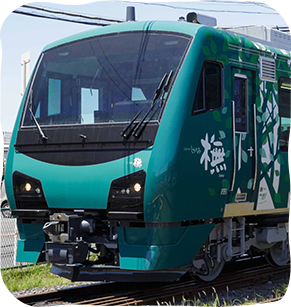
Resort Shirakami Buna train
The beautiful Buna model of Resort Shirakami
"The train gives a magical journey through landscapes that feel untouched by time."

Three Unique Designs

Resort Shirakami features three distinct train designs inspired by the UNESCO World Heritage Site Shirakami-Sanchi:
  • Buna: Beech tree theme with warm wooden interiors
  • Kumagera: Black woodpecker motif featuring deep blues
  • Aoike: "Blue Pond" design with aquatic colors
Each train operates on a hybrid system using diesel engines and lithium-ion batteries, making it environmentally friendly.

The Scenic Journey

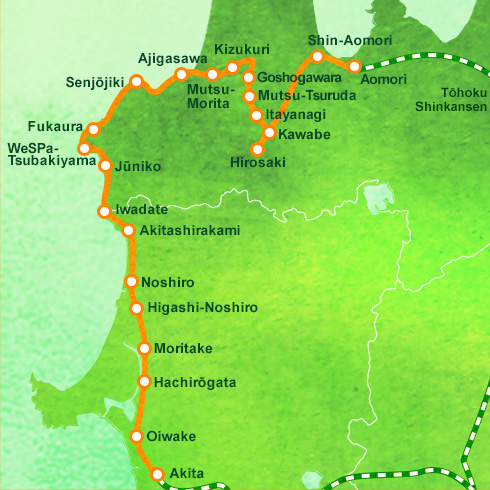
Resort Shirakami route map
The scenic Gono Line route along the Sea of Japan
  • Must-see: Coastal views of the Sea of Japan
  • UNESCO Site: Shirakami-Sanchi beech forests
  • Photo stops: Juniko (Twelve Lakes) area

Coastal Wonders & Mountain Vistas

The Resort Shirakami connects Aomori and Akita via the picturesque Gono Line, offering some of Japan's most stunning coastal scenery. As the train winds along the Sea of Japan coast, you'll enjoy breathtaking views of:
  • Dramatic sea cliffs and fishing villages
  • The iconic Mount Iwaki ("Tsuruga Fuji")
  • UNESCO-listed beech forests of Shirakami-Sanchi
The train makes strategic stops at scenic locations, allowing you to explore highlights like the Juniko (Twelve Lakes) area.

Onboard Experience

Train interior with wooden design
The warm, woody interior of the Buna train

Comfort & Culture Combined

Step inside to discover thoughtfully designed spaces:
  • Observation Lounges: Panoramic windows for optimal viewing
  • Event Spaces: Live cultural performances during the journey
  • Box Seats: Private compartments with convertible beds
  • ORAHO Counter: Local snacks, drinks, and souvenirs
Photography enthusiasts will appreciate the numerous Instagrammable spots throughout the train.

Local Treats & Activities

The train features charming amenities where you can enjoy:
  • Local Tohoku snacks and beverages
  • Exclusive Resort Shirakami souvenirs
  • Cultural performances and region-themed quizzes
During the journey, staff often host interactive activities about Tohoku culture.
Box seats on Resort Shirakami
Spacious box seats that convert to sleeping areas
Resort Shirakami ticket
Commemorative train ticket

Personal Experience

During my journey, I was fortunate to experience both the Buna and Kumagera trains. The box seats were particularly memorable - with convertible beds and privacy curtains, they offer a perfect retreat for introverts.
Seating Tip: For the best experience, reserve box seats in advance. If the train isn't full, you can move around to different viewing areas after departure.

What I Loved

  • Breathtaking coastal and mountain views
  • Three unique train designs to experience
  • Spacious box seats with privacy
  • Cultural performances onboard
  • Free with JR East Tohoku Area Pass
  • Commemorative boarding certificate
  • Eco-friendly hybrid engine system

Considerations

  • Limited departures (2-3 per day)
  • Requires advance seat reservation
  • Popular route - books up quickly in peak seasons
  • Full journey takes 5 hours
  • Not all stations have full accessibility

Ride the Resort Shirakami!

Ready for your scenic journey through Tohoku?

Check Schedule & Reserve Seats
Reservations can be made at JR Stations or through Eki-Net

Final Verdict

★★★★☆ 4.7/5

The Resort Shirakami offers an unforgettable journey through Tohoku's stunning landscapes. With its unique designs, comfortable interiors, cultural experiences, and breathtaking coastal views, this scenic train is a highlight of any northern Japan itinerary.

Perfect for

Scenery lovers and photographers
Cultural experience seekers
Travelers with JR East Pass
Those exploring off-the-beaten-path Japan

Consider if

You enjoy slow travel experiences
You appreciate unique train designs
You want to see Tohoku's coastal beauty
Travel Tip: Combine your train journey with visits to Hirosaki Castle (spring cherry blossoms), Juniko's Blue Pond, and Akita's Kanto Festival (August). Departures are limited - book at least a month in advance through JR East's Eki-Net system.

*Disclosure: This post contains affiliate links. If you book through them, I may earn a small commission at no extra cost to you. This helps keep the blog running - thank you! 🙏

🏨 Book Aomori Hotels 🏨 Book Akita Hotels 🎫 Buy JR East Pass 🚆 Reserve via Eki-Net

Have you experienced the Resort Shirakami or other Joyful Trains in Japan? Share your stories below!

© 2025 Jin Travels Japan

Share
Tweet
Pin
Share
No comments
Resort Shirakami decorated exteriors of Buna(beech) Train ...

I have finally found time to write more about my Tohoku trip last year!

With a JR East Tohoku Area Pass, I have managed to visit many places, from Tokyo to Nikko, Sendai and Matsushima, Iwate and Aomori. :)

I am also glad to be able to board two of JR East's Joyful trains: the Pokemon with YOU train and Resort Shirakami (Bune and Kumagera).

So here I would like to share about these trains with you!

I'll talk about:

  • What is Resort Shirakami
  • The train route
  • Reservation of the train
  • Boarding the train

What is Resort Shirakami

Resort Shirakami is one of the types of Joyful Train series by JR East, a Japanese railway operator.
There are three models of the Resort Shirakami, Aoike, Buna, and Kumagera.


Resort Shirakami
Resort Shirakami - Buna
Resort Shirakami
Resorot Shirakami - Aoike
Resort Shirakami
Resort Shirakami - Kumagera

All three designs of the Resort Shirakami are different, so you can enjoy the train along its route between Akita and Aomori. The train runs on a hybrid system - diesel engine (acceleration) + lithium ion batteries (start up) to operate the motor. When the train decelerates, the motor acts as a generator, while Shirakami's brake system uses the energy to convert to electricity that is restored in the batteries.

Internally, all of the Resort Shirakami has four cars that consists of the combination of the following: (1) Event space + Observation Room, (2) Ordinary Car reserved seats, (3) Box Seats, and (4) the ORAHO counter.

In the event space, you can enjoy performances. The performance will be from time to time and if you aren't seated at the event space, there are TVs that you can view from the ordinary car reserved seat space. 

You can also order drinks and sweets, or purchase souvenirs from the ORAHO counter.

The Train Route of Resort Shirakami

The Resort Shirakami runs on the Gono Line, to and from Aomori an Akita, two wonderful prefectures of the Tohoku region of northern Japan.

Regular stops
Resort Shirakami route on Gono Line

Through the scenic train, you can enjoy the seaside view from this train itself. They also offer multiple stops. If you are heading to Shirakami Sanchi, a beautiful place with great landscapes, you can stop at Juniko and make a transfer to a bus.
Otherwise, you can also use this train to Hirosaki during late spring (recommended late April~early May), which the Hirosaki Park is absolutely beautiful. Though the ride from Aomori is very short on the Resort Shirakami - you might not enjoy the train enough.

If you are heading to Akita during summer, especially around mid July, consider stopping at Noshiro Staiton and transfer to Takanosu Station, then take a bus to Suiun Park for the beautiful hydrangeas.

For Akita city itself? Visit the local shrines like Iyakata Shrine, or during late summer (usually August) you can check out the Akita Kanto Festival, or for the Akita dogs! You can also visit places like Lake Tazawa or Kakunodate from Akita Station.

If you are looking for places to chill with tasty apples, Aomori City has great sunset views in ASPAM, and you can learn more about Nebuta lanterns from the Warasse museum. If you would like some souvenirs, just head straight to A-Factory to drink and eat your heart out with the delicious pastries and apple-related food. If you understand Japanese, visit the Hakkodamaru to learn more about the history on how the people from Honshu travel to Hokkaido via ferries. 

There are, of course, much more to do between these few places! :)


How to Reserve for Resort Shirakami

Whether you have a JR pass or not, you can reserve a seat for Resort Shirakami on JR East's ekinet website! You just needed a credit card for reservation. If you abandon your ticket without cancellation before the cancellation period, your card will be charged.

Reservations can be done 1 month prior boarding. Example, if you are boarding on 7 April, you will be able to reserve on 7 March. There is a limit to the number of trains you can reserve. 

If you have a JR Pass (Nationwide, JR East, whichever applicable to Tohoku), you will need to let them know that you are using a JR Pass for the reservation. Otherwise, you need to select to pay upon collection.

Also, you will need to select a pickup point. Usually I pick things up at the place I exchange my JR Pass, and I recommend doing so since the airport staff are multilingual since they also hire people from Taiwan (the girl that I dealt with has a Taiwanese accent) so she can speak at least English, Mandarin Chinese and Japanese. 

Note: You cannot pick up an ekinet-reserved ticket that is departing on the same day. Example, if I arrived Narita on 10 April and wanted to pick up my Narita Express (N'EX) that departs at 11AM, that is not allowed at all. But you can just inform the staff at the airport counter if you wish to board the next N'EX. I have never seen them full. At all. This means, if you are planning to board the Resort Shirakami today, you cannot book via ekinet - just head to a JR Ticketing counter!


Boarding the Resort Shirakami

Boarding isn't difficult at all. Depending on your luck, you either get the normal paired seats, or you get yourself a box car.

After you receive your ticket, you'll get to see the details:

1. Departing station to Disembarking Station
2. Train number
3. Departure time and arrival time
4. Seat number

I wanted to try the trains with different designs, so honestly in order to save time I booked myself a round trip from Aomori and Hirosaki - Buna to Hirosaki, and Kumagera to Aomori.


Promotional Image of Buna


Because the train is at the hub, so I got to see the train earlier! You can't enter until it's fully cleaned, though. So I witnessed how the Japanese staff effectively cleans the entire car.


Shirakami - Buna


My time in Hirosaki was history. 

Later of the day, I returned to Hirosaki Station to board the Kumagera version of Resort Shirakami.
Because it wasn't a hub station from where I boarded so I didn't have a good shot of Kumagera :( 

No photo description available.
My brain literally was so bad I only managed to record a video and making a screenshot out of it ugh

Well at least, surprisingly, I got the box seat!

Oof I didn't notice my ticket was upside down until now lol


The joy of not sharing seats while having my favorite convenience store muscat water all to myself


I was lucky that I didn't have to share this space with anyone!
The introvert side of mine is very pleased.

The hand rests on the 'sofa' seat can be opened and you can sleep across it. 
Oh also you can raise the leg part and legit making this place a bed! 

Since there are two sides so you can make it a bedroom (?) for two. Haha!
Muscat water was from the convenience store outside Hirosaki Station. 

Overall, the rides were pleasant and I am certain that I will be back to Tohoku area someday and ride the Aoike to further spots so I can enjoy the sea views too!

I'll end this post with Mt. Iwaki from Resort Shirakami.
It's literally also known as the Tsuruga-Fuji.
It's not the Mt. Fuji we know, though!


This is not Mt. Fuji, but Mt. Iwaki


Please feel free to visit Tohoku for a different experience than the usual Japan! :)

Until next time~


    Share
    Tweet
    Pin
    Share
    No comments
    Japanese Otera
    Top of Risshakuji during summer

    If you love Japanese temples and shrines and is looking for something that you'd love to keep (and unique to your own), consider temple stamps!

    I would like to share something special in Tohoku that I don't think I have noticed much written in full details in English yet.

    In Japanese temples, we can collect temple stamps called Goshuin. But if you are into something more interesting than just collecting Goshuins, consider this activity in Tohoku called Shiji Kairo!

    They are like stamp rallies - you pay a visit to a certain list of temples, then you can pay and collect stamps. Of course, Shiji Kairo is not the only place that you can do this (you can do the 7-temple primilege in Onomichi too but I personally like to share about Shiji Kairo in Tohoku better, since I actually managed to finish a cycle before the new Reiwa Era.


    So, what is this Shiji Kairo thing?

    Shiji Kairo (四寺廻廊) is an activity where you pay a visit to the 4 important temples founded by Ennin (円仁) a.k.a. Jikaku Daishi (慈覺大師). What makes this popular is that, these locations were also visited by the late poet Matsuo Basho.

    Basho-sensei has written poems that beautifully describes various places that he have visited that portrays the beauty of each place, in his work named "Oku no Hosomichi". You can find some pillars/ stone blocks that has his works on it in all four of these temples (and places nearby too).

    What are the four temples? Where are they?

    1) Chusonji in Hiraizumi, Iwate prefecture

    Chusonji is listed as the national treasure of Japan. To go there, you can take a bus from Hiraizumi station and climb up a slope. You will find multiple temples here but for the stamp, you'll need to go to the main hall.

    Chusonji is my third stop of Shiji Kairo in April.

    Image may contain: sky and outdoor
    Outside of Chusonji's entrance

    The temple gives a relaxing vibe, and has a surprising amount of Taiwanese tourists. When I was there, I was able to enter the interior of temples and see their exhibition of the temple's history, and some artworks by a local artist.

    What makes this place nice is also the slope. It has nice rows of trees and is very eye-pleasing. Though the slopes might not be so suitable for those with weak legs. There are benches along the way if you need some rest, though!

    Image may contain: tree, sky, plant, outdoor and nature
    The slope up to Chusonji

    Also Chusonji has this hall called Konjikido. It's a hall decorated in gold foils, and is one of the three temples that are heavily decorated with gold foils in Japan. The other two are Kinkakuji of Kyoto, and Taiyuin of Nikko. It is so beautifully decorated with a lot of beautiful details in it using colorful shells and golden leaf. If you leave Konjikido there is also a small hut that shows how the decorations are made (in Japanese) as well.

    2) Motsuji in Hiraizumi, Iwate prefecture

    Motsuji is also part of the heritage sites in Hiraizumi of Iwate prefecture. It was actually my second stop for this round of Shiji kairo. The temple's main prayer hall is below:

    Image may contain: sky and outdoor

    But for the stamp, the counter is very close to the entrance.

    What Motsuji offers, is their beautiful garden with pond.

    Image may contain: tree, sky, cloud, outdoor, nature and water
    The pond of Motsuji

    If you visit during summer you get to see patches of iris flowers as well! The iris flowers are donated by Meiji Jingu. But if you visit during spring, there are some sakura trees that are beautiful outside (there's one inside too).

    Image may contain: tree, plant, outdoor and nature
    Sakura tree outside Motsuji's entrance

    Going to Motsuji was an easy 15-minute or so walk from Hiraizumi Station. I visited this place early morning so the streets were fairly quiet, but there are some little shops that you can drop by with friendly obasans!

    3) Yamadera Risshakuji in Yamagata prefecture

    Image may contain: tree, sky, house, outdoor and nature
    Yamadera Risshakuji Temple (not the hiking place yet)

    Risshakuji has its main temple that is only a short walk (in 10 mins) from Yamadera station. If you are up to hiking, you can consider hiking the mountain that actually it's just a couple of flights of stairs totaling up to about 1000 steps (you can rest midway, there are observatory spots that are great too! You can hike with a small fee of 300 yen. This place is my final stop of my Shiji Kairo.

    Before hiking you can also buy konjac with mustard. It has became my favorite local snack. I'd eat them again and again! It's a healthy snack and it was also said to give you a lot of energy (well I didn't really feel as tired as I thought I would be since I ran out of breath climbing Batu Caves with only 272 steps). It took me less than 2 hours to return back to the train station.

    Image may contain: food and outdoor
    If I remembered them correctly they were 100 JPY per stick

    The stamp collection doesn't require you to hike, by the way! But the view is amazing!

    Image may contain: mountain, sky, tree, house, plant, outdoor and nature
    Almost arriving the top of Yamadera

    A local lady from Sendai told me that she frequently visited Yamadera, and the time I visited in April was perfect because there are both sakura and also the snow-capped mountains in the same view! (I hiked on 23 April 2019).

    4) Zuiganji in Matsushima, Miyagi prefecture

    This was my first stop of Shiji kairo in April 2019. Coming here with the intent to pray as well as to take some good shots of graduation photos, I've decided to visit Matsushima.

    You can buy the entrance ticket via a machine to Zuiganji. Then, you can let the staff know that you wanted a Shiji Kairo stamp. You'll be most likely to leave your book there (if this isn't your first stop) and get a waiting number. The staff will let you to visit the insides of the hall before coming back for your stamped book.

    Image may contain: outdoor
    Waiting number

    Zuiganji gives a strong impression where it offers a museum where you can understand the history of the temple as well as the treasures, how this place is made and what it is made of. They have some nice plum blossoms in the temple as well.

    Image may contain: tree, sky, plant, outdoor and nature
    Before entering the halls of Zuiganji

    Inside Zuiganji halls, photography is not allowed in most regions. There are more artefacts and I can't help to gasp along the way. "No wonder it is the most famous zen temple in Tohoku!" was what went through my mind. I could spend hours in this temple.

    Image may contain: sky and outdoor
    Temple monks outside the Kuri (Zen Kitchen)

    I also think that Date Masamune has lived an honorable life (despite losing an eye) when he restored this place as his family temple with the decors inside.

    There are also cedar trees (though many were damaged in the 2011 tsunami). There are also statues and caves.

    Image may contain: tree, sky, outdoor and nature
    Rows of cedar tree

    Behind the cedar trees the caves were also said to be used for meditation. Now it's just full of statues.
    Image may contain: tree, outdoor and nature
    Meditation Caves and Statues
    Image may contain: tree, sky, plant, outdoor and nature
    Sakura in full bloom

    This place is also an easy 10 minute walk from Matsushimakaigan station, which is less than an hour from Sendai station. You can try the zunda-flavored items here. Also, Matsushima is famous for their oysters!

    What's so nice about this activity?

    What is great about shiji kairo is that, in each temple you can get a stamp, and after collecting a stamp (goshuin) from each temple (order doesn't matter), you can get a shikishi from the last temple you visited! There are four different versions, so some people visit four times of different orders to get all four types of shikishi.

    Below is one of the shikishi I've collected:

    No photo description available.
    Shikishi from Yamadera Risshakuji

    Of course, collecting is not the only thing that is great about it.

    How do you start with shiji kairo?

    First, you get a book for stamps from the first temple of visit. You will need to tell them that you are doing the Shiji kairo. There will be a goshuin book with your first stamp totaling of 1000 yen. Each stamp will be 300 yen. Now you have your stamp and you can begin your collection!

    Your book looks like this:

    No photo description available.
    Cover for Shiji Kairo book


    Things to take note of 

    1. Do not make it a place as a touch-and-go place and keep your manners. It is a form of courtesy to visit with a heart that seeks to pay respect. It would be more polite if you can bring juzu (beads) and/or wagesa (a robe). These items are Buddhist accessories, but it is not necessary to bring/wear them for your visits.

    2. The Shiji Kairo book is not usable for other goshuins. Because it'll look like this and is fully occupied when four temples are done.

    No photo description available.
    Completed Shiji Kairo Book


    3. Many of these places have a no-camera restriction, please make sure not to take photos/ videos of the camera-prohibited areas.

    4. Please wear appropriately to a temple.


    Tips for tourists (short term visitors, non-Japanese passport holder)

    If you are a foreign tourist, you can consider to purchase your JR East (Tohoku Area) pass or JR Pass (Nationwide) to reach these regions. The regions in Tohoku are beautiful so you can definitely stay a couple of nights in each place!

    I've written a post about this JR Pass that you can consider reading too! If you need more references about the activity you can check the links that I'll put in the next segment.

    Until next time!


    Other references

    For those who want to learn more, I have attached some links below. Hope the above helps!
    1) Shiji Kairo (Japanese): https://www.shijikairou.com/index.cgi?cid=1
    2) 5-day itinerary for Shiji Kairo (English): https://travel.navitime.com/…/jp/model-p…/detail/ntjplan166/
    3) Oku no Hosomichi by Matsuo-sensei: https://en.wikipedia.org/wiki/Oku_no_Hosomichi


    Share
    Tweet
    Pin
    Share
    No comments
    Image may contain: outdoor
    JR East Joyful Train - Pokemon With YOU


    It has been some time since I last wrote, but I thought it was finally the time I should write about my bullet train (shinkansen) rides.

    For those that may have wondered, I've boarded quite a number of shinkansen rides during April! I was able to do that with a pass called JR East Tohoku Area Pass.

    So today, I'm writing about JR East Pass before writing more on joyful trains on my recent trip, so here are my 5Ws on JR East Tohoku Area Passm while answering some frequently asked questions that I received.


    What is JR East Tohoku Area Pass?

    Maybe many of you have heard about JR Pass and only know that there's the super pricey one that runs along the whole of Japan. Actually, if you are traveling only the northern side of Japan, the Nationwide JR Pass is not necessary.

    JR East Tohoku Area Pass is a pass where you can travel from Tokyo, and all the way up to Aomori, while being allowed to use it in Tochigi, Chiba, Ibaraki, Fukushima, Miyagi, Yamagata, Iwate, Akita, and of course - Aomori. 

    No photo description available.
    My JR East Pass

    Do take note that this pass doesn't allow you to go to Nagoya, Kyoto, Osaka, Hiroshima, Takayama, Toyama, etc. without additional charges.

    If you want to go oto Mt. Fuji, you can still use this pass to go to Otsuki Station, then change to Fujikyu Railways to Kawaguchiko Station, or take a normal JR Train to Odawara station (for Hakone).


    What are the types of transportation I can take with JR East Pass?

    There are plenty of trains that you can take! I'm categorizing them as below:
    1. Shinkansen (Bullet Trains)
      • Hokuriku Shinkansen up to Sakudaira
      • Joetsu Shinkansen up to GALA Yuzawa
      • Akita Shinkansen up to Akita
      • Tohoku Shinkansen up to Shin-Aomori
      • Yamagata Shinkansen up to Shinjo (Yamagata prefecture)
    2. Limited Express Trains/ Airport Trains
      • Narita Express (to and from Narita)
      • Tokyo Monorail (to and from Haneda)
      • Sendai Airport Transit 
      • Ltd. Express Tsugaru (between Akita and Aomori)
      • Ltd. Express Hitachi (between Ueno and Iwaki)
      • and many more other Ltd. Express Trains
    3. Joyful Trains
      • Pokemon with YOU train
      • SL Ginga
      • High Rail 1375
      • Resort Shirakami
      • Toreiyu Tsubasa
      • Genbi Shinkansen
      • Kirakira Uetsu
      • Oykot
      • SL Gunma
      • and more! (check it here)
    4. Local Trains
      • Any JR Trains that are in the coverage region, eg: Ichinoseki Station to Hiraizumi Station
      • You can even use it within Tokyo city itself for lines like the Yamanote Line, Chuo Line... etc. But I don't recommend this pass if you are only visiting Tokyo.
    5. JR buses
      • Any valid bus routes (not highway bus) eg: Bus from Aomori Station to Lake Towada.
      • You can find the list of available buses in Tohoku that is eligible for the bus here.

    For detailed information, visit here.


    Where should I use my JR Pass? 

    Usually, we use JR Pass on Shinkansen rides. However, if you find this a little pricey and would like to travel on a slower pace, maybe you can refer to this pass instead. 

    You can exchange your JR Pass at JR East Exchange Offices - Available in Narita, Haneda, Major stations in Tokyo (Tokyo, Ueno, Ikebukuro, Shinjuku, Shibuya...), Sendai, etc, and get reserved tickets in any stations with Midori no Madoguchi.

    No photo description available.
    Some of my reserved tickets

    Why is JR East Tohoku Area Pass better?

    It's generally better than JR Nationwide if you're traveling in the Tohoku region, and far cheaper!
    Nationwide for 7 days is 29,110 JPY, and JR East Tohoku Area Pass is only 19,000 JPY!
    I'd be glad to save about 100USD for food! 

    Besides, Tohoku is a region that you generally would love to spend a couple of days in each area. This pass gives you a 14-day period and you can select any 5 days to use it. So you don't have to feel like you've been wasting money for not utilizing the pass.

    JR Pass is why we learn maths, yo. 


    How do I use this pass? 

    Upon purchase of this pass, you can bring your exchange order to Japan and exchange them at JR East Exchange offices.


    Can I reserve train tickets prior arriving Japan?

    Yes. You can make reservation up to 1 month before your usage date. You can reserve your ticket in eki net (English site here).

    For example, if your desired travel date is 24 April, the earliest day you can reserve your shinkansen is 23 March.


    How should I reserve train tickets online?

    You can reserve via ekinet (refer above).

    However, you are required to have a credit card with your name for the reservation. JR East staff will check your card for bookings in Ekinet.

    Additionally, you cannot reserve a ticket that is departing on the same day of date of collection. For example, you are arriving Narita Airport and on 10 April, and want to book for Narita Express that departs on 10 April - you will not be allowed to do so in Ekinet. You can make a reservation in JR East counter in Narita Airport. 

    You can also reserve joyful trains on ekinet. I will write a tutorial about this next time.


    Where do I purchase a JR East Tohoku Area Pass?

    As long as you are entering Japan with a short-term visitor visa, you can purchase your JR East Pass in your country. You can look for travel agencies such as H.I.S. Travel, JTB, etc. Your travel agent should be able to give you an exchange order on the spot. 

    p/s: You will need to provide a passport copy, or your passport details (birthday, name, passport number, full name) to your agent, as it's required for JR East.


    Can I purchase JR East Tohoku Area Pass when I arrive in Japan?

    Yes, it's certainly possible! However, you will be paying another 1000 yen. Which means, instead of 19,000 JPY, you will be paying 20,000 JPY for your purchase in JR East Exchange Offices. Passport with a temporary visitor visa is still required.


    When should I purchase a JR East Tohoku Area Pass?

    You can purchase JR East Tohoku Area Pass as long as it is within 90 days prior exchanging in Japan. I exchanged mine on 11 April, but purchased my pass during March. The earliest time I can purchase this pass is in January.


    What do I need to know about my 14-day validity period?

    So, JR East works in a way where it is different from JR Nationwide pass. JR Nationwide allows you to choose the starting day of your pass, but JR East fixes the starting date of your 14-day validity period.

    For example I've exchanged mine on the 11th. Although I can use it for any 5 days from the 11th, but my ending date is on the 24th.  I can't be exchanging on the 11th and asking to have the pass 14-day period be extended for a few days later. (I'm using my pass on first day anyway lol)


    How do I know if my JR East Pass is worth it?

    Use a fare calculator. Hyperdia is your best friend. You can enter the starting and ending points of your train journey to have the fare calculated. I'll write a tutorial about this and update later!

    One way from Tokyo to Shin-Aomori is 17,350 on reserved seats via Hayabusa, and the pass itself is already 19,000 JPY. If you're doing a round trip between these two places you're saving a lot!


    Are there any freebies that we can get by using JR East Tohoku Area Pass?

    Definitely! From time to time there are different campaigns from JR East. I got a Hayabusa Shinkansen badge from them in Nikko station! For other campaigns, check them out here!

    A Shinkansen Hayabusa badge I received from JR Nikko Station

    Any other questions? Ask me in the comments or DM me at yamashinajin in Instagram! :)

    See ya next time!
    Share
    Tweet
    Pin
    Share
    No comments
    Older Posts

    ABOUT ME
    Jin
    Jin
    Freelance Interpreter & Translator
    Type A  ·  ENFP  ·  Virgo–Libra Cusp
    Interpreting Experience
    ・Hoshino Resorts Tomamu
    Travel Events
    ・Gifu Prefecture
    Travel & Business Events
    ・Fukuoka Prefecture
    Event Interpretation
    Former travel consultant, Japanese agency (3+ years)
    Languages
    English  ·  中文  ·  Bahasa Malaysia  ·  日本語
    岐阜県通訳・旅行コンサルタント経験有。
    4ヶ国語話せます。
    日本文化とモバゲーが大好きです!
    Support the blog

    Enjoyed this guide?

    Researching and writing takes time. If this post helped you, a cup of tea is a lovely way to say thanks.

    Buy me a cup of tea →

    No obligation · always free to read

    Discover Japan's Finest Ryokan

    Find the perfect ryokan for your journey.

    Skip the guesswork. Ryokanbook connects you with handpicked traditional inns across Japan — from hidden hot spring gems to culturally rich stays, with real local support every step of the way.

    Browse ryokans →

    A resource I genuinely recommend — no affiliate, just good travel finds.

    Klook.com

    Blog Archive

    • ▼  2026 (88)
      • ▼  October (8)
        • 2026 Shirakawa-go Drinks Guide: Beer, Sake & Cider...
        • Useless Tree | On Taking Root・Jin's Musings
        • Tokyo Without Compromise: The Refined Traveller's ...
        • 2026 Flavors of Shirakawa-go: Sansai, Doburoku & M...
        • HOSHINOYA Tokyo: The Ryokan Tower of Otemachi — A ...
        • 2026 Shirakawa-go Shrine Trail Guide: Hidden Gems ...
        • Why I Soak but Do Not Swim | Jin's Musings
        • Tokyo Neighbourhood Guide: Where to Stay Based on ...
      • ►  September (10)
      • ►  August (11)
      • ►  July (10)
      • ►  June (10)
      • ►  May (8)
      • ►  April (9)
      • ►  March (14)
      • ►  February (4)
      • ►  January (4)
    • ►  2025 (49)
      • ►  December (5)
      • ►  November (4)
      • ►  October (4)
      • ►  September (5)
      • ►  August (4)
      • ►  July (4)
      • ►  June (5)
      • ►  May (4)
      • ►  April (4)
      • ►  March (6)
      • ►  February (4)
    • ►  2020 (18)
      • ►  November (1)
      • ►  July (1)
      • ►  June (2)
      • ►  May (3)
      • ►  April (3)
      • ►  March (4)
      • ►  February (3)
      • ►  January (1)
    • ►  2019 (24)
      • ►  October (5)
      • ►  September (1)
      • ►  August (1)
      • ►  July (5)
      • ►  June (4)
      • ►  May (4)
      • ►  March (3)
      • ►  January (1)

    Created with by BeautyTemplates

    Distributed by Gooyaabi Templates