
Tokyo Neighbourhood Guide: Where to Stay Based on Your Travel Style (2026) | Jin Travels Japan
Tokyo Neighbourhood Guide: Where to Stay Based on Your Travel Style (2026)
 Not sure where to stay in Tokyo? This neighbourhood guide matches you to the right area — and the right hotel — based on who you're traveling with and what you want. From budget solo traveler to luxury family of six.
Tokyo Neighbourhood Guide: Where to Stay Based on Your Travel Style (2026)
 Not sure where to stay in Tokyo? Six neighbourhoods matched to your travel party and budget — solo, couples, families with kids, large groups. Real hotel picks, honest takes.
Where to Stay
A neighbourhood guide matched to how you travel
Tokyo rewards the right base. Choose well and the city opens up — your commute is short, your mornings unhurried, and the neighbourhood itself becomes part of the experience. Choose poorly and you spend half your trip on trains.
This guide covers six neighbourhoods, matched to your travel party and budget. Honest pros and cons. Specific hotel picks with direct booking links. — Jin, Gifu Interpreter & Japan Travel Specialist
Find your neighbourhood
Use this table to narrow down your choice, then read the full breakdown below.
| Neighbourhood | Solo | Couple | Group 3–4 | Family Kids | Family Teens | Large 5+ |
|---|---|---|---|---|---|---|
| 🗼 Shinjuku | ★★★ | ★★★ | ★★★ | ★★ | ★★★ | ★★ |
| 🛍️ Shibuya | ★★★ | ★★★ | ★★ | ★ | ★★★ | ★ |
| ⛩️ Asakusa | ★★★ | ★★★ | ★★ | ★★★ | ★★ | ★★ |
| 🦕 Ueno | ★★ | ★★ | ★★ | ★★★ | ★★ | ★★ |
| 🥂 Roppongi | ★ | ★★★ | ★★ | ★★ | ★★ | — |
| 🚅 Tokyo Station | ★★ | ★★ | ★★ | ★★ | ★★ | ★★★ |
Shinjuku Station — the world's busiest — connects you to almost every line in Tokyo within minutes. The west side is skyscraper quiet; the east is neon, izakaya alleys, and Kabukicho. The south is department stores and family dining. There is genuinely something for every traveler here, which is precisely why it is the most logical base for first-time visitors who want maximum flexibility.
What works
- Best transport connectivity in Tokyo
- Every price tier well represented
- Late-night dining and convenience
- Direct buses to Hakone, Fuji, Kawaguchiko
- Easy Shinkansen access via JR lines
What to consider
- Loud and busy — not restful
- Kabukicho touts at night
- Less distinctly "Tokyo" than Asakusa
- Smaller rooms at most price points


The Dormy Inn formula is hard to beat: rooftop onsen, late-night ramen service, clean comfortable rooms. Ikebukuro is 10 min from Shinjuku — a worthwhile trade for space and the onsen experience.

The Godzilla hotel. A giant Godzilla head peers over the roofline and dedicated "Godzilla View" rooms look directly into its face. Excellent location atop the Shinjuku Toho Building. Mid-range value with genuine personality.


Spacious serviced apartments on the quieter west side. Proper living space with kitchenette and separate bedroom options. Strong value per person split 3–4 ways.

The most family-friendly of Shinjuku's larger hotels — generous room sizes, extensive dining, and enough on-site facilities to keep a family self-sufficient. Excellent value at the upper mid-range.

Shibuya is where Tokyo's younger energy lives. The Scramble Crossing, Harajuku's Takeshita Street, Omotesando's designer boutiques, and some of Tokyo's best rooftop bars — all within walking distance. Ideal for solo travelers and couples who want to be immersed in the city's cultural present, and for families with teenagers who want to explore independently.
What works
- Best neighbourhood for culture and style
- Excellent mid-range and luxury hotel selection
- Walking distance to Harajuku, Omotesando, Yoyogi Park
- Strong late-night food and bar scene
- Teenagers love the independence here
What to consider
- Few good budget options
- Crowded — especially the Scramble
- Not well suited to families with young children
- Pricier than Shinjuku for comparable quality


IHG's boutique brand executed well — neighbourhood-specific design, spacious rooms by Tokyo standards, and a rooftop bar with Scramble views. A cut above mid-range without crossing into luxury pricing.

Apartment-style rooms with kitchenettes and washing machines — practical for families with teenagers and longer stays. Excellent location between Shibuya and Harajuku. Verify kitchenette availability by room type before booking.
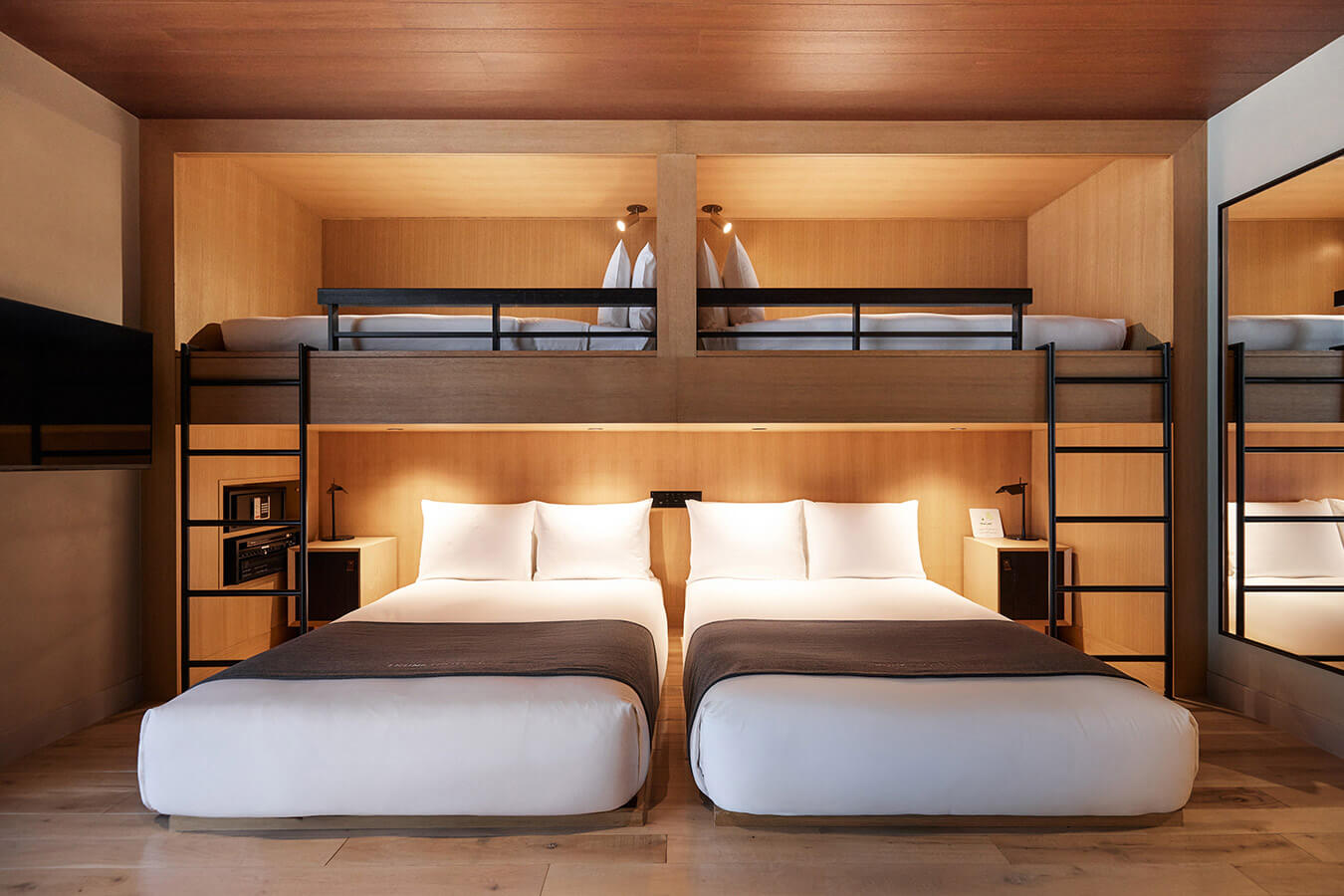
Tokyo's most design-forward luxury boutique hotel — on the famous Cat Street between Harajuku and Shibuya. Every room a considered aesthetic statement. The rooftop bar is one of Tokyo's best.

Senso-ji Temple, rickshaw drivers, yukata rental, craft shops, and street food — all on one walking circuit. The most photogenic neighbourhood for first-time visitors and the best budget option that still feels distinctly Tokyo. Families with young children love it because the streets are calm, the food is excellent, and the temple gives children something concrete to engage with.
What works
- Most traditional Tokyo atmosphere
- Best budget accommodation in the city
- Calm streets, family and child-friendly
- Excellent street food and local markets
- Direct Skytree access nearby
What to consider
- More train changes to reach Shinjuku / Shibuya
- Temple area crowded 10 AM–4 PM
- Limited luxury hotel options
- Quiet after dark compared to west-side areas

The standard for budget accommodation in Asakusa — clean, social, run by people who genuinely care. Private rooms available alongside dormitories. A favourite among solo Asian travelers.

Social budget option with lively atmosphere and central Asakusa location. Good common areas. Ideal for groups splitting the cost of a private room, or solo travelers who want to meet people.


Hoshino's urban concept brand — neighbourhood-immersive, with guided local tours included and genuinely thoughtful communal design. Excellent for families who want staff to help them discover Asakusa's quieter corners.

The "Strange Hotel" — staffed by robots at the front desk. Clean, efficient, and delightful for children. Don't come for luxury; come for the novelty factor and the location at reasonable rates.


A classic Asakusa landmark — upper floors offer views over Senso-ji, magical when the temple is lit at night. Good room sizes, reliable facilities, and a strong sense of place. A dependable choice for couples and families.

Ueno Park holds the Tokyo National Museum, National Museum of Nature and Science, Tokyo Zoo, Shinobazu Pond, and the city's most celebrated cherry blossom promenade — all within walking distance. The Ameyoko market runs nearby for cheap street food and shopping. Often overlooked by travelers who head straight to Shibuya, which is their loss.
What works
- Best museums and parks for families
- Strong budget accommodation cluster
- Walking distance to Asakusa (10 min)
- Ameyoko market for affordable food and shopping
- Direct Narita Express access (Ueno Station)
What to consider
- No true luxury hotel options
- Less stylish than Shibuya or Roppongi
- Ameyoko market can feel hectic


Hankyu's Remm brand is known for sleep quality — excellent mattresses, blackout curtains, and thoughtful sound insulation. Located between Ueno and Tokyo Station. Particularly good for travelers who prioritise rest.

Apartment rooms with full kitchens — the top pick for families with young children in the Ueno area. Walking distance to the zoo and museums. The kitchen is genuinely useful when traveling with children who have unpredictable meal timing.

Roppongi and the wider Minato ward is where Tokyo's luxury accommodation concentrates. The Mori Art Museum, Tokyo Midtown, National Art Center, and a dining scene that competes with Paris and New York are all here. If comfort, space, and service are your priorities, this is Tokyo at its best.
What works
- Best luxury hotels in Tokyo
- World-class art and fine dining immediately accessible
- Quieter and more refined than Shinjuku
- Tokyo Tower is walkable from some hotels
- Family suites and connecting rooms at major properties
What to consider
- No budget or mid-range options worth recommending
- Transport requires changes — not on the Yamanote Line
- Roppongi nightlife district can be noisy on weekends

Floors 45–53 of the Midtown Tower. The views are extraordinary. Service exceptional even by Ritz-Carlton standards. The spa and dining are destination experiences in themselves. Best honeymoon hotel in Tokyo.


Park Tower overlooks Shiba Park with Tokyo Tower directly in view — one of the best hotel views in the city at a more accessible price than the Ritz or Hyatt. Large rooms, a pool, family-friendly facilities.

Tokyo Station is where the Shinkansen lines meet — meaning if your trip continues to Kyoto, Osaka, or beyond, this is the most logical base. The neighbourhood (Marunouchi, Ginza, Nihonbashi) is calm, polished, and upscale. A different pace from Shinjuku or Shibuya. Hotels here tend toward luxury, but MIMARU makes it accessible for large families on mid-range budgets.
What works
- Best Shinkansen access in the city
- Central geographic location
- Refined, calm atmosphere
- MIMARU Station East — Tokyo's best large-group option
- Ginza luxury shopping immediately accessible
What to consider
- Expensive — few budget options
- Quieter nightlife than west-side areas
- Less immersive than Asakusa or Shibuya

Multi-bedroom apartments with full kitchens and washing machines, steps from Tokyo Station. The best large-family accommodation in Tokyo. Connecting units available for parties up to 8. Per-person cost is exceptional when shared.


Floors 33–38 of the Otemachi Tower. The smallest room is 76 sqm. Soaring ceilings, a forest-themed spa drawing on Japanese wellness traditions, and a level of service that resets your expectations. The best hotel in Tokyo.
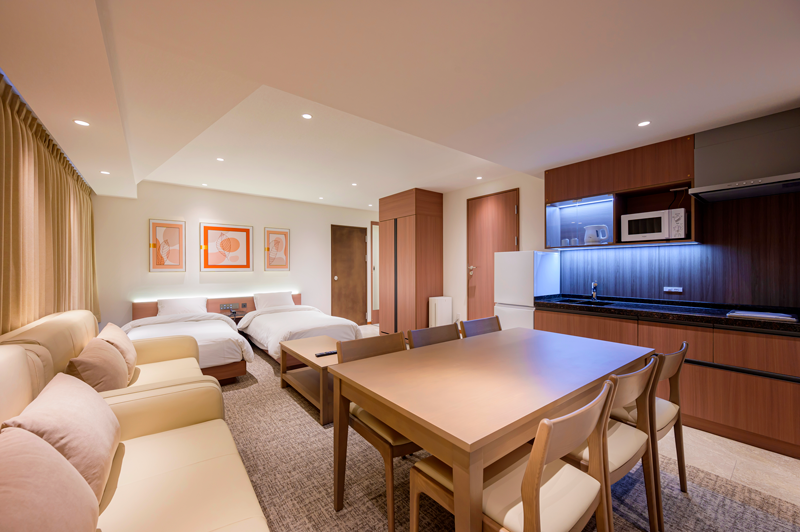
Purpose-designed for large groups — apartments sleeping up to 8, with multiple bedrooms, full kitchen, living and dining room. One of the very few Tokyo options genuinely built for extended families. Book well in advance.
FAQ
Shinjuku for transport convenience — it connects you to almost everywhere in Tokyo and all day-trip buses depart from here. Asakusa if you want the most traditional, photogenic Tokyo experience. Both are excellent first-timer choices for different reasons.
Asakusa or Ueno. Both have walkable streets and major child-friendly attractions within walking distance — Senso-ji Temple and Tokyo Zoo respectively. MIMARU Asakusa Station and MIMARU Ueno East are the top picks for apartment-style accommodation with kitchens and laundry.
Roppongi / Minato for the luxury experience — the Ritz-Carlton for views, Aman Tokyo for atmosphere and extraordinary space. Shibuya for a more design-led, culturally immersive romance. The Four Seasons Marunouchi near Tokyo Station is the most intimate option if you want a boutique feel.
MIMARU Tokyo Station East and Cocoyo Hotel Tokyo are purpose-built for large groups, with multi-bedroom apartments, full kitchens, and living rooms. Booking 4 standard hotel rooms at this group size is both more expensive and far less comfortable. See the dedicated large groups section above.
For families and groups, yes — consistently. The kitchens are genuinely functional (not just a kettle), the washing machines matter for trips of 7+ days, and the per-person cost shared across 4–6 people is very competitive with business hotels. I recommend them regularly as an interpreter.
Shinjuku has the best transport connections and all budget/mid/luxury tiers well represented. Asakusa offers more character and the most traditional Tokyo atmosphere. For cultural immersion, Asakusa edges it. For pure transport convenience and day-trip access, Shinjuku wins.
This post contains affiliate links (Trip.com & Agoda). If you book through these links, I may earn a small commission at no extra cost to you. All recommendations are based on genuine research. Thank you for supporting the blog.

0 comments