• Home
    • Travel Regions
      • Hokkaido
      • Tohoku
      • Osaka
      • Tokyo
      • Kyushu
      • Gifu
    • Reach Out
      • About Me
      • Contact Me
    • Tips & Guides
      • budgeting
      • Car Rental
      • Transportation
      • Muslim-friendly Guide
      • Coming Soon

Jin Travels Japan

Instagram Twitter Substack
Japanese Otera
Top of Risshakuji during summer

If you love Japanese temples and shrines and is looking for something that you'd love to keep (and unique to your own), consider temple stamps!

I would like to share something special in Tohoku that I don't think I have noticed much written in full details in English yet.

In Japanese temples, we can collect temple stamps called Goshuin. But if you are into something more interesting than just collecting Goshuins, consider this activity in Tohoku called Shiji Kairo!

They are like stamp rallies - you pay a visit to a certain list of temples, then you can pay and collect stamps. Of course, Shiji Kairo is not the only place that you can do this (you can do the 7-temple primilege in Onomichi too but I personally like to share about Shiji Kairo in Tohoku better, since I actually managed to finish a cycle before the new Reiwa Era.


So, what is this Shiji Kairo thing?

Shiji Kairo (四寺廻廊) is an activity where you pay a visit to the 4 important temples founded by Ennin (円仁) a.k.a. Jikaku Daishi (慈覺大師). What makes this popular is that, these locations were also visited by the late poet Matsuo Basho.

Basho-sensei has written poems that beautifully describes various places that he have visited that portrays the beauty of each place, in his work named "Oku no Hosomichi". You can find some pillars/ stone blocks that has his works on it in all four of these temples (and places nearby too).

What are the four temples? Where are they?

1) Chusonji in Hiraizumi, Iwate prefecture

Chusonji is listed as the national treasure of Japan. To go there, you can take a bus from Hiraizumi station and climb up a slope. You will find multiple temples here but for the stamp, you'll need to go to the main hall.

Chusonji is my third stop of Shiji Kairo in April.

Image may contain: sky and outdoor
Outside of Chusonji's entrance

The temple gives a relaxing vibe, and has a surprising amount of Taiwanese tourists. When I was there, I was able to enter the interior of temples and see their exhibition of the temple's history, and some artworks by a local artist.

What makes this place nice is also the slope. It has nice rows of trees and is very eye-pleasing. Though the slopes might not be so suitable for those with weak legs. There are benches along the way if you need some rest, though!

Image may contain: tree, sky, plant, outdoor and nature
The slope up to Chusonji

Also Chusonji has this hall called Konjikido. It's a hall decorated in gold foils, and is one of the three temples that are heavily decorated with gold foils in Japan. The other two are Kinkakuji of Kyoto, and Taiyuin of Nikko. It is so beautifully decorated with a lot of beautiful details in it using colorful shells and golden leaf. If you leave Konjikido there is also a small hut that shows how the decorations are made (in Japanese) as well.

2) Motsuji in Hiraizumi, Iwate prefecture

Motsuji is also part of the heritage sites in Hiraizumi of Iwate prefecture. It was actually my second stop for this round of Shiji kairo. The temple's main prayer hall is below:

Image may contain: sky and outdoor

But for the stamp, the counter is very close to the entrance.

What Motsuji offers, is their beautiful garden with pond.

Image may contain: tree, sky, cloud, outdoor, nature and water
The pond of Motsuji

If you visit during summer you get to see patches of iris flowers as well! The iris flowers are donated by Meiji Jingu. But if you visit during spring, there are some sakura trees that are beautiful outside (there's one inside too).

Image may contain: tree, plant, outdoor and nature
Sakura tree outside Motsuji's entrance

Going to Motsuji was an easy 15-minute or so walk from Hiraizumi Station. I visited this place early morning so the streets were fairly quiet, but there are some little shops that you can drop by with friendly obasans!

3) Yamadera Risshakuji in Yamagata prefecture

Image may contain: tree, sky, house, outdoor and nature
Yamadera Risshakuji Temple (not the hiking place yet)

Risshakuji has its main temple that is only a short walk (in 10 mins) from Yamadera station. If you are up to hiking, you can consider hiking the mountain that actually it's just a couple of flights of stairs totaling up to about 1000 steps (you can rest midway, there are observatory spots that are great too! You can hike with a small fee of 300 yen. This place is my final stop of my Shiji Kairo.

Before hiking you can also buy konjac with mustard. It has became my favorite local snack. I'd eat them again and again! It's a healthy snack and it was also said to give you a lot of energy (well I didn't really feel as tired as I thought I would be since I ran out of breath climbing Batu Caves with only 272 steps). It took me less than 2 hours to return back to the train station.

Image may contain: food and outdoor
If I remembered them correctly they were 100 JPY per stick

The stamp collection doesn't require you to hike, by the way! But the view is amazing!

Image may contain: mountain, sky, tree, house, plant, outdoor and nature
Almost arriving the top of Yamadera

A local lady from Sendai told me that she frequently visited Yamadera, and the time I visited in April was perfect because there are both sakura and also the snow-capped mountains in the same view! (I hiked on 23 April 2019).

4) Zuiganji in Matsushima, Miyagi prefecture

This was my first stop of Shiji kairo in April 2019. Coming here with the intent to pray as well as to take some good shots of graduation photos, I've decided to visit Matsushima.

You can buy the entrance ticket via a machine to Zuiganji. Then, you can let the staff know that you wanted a Shiji Kairo stamp. You'll be most likely to leave your book there (if this isn't your first stop) and get a waiting number. The staff will let you to visit the insides of the hall before coming back for your stamped book.

Image may contain: outdoor
Waiting number

Zuiganji gives a strong impression where it offers a museum where you can understand the history of the temple as well as the treasures, how this place is made and what it is made of. They have some nice plum blossoms in the temple as well.

Image may contain: tree, sky, plant, outdoor and nature
Before entering the halls of Zuiganji

Inside Zuiganji halls, photography is not allowed in most regions. There are more artefacts and I can't help to gasp along the way. "No wonder it is the most famous zen temple in Tohoku!" was what went through my mind. I could spend hours in this temple.

Image may contain: sky and outdoor
Temple monks outside the Kuri (Zen Kitchen)

I also think that Date Masamune has lived an honorable life (despite losing an eye) when he restored this place as his family temple with the decors inside.

There are also cedar trees (though many were damaged in the 2011 tsunami). There are also statues and caves.

Image may contain: tree, sky, outdoor and nature
Rows of cedar tree

Behind the cedar trees the caves were also said to be used for meditation. Now it's just full of statues.
Image may contain: tree, outdoor and nature
Meditation Caves and Statues
Image may contain: tree, sky, plant, outdoor and nature
Sakura in full bloom

This place is also an easy 10 minute walk from Matsushimakaigan station, which is less than an hour from Sendai station. You can try the zunda-flavored items here. Also, Matsushima is famous for their oysters!

What's so nice about this activity?

What is great about shiji kairo is that, in each temple you can get a stamp, and after collecting a stamp (goshuin) from each temple (order doesn't matter), you can get a shikishi from the last temple you visited! There are four different versions, so some people visit four times of different orders to get all four types of shikishi.

Below is one of the shikishi I've collected:

No photo description available.
Shikishi from Yamadera Risshakuji

Of course, collecting is not the only thing that is great about it.

How do you start with shiji kairo?

First, you get a book for stamps from the first temple of visit. You will need to tell them that you are doing the Shiji kairo. There will be a goshuin book with your first stamp totaling of 1000 yen. Each stamp will be 300 yen. Now you have your stamp and you can begin your collection!

Your book looks like this:

No photo description available.
Cover for Shiji Kairo book


Things to take note of 

1. Do not make it a place as a touch-and-go place and keep your manners. It is a form of courtesy to visit with a heart that seeks to pay respect. It would be more polite if you can bring juzu (beads) and/or wagesa (a robe). These items are Buddhist accessories, but it is not necessary to bring/wear them for your visits.

2. The Shiji Kairo book is not usable for other goshuins. Because it'll look like this and is fully occupied when four temples are done.

No photo description available.
Completed Shiji Kairo Book


3. Many of these places have a no-camera restriction, please make sure not to take photos/ videos of the camera-prohibited areas.

4. Please wear appropriately to a temple.


Tips for tourists (short term visitors, non-Japanese passport holder)

If you are a foreign tourist, you can consider to purchase your JR East (Tohoku Area) pass or JR Pass (Nationwide) to reach these regions. The regions in Tohoku are beautiful so you can definitely stay a couple of nights in each place!

I've written a post about this JR Pass that you can consider reading too! If you need more references about the activity you can check the links that I'll put in the next segment.

Until next time!


Other references

For those who want to learn more, I have attached some links below. Hope the above helps!
1) Shiji Kairo (Japanese): https://www.shijikairou.com/index.cgi?cid=1
2) 5-day itinerary for Shiji Kairo (English): https://travel.navitime.com/…/jp/model-p…/detail/ntjplan166/
3) Oku no Hosomichi by Matsuo-sensei: https://en.wikipedia.org/wiki/Oku_no_Hosomichi

Share
Tweet
Pin
Share
No comments
Shinhotaka Ropeway in Autumn

Hello everyone! In my previous post I've mentioned six things to do in Gifu! There are much more that we can do besides visiting Shirakawa-go, the famous UNESCO world heritage!

Let's continue exploring on things we could do in Gifu! (^O^)/


Click here to go to Part 1.
Click here to go to Part 3.

7. Riding the Shinhotaka Ropeway

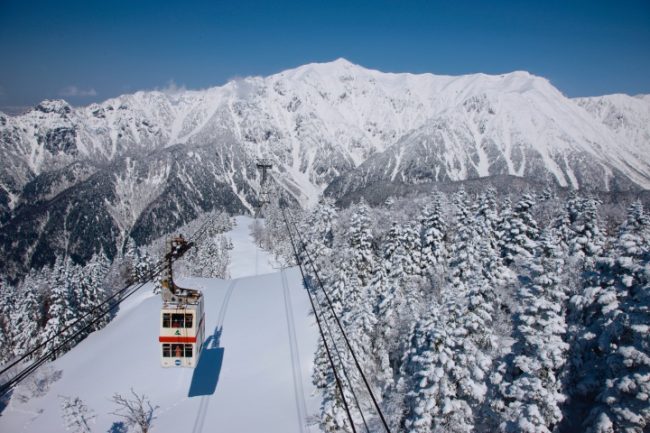
Shinhotaka Ropeway in Winter
If you wondered what makes this ropeway so famous, it's because Shinhotaka ropeway is the one and only (yes, one AND only!) two-tiered gondola! 

Boarding the ropeway gives you a panoramic view of the alps in northern Japan from the observation deck that stands at an high altitude of 2,156m.

Additionally, this ropeway is actually comprised out of two ropeways. First was a short 200m climb to Nabedaira Kogen (En: Nabedaira Highlands) from the bus stop. Alternatively you can also drive up to Nabedaira Kogen (but there's no bus service to this highland). After the first ropeway, you will find public bath, little shops (including restaurants) and galleries, and of course, the visitors' centre. You'll also see some hiking trails and the starting point of double decker ropeway of Shinhotaka ropeway. 

The double decker goes up to the upper station that has an observation deck as well as restaurants and souvenir shops. Hiking season are usually during summer (generally June~Sept). Here is where hikers hike into further points of the mountains. You can actually descend to Kamikochi or even climb further to Nishi-Hotakadate, but proper hiking equipment and preparation is necessary. 

For this ropeway, I personally recommended to visit during autumn and winter for the best views! You also get to see a lot of greens during summer but I personally just prefer autumn and winter. Round-trip will be 2,900 JPY or 1,600 JPY one way from the bottom bus stop, and 100 yen cheaper if you're going from Nabedaira Kogen. 


8. Relaxing in Okuhida Hot Spring Villages

Shinzansou Onsen

Besides Gero that you always see on JR Takayama Hokuriku Tourist Area Pass that has lots of hot spring, Okuhida has a region that has abundant natural hot spring, you could say that they have the highest number of hot air baths in Japan!

Whether you fancy staying overnight, or going there as a day trip, this place would satisfy you as this onsen village comprises of five onsens located in central Japan! Imagine surrounding yourself amongst the alps throughout different seasons as you relax your body and mind here, it's absolutely healing!

It's not too far from Takayama, and you can easily book an express bus (approx. an hour on road) at less than 1,600 JPY. Then you can take a loop bus around to your preferred hot spring. 

Also, you get to see the Hirayu waterfalls in Hirayu Onsen, or ski facility nearby during winter; or if you like beef, please visit Fukuchi Onsen for their morning market specialties - especially Hida beef! 

Matcha Japan has a good write-up of this region that I suggest checking it out here.


9. Experiencing Hot Spring in Gero 

Yumeguri Tegata - A pass that allows you to enjoy onsens!

If you happen to feel like staying in a ryokan (Japanese inn) and wish to get to the city easily, perhaps Gero would be a good place to go too! Being said as one of the top three onsens, if you are staying overnight in Gero, you can definitely consider to also use the inn's shuttle services between Nagoya and Gero Onsen too! 

It was also said that the waters of Gero onsen are so luxurious as they work wonders on the skin! Also, there's a riverbed that features a free-of-charge natural outdoor bath! 

One unique part about Gero is that, you can also spend 1,300 JPY to purchase a wooden pass called Yumeguri Tegata. This pass allows you to enjoy three onsens among 30 participating ryokans! You can use this pass for any three facilities within 6 months and also keep it as a souvenir. 

The list of places that you can use Yumeguri Tegata is here (Japanese only).

10. Checking Out Old Streets of Mino

A shop in the streets of Mino

In my previous post I've vaguely mentioned about how much traditions have been preserved in Gifu prefecture. If you walk around the old streets of Mino, you will see that the Edo-esque feels are still well-retained! There is also the Mino Washi "Akari" Art Exhibition of Japanese paper sculptures that will be held annually during October.

The artworks will be on display are contributed from all over Japan, and will also be illuminated in the streets that gives Mino a dreamy atmosphere.

11. Knowing and Making Mino Washi Paper (Japanese Paper)

Image result for Mino gifu
Illuminated Mino Washi

Though not foreigner-friendly as there is a huge lack of foreign language information, in Mino-Washi Museum, you can check out the history of Mino Washi paper that has been telling stories for at least 1,300 years. You can definitely spend from 500~3,000 on courses to make Mino-Washi paper. There are different courses from making the paper, wetting the paper, making lanterns, making postcards/ certificates, and there are also Mino-washi pro routine courses that lets you experience being a pro washi maker for 1 hour, or for a full day! So far the courses are conducted in Japanese only.

Even if you aren't there to make washi, you can definitely visit their exhibitions! It has a long history since the past. Entrance fee is 500 JPY per adult. You can also purchase a 3-entry ticket to Mino-Washi museum, Akari Art Museum, and to the Former Imai's Residence. 

Access: 20 minutes by car from Mino Station.


12. Learning the Swordsmithing History from Seki Traditional Swordsmith Museum


Seki Traditional Swordsmith Museum写真
Sword-making 
Fan of swords? Then you must come to this place!

Remember from my previous post mentioning that wood is in high demands for smithing? This is why!

Along with Germany's Solingen and England's Sheffield, the city of Seki is one of the most well-known and highly regarded blade-producing areas in the world! Blades have been produced in Seki for over 700 years.

Here you can check the documentations and videos to public. You can even see sword forging in January 2, in the ceremony that marks the first forge of the year! You get to see the high quality products including kitchen knives, scissors, nail clippers, katana swords, etc. that are famous overseas too.

For English information, visit here.


13. Gujo Odori Dance Festival

Gujo Odori
Gujo Odori
Odori means dance in Japanese language. The Gujo Odori is considered as one of the three most famous folk dances in Japan. They dance all night from Aug 13-16 (actually for longer periods from mid-July till early September but Aug 13-16 is where it peaks), called Tetsuya Odori (Literally means "Overnight dance"). People from all around Japan would gather together to dance all night!

If you're joining, you can wear a yukata and geta (wooden clogs), and dance in the circles! Don't forget to go to Gujo Hachiman, the city of crystal clear waters! You can stroll through the historical town there too.

14. Making Life-like Food Replicas

Gujo Hachiman Replica Food
If you've walked past a traditional sushi or Japanese restaurant, you might realize that there are a lot of life-like food replica! You can actually make wax-based food replicas such as tempura, lettuce, etc.

Gujo is the city of these replicas and the replicas from Gujo are sold all over Japan. Amazing, isn't it? You can pay a small fee to experience making a replica in the city too! It doesn't require a lot of time either, so I'd say that you should try it!


I'll stop my list until here for today, but in my next post I'll write more! Such as:
  • Hill of Humanity Park and Chiune Sugihara Memorial Hall
  • Mt. Kinka and Gifu Castle
  • Nagara RIver Cormorant Fishing
  • Ogaki Festival... and more!!

Until next time!


Part 3 here!
Share
Tweet
Pin
Share
No comments
Hida Furukawa Koi
Hida Furukawa Koi
Hey there everyone! Today, I think Shirakawa-go has became very famous as a UNESCO world heritage spot as more and more are getting to know about JR Central's Takayama-Hokuriku Area Tourist Pass.

If you didn't know about Shirakawa-go, it's a place that looks absolutely magical during winter. See below! (Part 2 of the list is here; Part 3 is here!)

Shirakawago Winter
Snow-capped Gassho Houses in Shirakawa-go during Winter

Of course, Shirakawa-go in Gifu prefecture is not the only place you should visit! Here are some of the places that I recommend visiting in the Gifu Prefecture.

So, where is Gifu? What does it offer?

Map of Gifu

Gifu is in the central part of Japan, and is accessible via trains from Osaka/ Nagoya/ Toyama. Due to the central location, you could call it the heartland of Japan.

This prefecture has contributed a significant effort to when it comes to preserving their unique traditional cultures among the Japanese Alps and pristine rivers. Here, you can enjoy a variety of outdoor activities in each distinct season, as well as the traditional architectures, crafts and festivals. 

Generally, Gifu is divided into two parts: Northern Gifu (Hida Area) and Southern Gifu (Mino Area).

Image result for Gifu north and south
Northern and Southern Gifu (Map from Matcha)

Some Places/Things you can visit and do Northern Gifu are:
  • Shirakawa-go, the UNESCO World Heritage Site
  • Shinhotaka Ropeway and Onsen (Takayama City)
  • Cycling in Hida City
  • Checking out the old quarters of Hida Takayama
  • Seeing Hida Shunkei Lacquerware
  • Soaking in Hot Springs of Gero

Some Places/Things you can visit and do Southern Gifu are:
  • Skiing in Gujo Ski Resort (Winter)
  • Participate in Guji Odori Dance Festival (Summer)
  • Experiencing Japanese Papermaking (Mino Washi Paper)
  • Seeing Seki Swords
  • Checking out Ukai (Cormorant Fishing)
  • Buying a Masu (Wooden Measures/ Sake Cup)
  • Checking out the Edo Period architectures in Magome-juku
  • Checking out the Mino Yaki ceramic ware

Are you interested to know more about this area? Since so many are writing about Shirakawa-go and its winter light up, I'm not writing about it because my main focus is on other places that also deserve love from travelers. There'll also be 2~3 parts because it's quite a list! 

1. Takayama Jinya

Takayama Jinya
Takayama Jinya in Northern Gifu

This place acts as a former governmental office during the Edo Period. This history in this place starts from the vast timber resources available back in the period, that has placed Takayama under Tokugawa Shogunate's control. It was a resource that is important for smithing (remember Seki swords?) for charcoals, as well as to build houses and ships. 

Now, the building is currently open as a museum to public visitors, that includes nice tatami, beautifully drawn walls, zen art, and bunnies in the architecture.

Walking into the building you'll notice that the wave motif is frequently used on wall paintings, and also used as zen art on the outside (see image above). 

One thing you will also notice is the different types of tatami: you will see patches of tatami that are of different color and start to think if they are made half-assed. The answer's "no" - Edo period is also a period where social ranking has became a huge matter - higher rank? Nicer tatami for you. The more green the tatami is, the higher social ranking the person was.

There are more points about this place that if you have the chance, it's highly recommended to hire a local guide! Japanese local guide here (Japanese only).


2. Takayama Festival

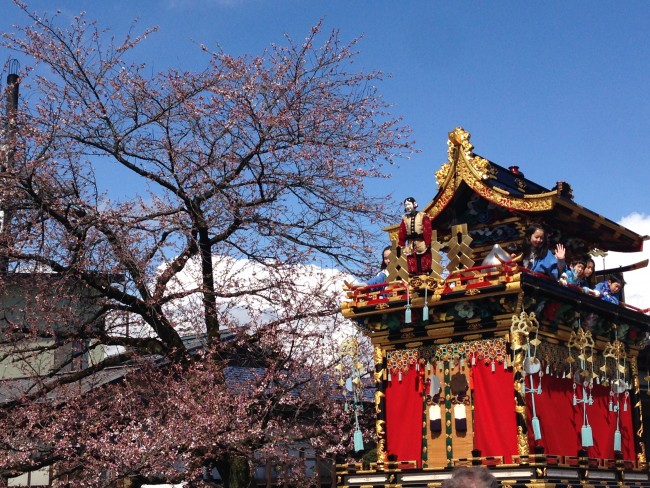
Takayama Spring Festival (Sanno Matsuri)
The Takayama Festival is held in April and October on a yearly basis, and is said to be among the top 3 most beautiful Japanese festivals! This is also designated as an Intangible Cultural Heritage by UNESCO in 2016. 

The reason why this festival is said to be one of the most beautiful festivals is that, you will see a lot of the extravagant workmanship of the traditional floats up close! 

The Spring Festival, or called Sanno Matsuri, is held on April 14 and 15 yearly. It is a way to celebrate the coming of spring. The floats will parade around the Kamimachi area, on the south of Yasugawa Street. 

Besides parade, there will also be the floats display. Generally they are from 9 in the morning until about 4.30PM. Three out of the floats (Sanbaso, Ryujin-tai and Shakkyo-tai) also has marionette performance! The marionettes moves in a very lively manner that you might think it's a live person and only performs twice a day for two days!

The night parade is also held on the first night. At night, you get to see lanterns, and the parade is done throughout the city slowly. Though if it starts to rain, the festival will be cancelled. 

For the Autumn Festival, or called Hachiman Matsuri, is held on 9 or 10 of October yearly. This festival is a celebration of good harvest for autumn, and there will also be floats,  marionette shows, and night parade!


3. Cycling and Learn the Local Lifestyles

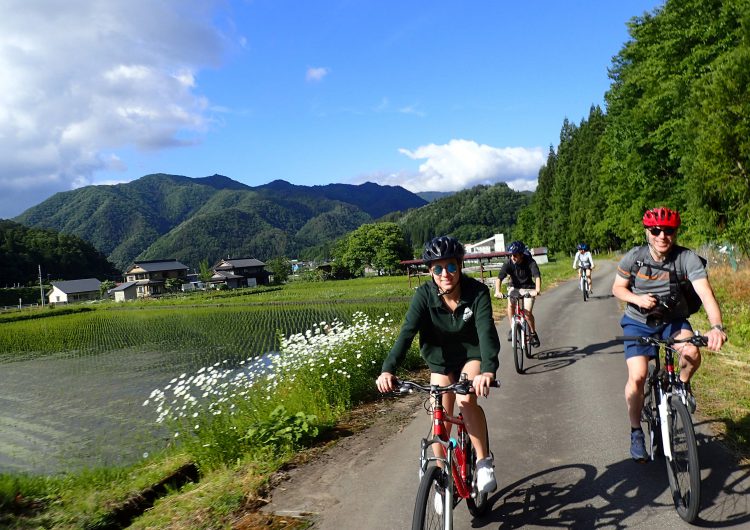
Hida Satoyama Cycling
If you have all the stamina and would love to look further than just tourist areas, how about considering tours offered from Satoyama Experience (not sponsored at all)? 

Participating the Hida Satoyama Cycling tour will allow you to experience the inaka (countryside). You can also get an English-speaking guide that tells you a lot of the geography and history, and things observed in this area. The course of cycling is relatively easy and you get to talk to locals! 

4. Furukawa Festival

Furukawa Festival
Furukawa Matsuri (c)飛騨市

The Furukawa Festival announces the arrival of spring to the Hida region, and is one of the three largest Japanese festival of its kind. Participating this festival makes you feel the energy and the liveliness of the city, as you will see a crowd of bare-chested men parades as they play the large taiko drums (imagine the arcade machine drum Taiko no Tatsujin, but WAY bigger). 

Also designated as an Intangible Cultural Heritage by UNESCO in 2016, it is annually held on April 19 and 20. It's a pretty unique festival, but since the group of men would shove around in order to hit the main taiko, it is also advised to view from a safe distance. 

5. Getting a piece of the Artisan Woodcrafts 

Yagi woofcraft in Gifu
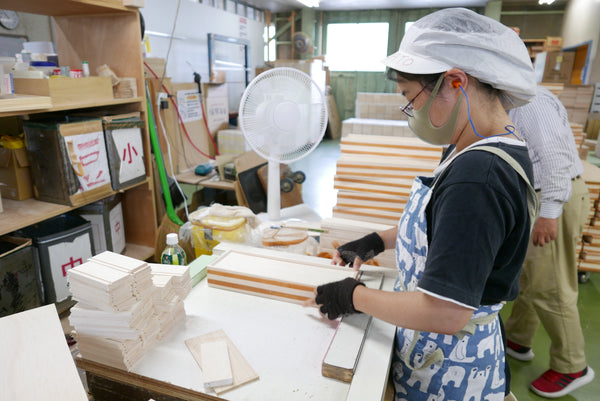
Production of Yagi 

Yagi is not just made for measuring cups, but also various other items such as boxes, little souvenirs, storage, and also for sake cups (yes, square sake cups)!

You can consider purchasing one as a souvenir! (You can read this catalog to have an idea on what can be done with wood). There are companies making this in Gifu, and since this region is also a place where wood holds a great significance, I can't think of a better souvenir besides this (omamori from shrines aside).

6. Shopping in Toki Premium Outlets

Toki Premium Outlet
Toki Premium Outlet

Worrying about losing your shopping spree if you spend more time in Gifu? Fret not! There's a premium outlet in Gifu prefecture itself, just 30 minutes from Tajimi Station by bus (access information here)!

Toki Premium Outlet is an area designed to look like Colorado of USA. If you're going there as a tourist, you get coupons that can save you heaps of yen!

Various brands such as Adidas, Birkenstock, Clarks, Disney Store, Edwin, Fossil, G-shock, Kate Spade... until Zwilling J.A. Henckles, you could almost say that they have stores from A to Z!


For more information, you can check their official site here.


As stamina depletes I'll be writing more on other days!


Here are some other things I'll be writing in the next post about Gifu:

7. Experiencing Shinhotaka Ropeway
8. Relaxing in Okuhida Hot Spring Villages
9. Experiencing Hot Spring in Gero... and more!


Gonna get some good rest. Until next time!

Update: Part 2 is here!
             Part 3 is here!
Share
Tweet
Pin
Share
No comments
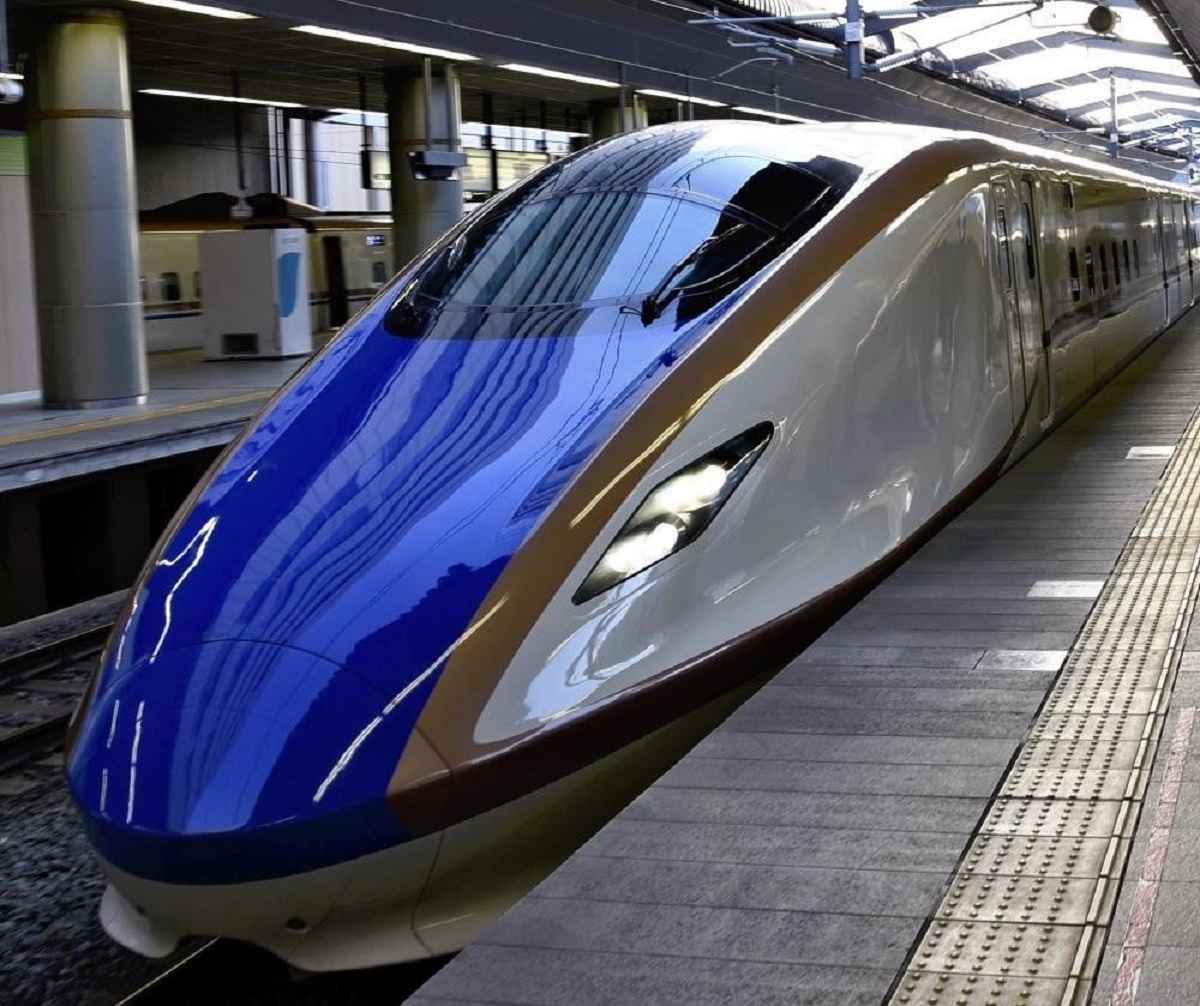
Shinkansen Hayabusa (Tohoku Shinkansen) and Komachi (Akita Shinkansen) meets!

For many visitors to Japan, we would definitely love to try to board a Shinkansen, right? 

But how do we know if we should just buy a single shinkansen ticket, or should we purchase a JR Pass?

If you didn't know what a JR Pass is, it's basically the most economic and time-saving pass that you can use in long distance travel in Japan! You use the shinkansen (bullet train) under Japan Railway (JR) unlimitedly within the pass validity period.

But there are so many types! 

So, if we are getting a JR Pass, what kind of JR Pass should we choose? The standard Nationwide Japan Rail Pass, or should we get regional passes, such as JR East Tohoku Area Pass, Kansai Hiroshima Pass, or something else?

Previously I've written about the different types of JR Passes, and today, I'll write a tutorial to walk you through the decisions!


How do I know if I  should buy a JR Pass?

The decision can be a little overwhelming with a lot of information online, so I'm here to help!

First we need to know the prices of JR pass, and also our itinerary in Japan - where do we plan to go, how long do we want to spend in each region, etc. 


Prices of Japan Rail (JR) Passes - and what they are 

I've listed of the different types of JR Passes, making a brief explanation of what they are, and their prices (as of 9 June 2019) previously (click here if you needed the list) in case if you needed an idea on how much they would cost. 

Note that child price is valid for those who are age of 6-11. Anyone age of 12 and above will be requiring an adult fare. Your age is determined by date of birth. 

Example, if your 12th birthday is 20 September but you are traveling in 20 April, you can purchase a child JR Pass since you'll be considered as 11 years old.


Calculating the need of a JR Pass

Assuming you've known the prices of JR Pass, it's time to calculate whether a JR Pass would be worth it.

Generally, I recommend using Hyperdia for your route information. This website shows the route information of the trains in Japan and is pretty easy to read.

The answer of how to know if you need a JR Pass (or any other pass in general) is just a simple formula:

The cost of your journey within the pass' time limits > Cost of the pass itself

Yes, it's THIS simple! As long as the total amount of your journey exceeds the pass cost in JPY, it's a huge YES for getting a pass!


Getting to know how to use Hyperdia - Case Study 1

Hyperdia is a fairly easy, yet a little overwhelming to navigate for first-time users. 

"How do I know which station I would need to board from?" is a very common question and here is when Google helps!

Let's take an example of the following case:
  • Landing in Narita Airport (starting journey in Tokyo) on 1 August 2019
  • Returning from Narita Airport (journey ends in Tokyo) on 7 August 2019
  • All hotels booked in Tokyo are nearby Tokyo Station.
  • On 3rd of Aug, wants to visit Osaka for 2 days.
  • On 5th of Aug, will return to Tokyo, will spend most of the time in the city
  • On 7th of Aug, return to Narita Airport. 

1. From the above case we know that the furthest part of the journey is Tokyo-Osaka, so we can find the price for shinkansen (bullet train) on hyperdia.

2. If you don't know the station names, look for the Shinkansen station in Osaka on a search engine (Google/ Yahoo, etc.). You'll get 'Shin-Osaka' as an answer. 

3. Consider the type of pass you plan to use. For this case scenario, they can have two options: JR Pass Nationwide (29,110 JPY), or Hokuriku Arch Pass (24,000 JPY). 

4. Visit hyperdia.com to start searching for the route, you should see the following site on PC. If you're an iOS user, you can find their app in the AppStore.


website of hyperdia.com


For the mobile version, you can see the search bar. A little different from PC in terms of layout, but the usage is the same.

5. Enter 'TOKYO' at the 'From' part and 'SHIN-OSAKA' at the 'To' part. You can define the date and time if you want to check the timing of the traveling date itself.

Select 'TOKYO' from the drop down list.

Do remember to select from Hyperdia's list so you won't see error messages.

Search conditions entered in Hyperdia

6. Here's the tricky part: If you've decided that you don't mind a transit and will be using a Hokuriku Arch Pass, you will need to have a little step: Going via Kanazawa station. Here you will need to click on 'More options' to see the following additional search options:

Hokuriku Shinkansen

You'll be able to find expanded options by default. This part is also helpful for JR Nationwide users, as you cannot board on a Nozomi train too.

For Hokuriku Arch Pass users, enter 'KANAZAWA' in 'via 1'. For JR Nationwide users, you will not need to enter anything in the 'via' segments.

However, you will need to make sure to adjust the trains that you wish to ride as follows (for JR users):

Additional search options

Why the above options?
  1. We are trying our best not to use any railways besides JR. 
  2. We can't board Nozomi/ Mizuho on JR Nationwide. 
  3. We're trying to reduce the walking (if you're ok with it you can keep the check for walk)
  4. Sleeper Limited Express/ Express isn't something that we are quite looking at since we want to focus on Shinkansens this time.

When all is good, hit the Search button! You should get this result for going pass Kanazawa, and this result for a direct travel.

Tokyo to Shin-Osaka via Kanazawa (suitable for Hokuriku Arch Pass users)


Tokyo to Shin-Osaka, direct train via Nozomi Shinkansen (suitable for JR Pass Nationwide users) 
If you forgot the additional options, you can scroll to the bottom to search again when the results are out.


On the above screens you would have noticed that the details:
  1. Total fare for reserved seats (you can change the seat fee to unreserved/ green in under 'Seat Fee'). 
  2. Number of transfers required
  3. Departure (blue) and Arrival time (pink)
  4. Time required for travel
  5. Transfer spots (yellow Tra.)
  6. If transfers are required: Arrival and Departure tracks 

7. Knowing the price above, we shall start calculating. Following the case scenario, we are doing a round trip between Tokyo and Shin-Osaka, we can multiply the fares (on reserved seats):

If going via Kanazawa using Hokuriku Arch Pass: 21,770 JPY x 2 = 43,540 JPY > Hokuriku Arch Pass' 24,000 JPY. Hence, worth buying. 

If going via JR Pass Nationwide of 29,110 JPY: 14,340 JPY x 2 = 28,680 JPY < JR Pass Nationwide. > Not entirely worth buying? Read more!

8. So with the calculation we can conclude that we know that Hokuriku Arch Pass is definitely worth it for a round trip (although more time-consuming). But for JR Pass Nationwide, we save time if it's a direct trip! 

9. Additionally, both of these passes can be used for 7 days, and this trip is only for 2 out of 7 days, so we can calculate other fares that can be covered in these two JR Passes, and the most important: Narita Express!

Knowing that we are staying nearby Tokyo Station and will be heading to and from Narita Airport, and JR Pass is valid for the transfer, we can use Narita Express! 


Narita Express


A round trip to and from Narita Airport to Tokyo would be 3,220 JPY x 2 = 6,440 JPY.


Adding it onto the amount we will be using for HIKARI, it'll be a total of 35,120 JPY > more than JR Nationwide's pass value of 29,000 JPY! 

Hence, without calculating for the usage of JR trains on other days, both JR Pass Nationwide and Hokuriku Arch Pass is worth buying!

10. So now we know that both are worth buying, the decision-making to choose between two passes are just:
  1. Your traveling budget (let's be real: with about 5000 JPY extra we can eat a very much decent meal in a Japanese sushiya!);
  2. Your willingness to spend more time on the road (people say: time is gold and we have limited time in Japan!);
  3. If you are not going to visit other areas outside of the valid areas in Hokuriku Arch Pass (How sure are you that you will visit X area only? Will you go to Okayama? Hiroshima? Nagoya? etc.).
  4. Do you want to consider domestic flights in Japan too? (but hey, more time spent to go to airports and check-in luggages, and less on-the-road views)

How I decide for this case scenario: I'd personally choose JR Nationwide if I'm not heading to the Hokuriku areas, but if I am stopping by the Hokuriku areas (Kanazawa, Toyama, etc.) without straying out from the valid regions, I'll pick Hokuriku Arch Pass! 


Case Study 2: Open Jaw Flights


Let's take another example:
  • Landing in Narita Airport (starting journey in Tokyo) on 1 August 2019
  • Returning from Kansai International Airport (journey ends in Tokyo) on 8 August 2019
  • On 1 Aug, hotel is booked near Tokyo Station
  • On 2nd of Aug, will travel to Sendai
  • On 4th of Aug, travel from Sendai to Ichinoseki
  • On 6th of Aug, return to Tokyo
  • On 8th of Aug, depart to Narita Airport

For this case, we have known that this journey is a journey up to Tohoku region only, so there .

So, one-way journey (direct) via Hikari is about 14k JPY, less than half of a JR Pass. 

At this case, it's better to buy a one-way ticket rather than a JR Pass (overnight buses, if that also interests you, check willer out!), especially when you are not visiting anywhere other than Tokyo and Osaka. 


What if I have an open jaw flight like above, but will also visit other regions?

I definitely have heard from different people wanting to visit other regions of Japan.
Hiroshima is a good day trip from Osaka, and some people even do day trips to Sendai!

As usual, we can see where we want to do day trips/ overnight at. 

Case Study 2.1: Day trip from Osaka to Hiroshima


One way fare between Shin-Osaka & Hiroshima: 
  • 10,430 JPY via Sakura, Kodama; Round trip: 20,860 JPY. 
  • 10,640 JPY via Nozomi (Round trip: 21,280 JPY).

Adding this onto one way fare of Hikari, definitely you should consider JR Pass Nationwide (7 days)! Do remember that JR Nationwide doesn't allow travels on Nozomi! 

Another way that I might do if I am going to Hiroshima: Getting 1-way ticket from Tokyo-Osaka, then another Kansai Hiroshima Area Pass (5 days, 13,500 JPY). The price is actually slightly cheaper but I wouldn't be able to go other places outside the Kansai-Hiroshima regional pass. I can also board Nozomi between Shin-Osaka and Hiroshima if I do this too!


Case Study 2.2: Day trip from Osaka to Okayama


One way fare between Shin-Osaka to Okayama: 
  • Via Nozomi: 6,430 JPY (Round trip: 12,860 JPY).
  • Via Kodama, Sakura: 6,220 JPY (Round trip: 12,440 JPY).

If you're heading to Okayama and even to Kurashiki, adding onto the one way fare from Tokyo to Shin-Osaka, JR Pass Nationwide is not worth it.

At this case, I will recommend you to consider the JR Kansai WIDE Area Pass at only 9,000 JPY + Nozomi access between Shin-Osaka to Okayama!  


Case Study 2.3: Day trip from Tokyo to Karuizawa, Gala Yuzawa


One way from Tokyo to Karuizawa: 6,110 JPY (round trip: 12,220 JPY)

One way from Tokyo to Gala Yuzawa (Echigo-Yuzawa Station): 6,870 JPY (round trip: 13,740 JPY)


Decision maker: IF you are going to both places within 3 consecutive days, you can consider getting one-way ticket from Tokyo - Shin-Osaka and another Tokyo Wide Pass (10,000 JPY) as it the total of both would still be lower than a JR Pass Nationwide (7 days).

Otherwise, you can consider the JR Nationwide Pass, because Tokyo Wide Pass works for 3 consecutive days only!


Case study 3: Regional Travel

Let's take another example:
  • Landing in Narita Airport (starting journey in Tokyo) on 1 August 2019
  • Returning from Narita/Haneda Airport (journey ends in Tokyo) on 8 August 2019
  • On 2 Aug, visit Sendai from Tokyo, staying 1 night.
  • On 3 Aug, visit Ichinoseki (Iwate) from Sendai, staying 3 nights.
  • On 7 Aug, return to Tokyo from Ichinoseki.
  • Hotels in Tokyo are booked near Shinjuku Station.
  • Hotels in Tohoku are booked near JR Stations.

Since we know that this will be a journey up to the Tohoku region, it is not necessary to use a JR Nationwide pass.


Why? Because there's a JR East Tohoku Regional pass. (Read here if you want). Plus, with the itinerary as above case scenario, we can utilize the flexible days offered by the pass!

In my previous post I've mentioned about JR East Pass offering 5 days among 14 days of travel. So what we can do is:

1 Aug: Exchange JR East Pass, book Narita Express to Shinjuku Station
2 Aug: Use JR Line to Ueno/ Tokyo Station, board the Tohoku Shinkansen to Sendai
3 Aug: Use Tohoku Shinkansen to Ichinoseki Station 
4 Aug-6 Aug: Not using the JR East Pass (consider a SUICA/ PASMO card, or regional bus passes.
7 Aug: Using JR East Pass to return to Tokyo via Tohoku Shinkansen
8 Aug: Using JR East Pass to return to Narita Airport via Narita Express


Why did I not suggest using the Tohoku Area Pass in Iwate?
  1. There are many local bus passes available: Hiraizumi 1 day bus pass, Morioka 1 day bus pass... etc.
  2. One way fare via train from Ichinoseki-Hiraizumi is only 200 JPY (round trip 400 JPY).
  3. One way fare via local line from Ichinoseki-Morioka is 1,660 JPY, 3,820 JPY via shinkansen Yamabiko's reserved seat, 3,920 JPY via Komachi (reserved seat) - JR East Pass is 19,000 JPY so it's still cheaper to buy tickets separately than using a JR Pass Nationwide 

Even if a little twist that we might be spending more time in Tokyo itself, there's also Tokyo Subway Ticket that is quite economic and not too pricey! Sometimes I didn't even feel bothered to use Tokyo Subway Ticket and go around with my own PASMO, especially when I am on a shopping spree in Shibuya and Akihabara. I could shop all day that even using Tokyo Subway Ticket is a little wasteful! 


Conclusions

After multiple case scenarios listed above, I think it is pretty obvious that we would definitely need to do quite some homework to cut down on our traveling budget (lol). Here are the few things that should be taken note of:
  1. Know where you'll be flying in and out from
  2. Know which cities you'll be visiting, and staying duration
  3. Check the fares of long distance travels
  4. Consider regional passes and see if which is more suitable
  5. Check the usage terms of the pass - are the passes continuous? 
  6. Or if you're actually lazy to do all the homework, ask your nearest Japan specialist travel agent (lool).

Hope this would help you in figuring how you can save some money for your next trip! 

If you need me to write about any post about traveling in Japan, drop me a comment/ DM me on Instagram at @yamashinajin! :)


Until next time!
Share
Tweet
Pin
Share
No comments
Image may contain: outdoor
JR East Joyful Train - Pokemon With YOU


It has been some time since I last wrote, but I thought it was finally the time I should write about my bullet train (shinkansen) rides.

For those that may have wondered, I've boarded quite a number of shinkansen rides during April! I was able to do that with a pass called JR East Tohoku Area Pass.

So today, I'm writing about JR East Pass before writing more on joyful trains on my recent trip, so here are my 5Ws on JR East Tohoku Area Passm while answering some frequently asked questions that I received.


What is JR East Tohoku Area Pass?

Maybe many of you have heard about JR Pass and only know that there's the super pricey one that runs along the whole of Japan. Actually, if you are traveling only the northern side of Japan, the Nationwide JR Pass is not necessary.

JR East Tohoku Area Pass is a pass where you can travel from Tokyo, and all the way up to Aomori, while being allowed to use it in Tochigi, Chiba, Ibaraki, Fukushima, Miyagi, Yamagata, Iwate, Akita, and of course - Aomori. 

No photo description available.
My JR East Pass

Do take note that this pass doesn't allow you to go to Nagoya, Kyoto, Osaka, Hiroshima, Takayama, Toyama, etc. without additional charges.

If you want to go oto Mt. Fuji, you can still use this pass to go to Otsuki Station, then change to Fujikyu Railways to Kawaguchiko Station, or take a normal JR Train to Odawara station (for Hakone).


What are the types of transportation I can take with JR East Pass?

There are plenty of trains that you can take! I'm categorizing them as below:
  1. Shinkansen (Bullet Trains)
    • Hokuriku Shinkansen up to Sakudaira
    • Joetsu Shinkansen up to GALA Yuzawa
    • Akita Shinkansen up to Akita
    • Tohoku Shinkansen up to Shin-Aomori
    • Yamagata Shinkansen up to Shinjo (Yamagata prefecture)
  2. Limited Express Trains/ Airport Trains
    • Narita Express (to and from Narita)
    • Tokyo Monorail (to and from Haneda)
    • Sendai Airport Transit 
    • Ltd. Express Tsugaru (between Akita and Aomori)
    • Ltd. Express Hitachi (between Ueno and Iwaki)
    • and many more other Ltd. Express Trains
  3. Joyful Trains
    • Pokemon with YOU train
    • SL Ginga
    • High Rail 1375
    • Resort Shirakami
    • Toreiyu Tsubasa
    • Genbi Shinkansen
    • Kirakira Uetsu
    • Oykot
    • SL Gunma
    • and more! (check it here)
  4. Local Trains
    • Any JR Trains that are in the coverage region, eg: Ichinoseki Station to Hiraizumi Station
    • You can even use it within Tokyo city itself for lines like the Yamanote Line, Chuo Line... etc. But I don't recommend this pass if you are only visiting Tokyo.
  5. JR buses
    • Any valid bus routes (not highway bus) eg: Bus from Aomori Station to Lake Towada.
    • You can find the list of available buses in Tohoku that is eligible for the bus here.

For detailed information, visit here.


Where should I use my JR Pass? 

Usually, we use JR Pass on Shinkansen rides. However, if you find this a little pricey and would like to travel on a slower pace, maybe you can refer to this pass instead. 

You can exchange your JR Pass at JR East Exchange Offices - Available in Narita, Haneda, Major stations in Tokyo (Tokyo, Ueno, Ikebukuro, Shinjuku, Shibuya...), Sendai, etc, and get reserved tickets in any stations with Midori no Madoguchi.

No photo description available.
Some of my reserved tickets

Why is JR East Tohoku Area Pass better?

It's generally better than JR Nationwide if you're traveling in the Tohoku region, and far cheaper!
Nationwide for 7 days is 29,110 JPY, and JR East Tohoku Area Pass is only 19,000 JPY!
I'd be glad to save about 100USD for food! 

Besides, Tohoku is a region that you generally would love to spend a couple of days in each area. This pass gives you a 14-day period and you can select any 5 days to use it. So you don't have to feel like you've been wasting money for not utilizing the pass.

JR Pass is why we learn maths, yo. 


How do I use this pass? 

Upon purchase of this pass, you can bring your exchange order to Japan and exchange them at JR East Exchange offices.


Can I reserve train tickets prior arriving Japan?

Yes. You can make reservation up to 1 month before your usage date. You can reserve your ticket in eki net (English site here).

For example, if your desired travel date is 24 April, the earliest day you can reserve your shinkansen is 23 March.


How should I reserve train tickets online?

You can reserve via ekinet (refer above).

However, you are required to have a credit card with your name for the reservation. JR East staff will check your card for bookings in Ekinet.

Additionally, you cannot reserve a ticket that is departing on the same day of date of collection. For example, you are arriving Narita Airport and on 10 April, and want to book for Narita Express that departs on 10 April - you will not be allowed to do so in Ekinet. You can make a reservation in JR East counter in Narita Airport. 

You can also reserve joyful trains on ekinet. I will write a tutorial about this next time.


Where do I purchase a JR East Tohoku Area Pass?

As long as you are entering Japan with a short-term visitor visa, you can purchase your JR East Pass in your country. You can look for travel agencies such as H.I.S. Travel, JTB, etc. Your travel agent should be able to give you an exchange order on the spot. 

p/s: You will need to provide a passport copy, or your passport details (birthday, name, passport number, full name) to your agent, as it's required for JR East.


Can I purchase JR East Tohoku Area Pass when I arrive in Japan?

Yes, it's certainly possible! However, you will be paying another 1000 yen. Which means, instead of 19,000 JPY, you will be paying 20,000 JPY for your purchase in JR East Exchange Offices. Passport with a temporary visitor visa is still required.


When should I purchase a JR East Tohoku Area Pass?

You can purchase JR East Tohoku Area Pass as long as it is within 90 days prior exchanging in Japan. I exchanged mine on 11 April, but purchased my pass during March. The earliest time I can purchase this pass is in January.


What do I need to know about my 14-day validity period?

So, JR East works in a way where it is different from JR Nationwide pass. JR Nationwide allows you to choose the starting day of your pass, but JR East fixes the starting date of your 14-day validity period.

For example I've exchanged mine on the 11th. Although I can use it for any 5 days from the 11th, but my ending date is on the 24th.  I can't be exchanging on the 11th and asking to have the pass 14-day period be extended for a few days later. (I'm using my pass on first day anyway lol)


How do I know if my JR East Pass is worth it?

Use a fare calculator. Hyperdia is your best friend. You can enter the starting and ending points of your train journey to have the fare calculated. I'll write a tutorial about this and update later!

One way from Tokyo to Shin-Aomori is 17,350 on reserved seats via Hayabusa, and the pass itself is already 19,000 JPY. If you're doing a round trip between these two places you're saving a lot!


Are there any freebies that we can get by using JR East Tohoku Area Pass?

Definitely! From time to time there are different campaigns from JR East. I got a Hayabusa Shinkansen badge from them in Nikko station! For other campaigns, check them out here!

A Shinkansen Hayabusa badge I received from JR Nikko Station

Any other questions? Ask me in the comments or DM me at yamashinajin in Instagram! :)

See ya next time!
Share
Tweet
Pin
Share
No comments
Older Posts

About Me

Jin
Jin
Freelance Interpreter & Translator
Type A  ·  ENFP  ·  Virgo–Libra Cusp
Interpreting Experience
・Hoshino Resorts Tomamu
Travel Events
・Gifu Prefecture Tourism
Travel & Business Events
Former travel consultant, Japanese agency (3+ years)
Languages
English  ·  中文  ·  Bahasa Malaysia  ·  日本語
岐阜県通訳・旅行コンサルタント経験有。
4ヶ国語話せます。
日本文化とモバゲーが大好きです!
Support the blog

If these posts have been useful…

Writing detailed travel guides takes time — researching, photographing, and keeping everything current. If you've found something here helpful, a coffee goes a long way. No pressure at all, and thank you for reading.

Buy me a coffee on Ko-fi
no obligation · always free to read
Rail Passes & Japan Essentials

Sort your rail pass before you book anything else.

Three years at travel fairs and it is still the first question: which JR pass do I actually need? What hassle-free activities would be great? Japan Experience carries the full range — regional and nationwide — with honest side-by-side comparisons.

Browse passes & activities →

Affiliate link. Booking through this supports the blog at no extra cost to you.

Klook.com

Blog Archive

  • ▼  2026 (62)
    • ▼  August (3)
      • 🌀 Typhoon in Japan: A Practical Survival Guide (2...
      • The Prescription Guide to Japan: Bringing, Buying,...
      • 2026 Shirakawa-go Doburoku Festival Guide: Dates, ...
    • ►  July (10)
    • ►  June (10)
    • ►  May (8)
    • ►  April (9)
    • ►  March (14)
    • ►  February (4)
    • ►  January (4)
  • ►  2025 (49)
    • ►  December (5)
    • ►  November (4)
    • ►  October (4)
    • ►  September (5)
    • ►  August (4)
    • ►  July (4)
    • ►  June (5)
    • ►  May (4)
    • ►  April (4)
    • ►  March (6)
    • ►  February (4)
  • ►  2020 (18)
    • ►  November (1)
    • ►  July (1)
    • ►  June (2)
    • ►  May (3)
    • ►  April (3)
    • ►  March (4)
    • ►  February (3)
    • ►  January (1)
  • ►  2019 (24)
    • ►  October (5)
    • ►  September (1)
    • ►  August (1)
    • ►  July (5)
    • ►  June (4)
    • ►  May (4)
    • ►  March (3)
    • ►  January (1)

Created with by BeautyTemplates

Distributed by Gooyaabi Templates