• Home
    • Travel Regions
      • Hokkaido
      • Tohoku
      • Osaka
      • Tokyo
      • Kyushu
      • Gifu
    • Reach Out
      • About Me
      • Contact Me
    • Tips & Guides
      • budgeting
      • Car Rental
      • Transportation
      • Muslim-friendly Guide
      • Coming Soon

Jin Travels Japan

Instagram Twitter Substack
This article is also featured in H.I.S. Travel Malaysia's Blog.

Known as part of the Kansai area, Mie is a region frequented by tourists who travel between the most popular cities such as Tokyo and Osaka, and are very close to Nagoya.

With a population of about 1.85 million, it contains cities such as Tsu, Yokkaichi, Ise-shi and others. Mie contains a variety of tourist destinations that have the essence of nature such as the Kiso River, Nagashima Spa Island, and traditional Japanese culture steeped in Shinto religion including Ise Jingu.


Visitors to Mie can experience a completely different environment than visiting major cities such as Tokyo or Osaka because the destination is mostly relaxing. Although visitors can often relax at many Mie destinations, F1 fans can also enjoy the fun here as the Mie is also the location of Suzuka Circuit, Japan’s first major international racing venue.


Here, visitors will be welcomed by the locals there, and feel refreshed and relaxed while traveling in the Mie region.

Let’s explore more reasons on why you should visit Mie!


1. Experience the different cultures of Japan


In the town of Toba region of Mie, you can see and experience the local culture of pearl. Toba pearls are the most famous in Japan, and are globally recognized for their highest quality.

At Mikimoto Pearl Island, visitors can learn about the history of pearls and female divers known as ‘ama’. Although not only limited to Mie, most of them work at Mie. They dive underwater to carry aquatic jewelry as well as seafood such as turban snails, sea urchins, and abalones.

They have been part of the tradition for centuries, but still keep the environment sustained from not taking too much from their oceans for the sustenance of marine life. To find some divers, visitors can visit the small local market in Toba, where they will see them selling their seaside findings, or dining in the cottage.

With these different traditions, Mie gives everyone a chance to try some very good seafood from Mie.


2. Deepen your understanding of Shinto religion


In the Mie region, there are many Shinto temples such as Ise Jingu which are also visited by the Japanese Emperor every year, and also Meoto Iwa near Toba. In these places visitors can experience traditional Japanese architecture that is simple and different from destinations in Japan that are full of decorations in their temples.


Mie’s Ise Jingu is also a place visited by the Japanese Emperor and Empress for prayers and enthronement ceremony. It is also believed that Amaterasu-omikami, the sun god in the Shinto religion is located in Ise Jingu. With the respect the Japanese have for their gods, Mie is a must visit.

3. Feel the romantic atmosphere


Usually in Japan, you will find beautiful lighting in many cities only at the end of the year near Christmas. But in Mie, there is a place where you can see the lighting from mid-October to May, which has become popular on many social media, Nabana no Sato. At night in the aforementioned months, the place is lit with millions of lights and is easily one of the most beautiful sights in the world with a different theme each year that you can visit every year. In the season with no light, visitors can enjoy the colorful flowers that surround the park.


Mie Prefecture is a place worth a lot more than just a day trip! You can arrive here with various kinds of rail passes too.

I'll talk about the tourist spots that you can easily visit in the next post! :)

Until next time!
Share
Tweet
Pin
Share
No comments

In our previous article about Kagoshima, we have introduced Kagoshima as a city with an active volcano as its main attraction. So, with volcanoes there are definitely great hot springs (onsen)!

And with great onsen, there comes the traditional Japanese inns, or what we call ryokan, will be here to enhance your journey to Kagoshima even further!

While many of the ryokans in Kagoshima are great, here is my list of 10 of the best and popular ryokans in Kagoshima! 

p/s: List is not in order of ranking, but rest assured that they are all great!


1. Myoken Ishiharasou Onsen


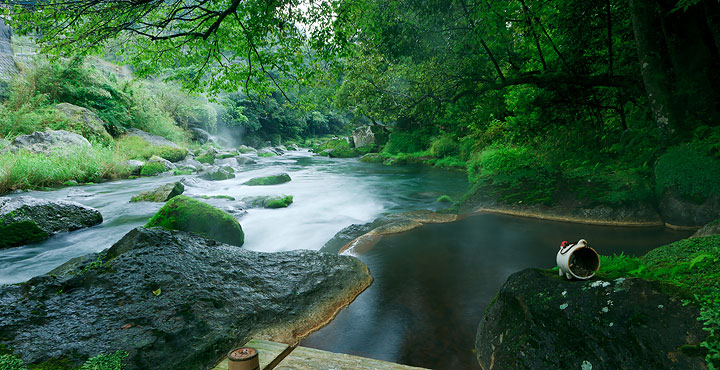
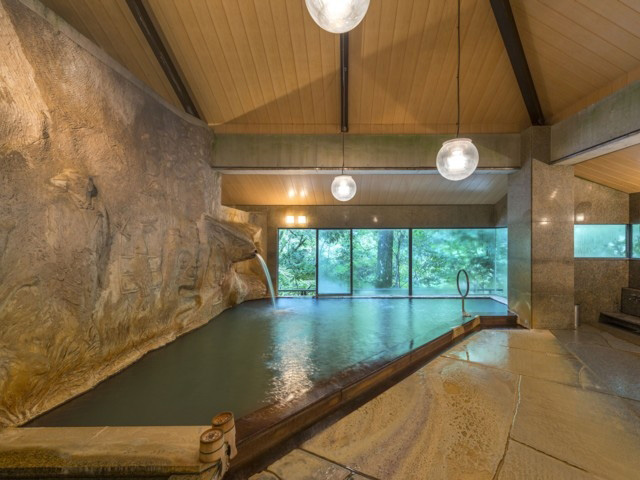
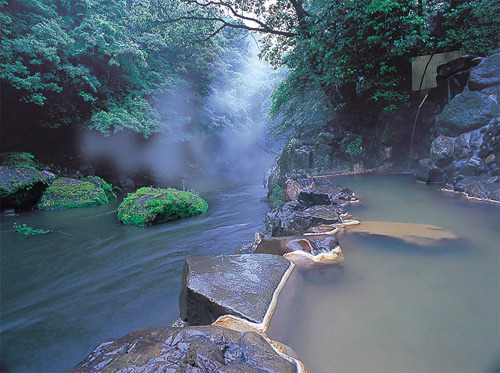
Being one of the most famous hot springs in Kagoshima, there is a great reason why everyone loves it, and it’s more than just great scenery and relaxing hot springs!  Myoken Ishiharasou Onsen’s hot springs are rich in minerals, hence they are offering great health benefits! All of these baths have great effects such as promoting the blood circulation, smoothing your skin, and helps to relieve your stiff muscles as well!


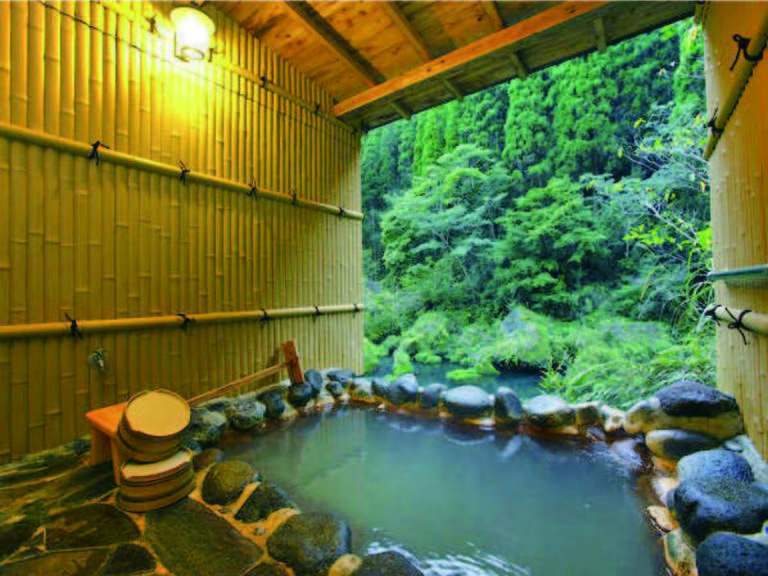
Besides, you can enjoy various types of hot springs in one single place, such as the main public bath, public open-air bath, dry carbon dioxide bath, as well as the rooms with private open-air bath.


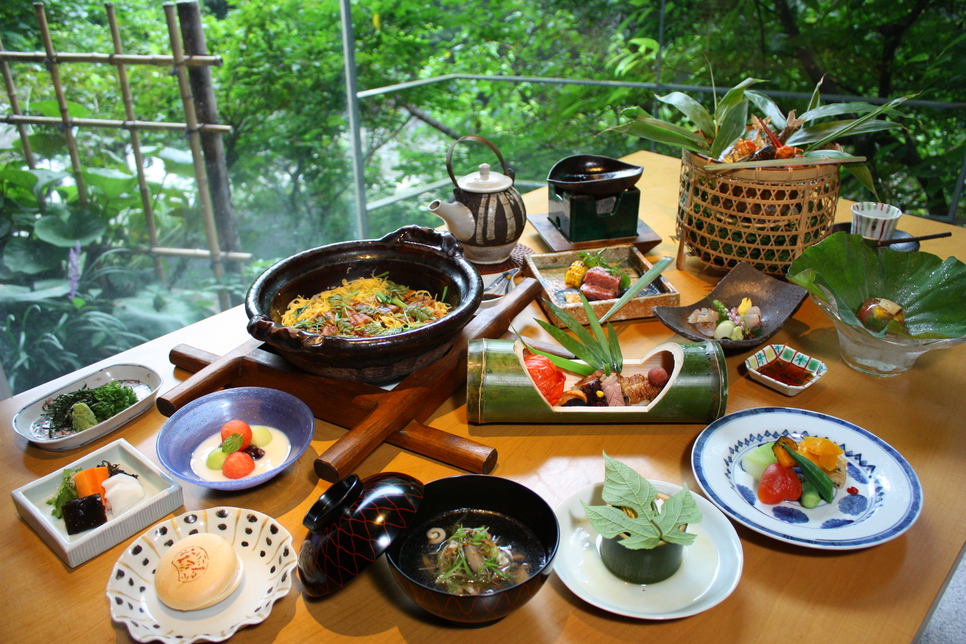
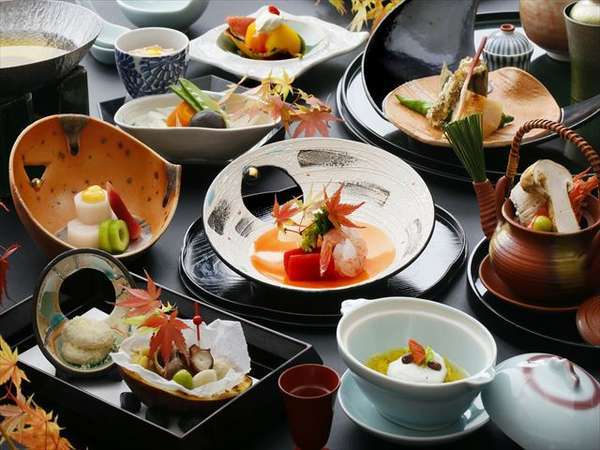
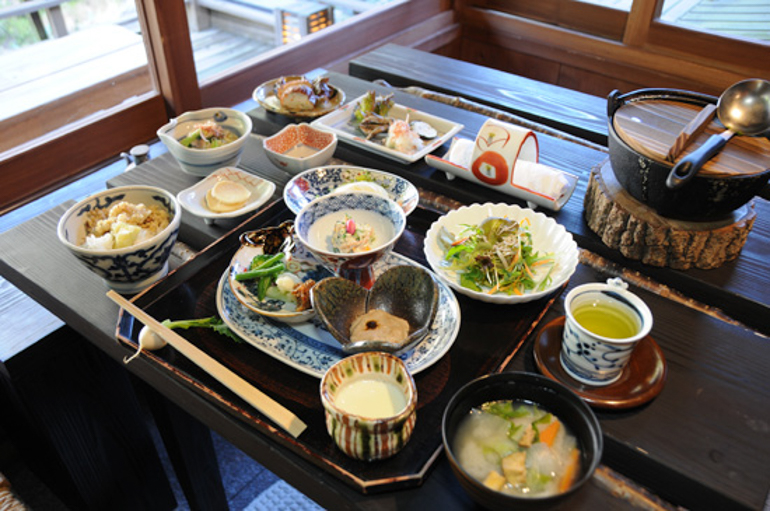
Of course, Myoken is also famous for its delicious meals, where ingredients are freshly sourced from Kagoshima’s finest and freshest local ingredients. The restaurants at Myoken provides semi-private dining room for its guests, so you can enjoy precious dining experience at Myoken!


2. Hotel Kayoutei


Hotel Kayoutei is another famous hotel in Kagoshima! Many guests loved the meals here, and not just because you can enjoy your meal in your room, but the meals are carefully and deliciously prepared the chef using the finest local and seasonal ingredients! 


That’s definitely not all! Because at Hotel Kayoutei, it isn’t just that your rooms are spacious and cozy, but you can enjoy the scenic view of the nature from your room and the open-air bath as well. 


The hotel is also equipped with natural onsen as well, and you can relax yourself in the public bath, semi open-air bath, and open-air bath. It is also not far from Japan’s cultural asset in Kareigawa Station - the station sells delicious ekiben (bento lunch boxes sold in train stations) on weekends, so consider getting one for lunch!


3. Yukyu no Yado Isshin


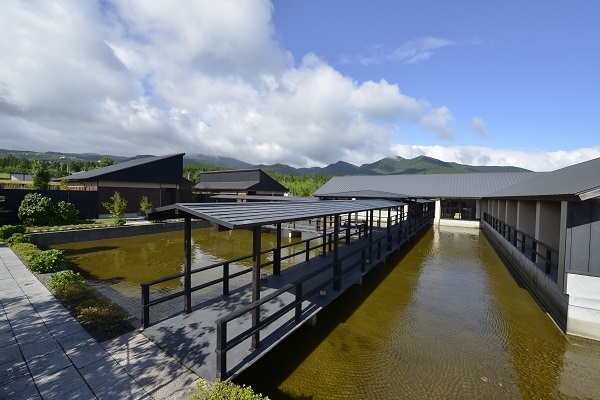
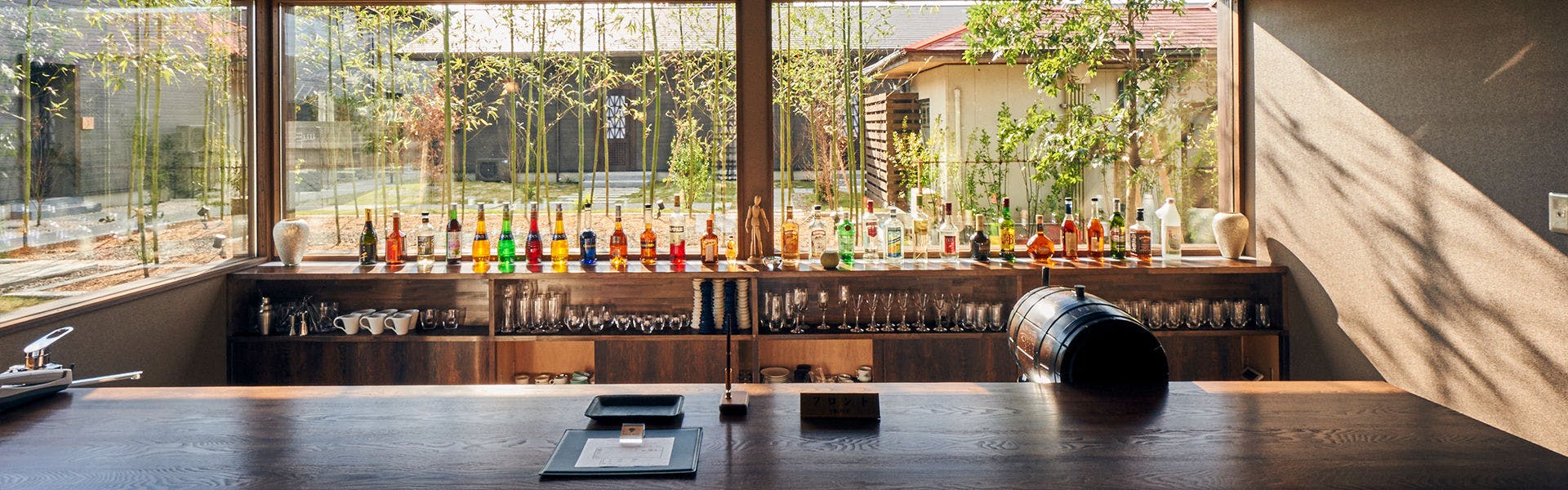
Seeing the photos of this ryokan, you might start to think that this isn’t even a ryokan, but being a water chalet or the sort, right? But hey, welcome to Yukyu no Yado Isshin! It is located a little bit further from the center of Kirishima city, and it only accommodates 7 guest rooms!


Isshin is famous for its onsen waters that promotes healthy skin and enhancing metabolisms, and also their delicious meals that are made with home-grown vegetables, fresh caught fish, and Japanese beef taken directly from local poultry.


For non-Muslim guests, don’t forget to visit the shochu bar to enjoy rare Japanese shochu like Mao and Moriizou in the evening!


4. Ibusuki Shusuien

Ryokan Ibusuki Syusui-en, Japan - Booking.com


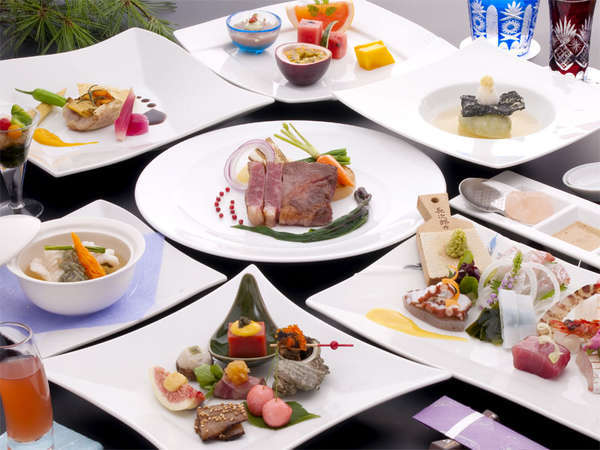
When it comes to popular ryokan in Kagoshima, and especially in Ibusuki, Shusuien is a place to never miss out! Besides the onsen, its tempting gourmet has gotten them a No.1 rank in food & beverage category among 100 hotels & ryokan in Japan for 33 years in a row! If you love eating, you would definitely want to have a wonderful dining experience during your stay in this ryokan!


In terms of their hot spring, Shusuien uses only the best and freshest onsen water for its public bath and open-air bath, and you can enjoy water foot onsen or sand foot onsen as well. It Offers Japanese style, Western style, and special guest rooms, Shusuien is very popular among the locals and the visitors as well! It is no wonder that it would rank high for decades!


5. Sankara Hotel & Spa Yakushima


This listing is one exception, because it is not a ryokan, but it is a great place to stay at if you are planning to visit Yakushima! If you have plans for hiking in Yakushima, then Sankara hotel & spa Yakushima is a place you definitely want to stay in Kagoshima prefecture!
 

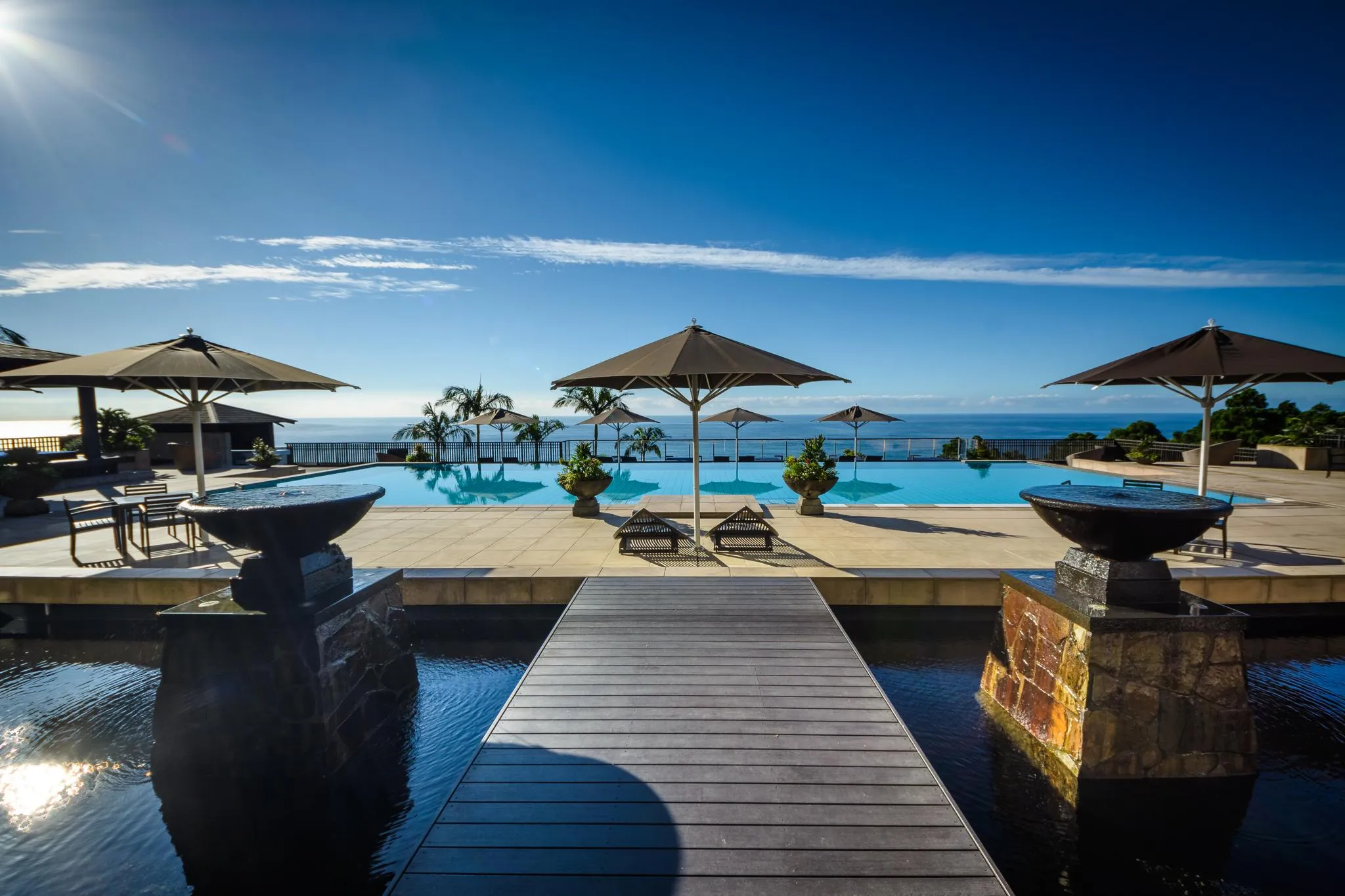
You can spend a special time on this quiet island that is said to inspire the mystically beautiful Studio Ghibli movie, Princess Mononoke at your own pace. At the spa, courses that incorporate the rich natural essence of Yakushima are popular. Please try your very best at a luxury ryokan / hotel surrounded by the nature of Yakushima. Here, it is equipped with pools and spa center, with sophisticated guest rooms of suites and villa types. Furthermore, it has a luxurious interior with a warm Asian modern feel, making it a great place to relax after a long day of hiking or exploring around Yakushima.


Besides relaxing spa and great facilities, the resort Sankara Hotel & Spa Yakushima offers high-quality meal as well! There are many fans from overseas for its deliciousness. You can fully enjoy the dishes that are unique to the island. The dishes using plenty of ingredients selected from Yakushima and Tanegashima of Kagoshima!


6. Komatsu


Located in Kirishima Onsen Village of Kagoshima Prefecture, Komatsu is a small inn with only 6 rooms in a forest with a warm and homely atmosphere. You can spend a relaxing time with the modern Japanese atmosphere with the warmth of wood, where you can reminisce the good old days of Japan.


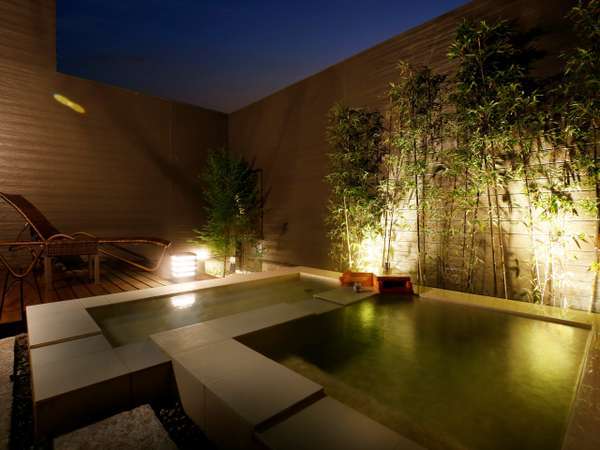
All rooms have indoor and outdoor baths. Relaxed from the heart, wrapped in the gentle scent of the simple sulfur spring. You can spend a luxurious holiday where you can soak in the hot spring whenever you want. This is a luxury ryokan where you can feel relieved somewhere and enjoy the service of shaved ice after bathing.


7. Onsen Garden Yumotoan Kiyohime


Kiyohime Onsen is a long-established hot spring inn that was founded in 1916 (Taisho 5) and has the oldest history in the Kirishima Onsen’s Hinatayama Onsen Village. Onsen Garden Yumotoan Kiyohime is a designer ryokan that has more than 100 years of history! As a challenge after 100 years, Kiyohime Onsen grandly opened to public on December 3, 2018.


Kiyohime Onsen has long been popular as a hot spring with beautiful skin and a hot spring that brings good luck. The beauty of the hotel's bountiful natural spring water will heal your daily fatigue. It is an important hot spring and want to be a hot spring inn that is loved by everyone!


8. Ibusuki Hakusuikan Rikyu


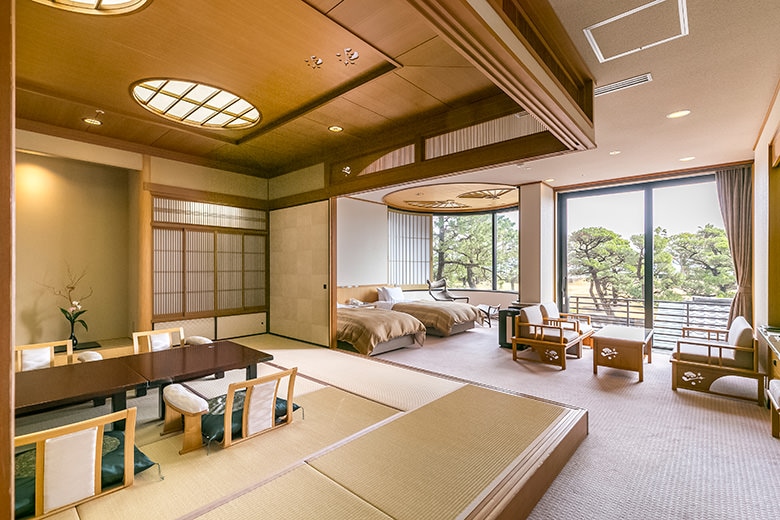
With a list of the best ryokans in Kagoshima, Ibusuki’s Hakusuikan Rikyu is a place that no list would want to miss out! It is a place where you can enjoy a luxurious traditional Japanese space while gazing at the magnificent blue sea of Kagoshima Prefecture. 


The 84 square meters of spacious and elegant Japanese-Western rooms offer spectacular views of the blue Kinko Bay and pine gardens. Its beauty is so breathtaking that you will almost forget to breathe! The contrast between the blue of the sea and the green of the pine trees is very beautiful, and the pine trees are illuminated at night, which makes it very fantastic. 


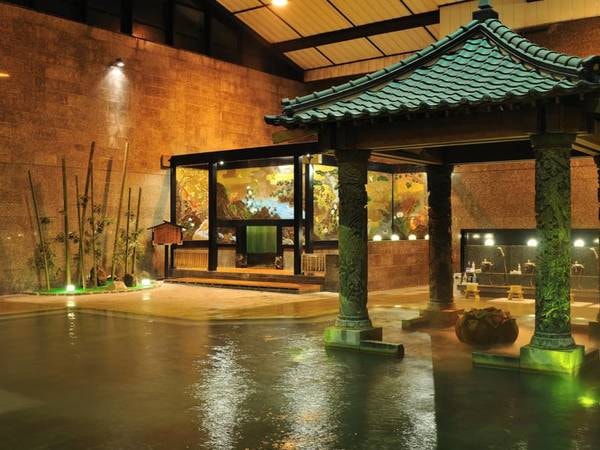
There are various types of baths, including the Genroku bath, which reproduces the bath of the Edo period, the open-air bath with a panoramic view of the sea, and the sand steaming bath. Ibusuki Onsen is also called the hot spring for beautiful skin. Why don't you refresh yourself both physically and mentally, away from your daily routine?


9. Yakakutei


Yakakutei is located in the oldest hot spring in Kagoshima Prefecture, Hinatayama Onsen. This is a recommended luxury ryokan / hotel where you can spend peaceful time as birds rest their wings. The hot spring is a bathhouse that is said to have been loved by the historical figures Takamori Saigo and Ryoma Sakamoto. 


The hot spring water here is a clear, colorless and transparent weak alkaline hydrogen carbonate spring. It is also called "Bijin no Yu", which means “The Beauty Bath”. Their relaxing Japanese-style room allows you to enjoy the beautiful scenery of the four seasons and feel Japanese culture. 

10. Wasure-no-sato Gajoen


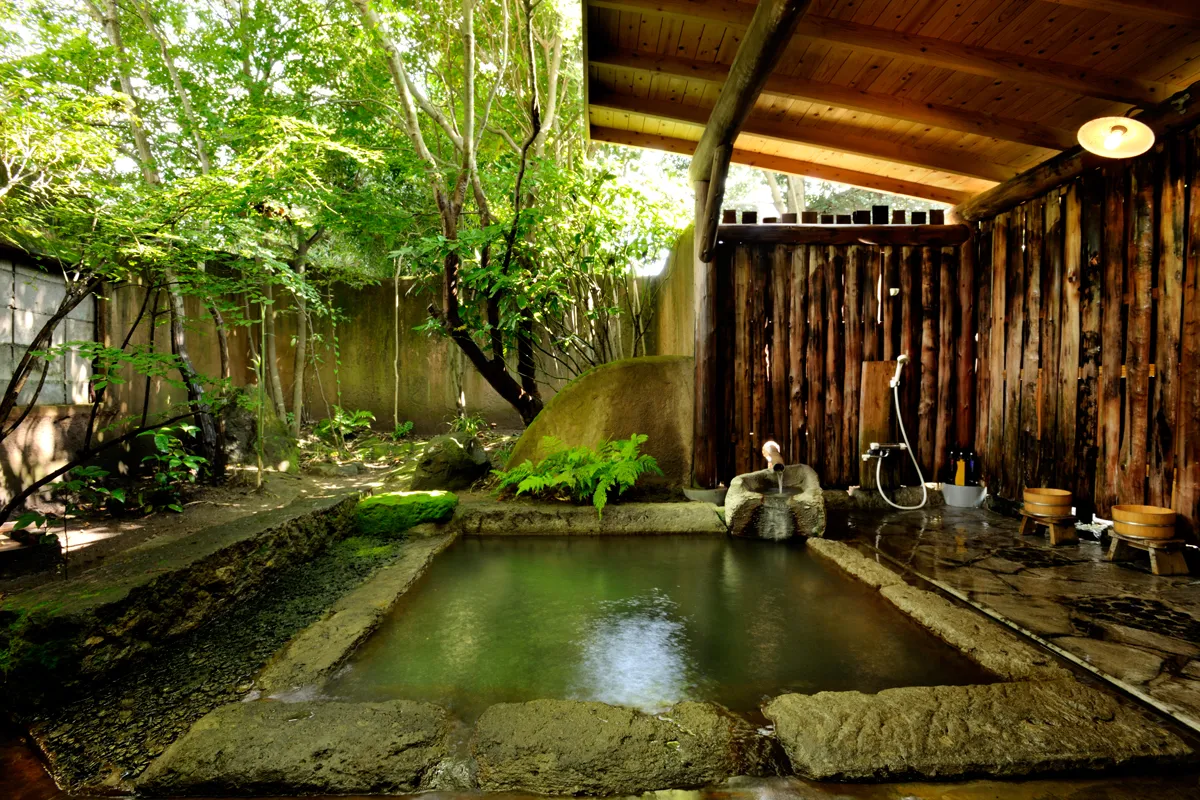
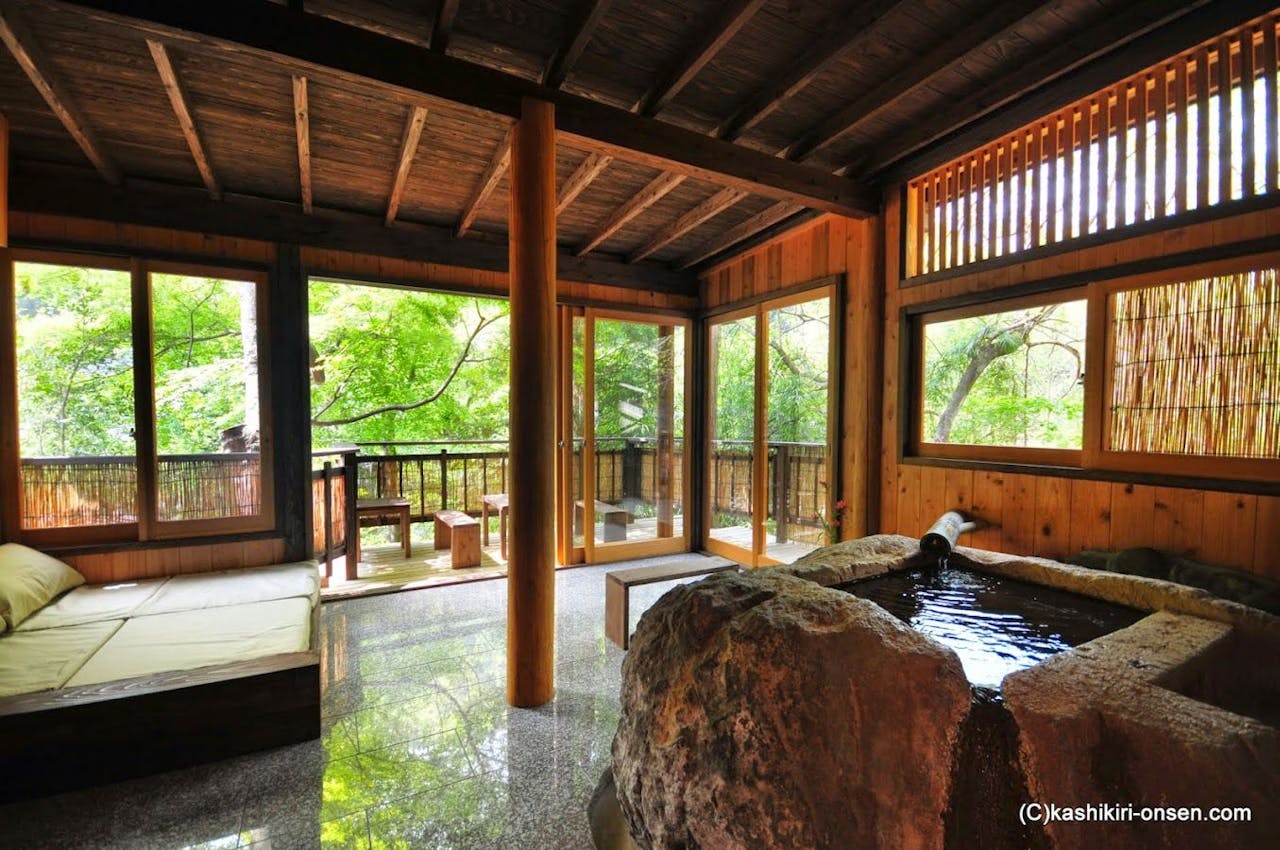
Contrary to its excellent accessibility, Gajoen is a beautiful inn that blends perfectly with the lush green trees of Kirishima. There are only 10 detached rooms with a thatched roof relocated to the site along the Tenryo River, with eight (8) of them are equipped with 100% free-flowing hot spring baths, and the rooms with open-air baths started here. 


The delicately cooked dishes made with vegetables produced in their own garden that delivers the taste unique to the region. You will feel at ease with the traditional Japanese scenery, such as thatched roofs, hearths, and rivers that flow near the inns. 


Gajoen is an inn that not only forgets your daily routine and thoughts, but at the same time reminds you what important things you should never forget.


Among the ryokans (and hotel), which of them is your favorite? 
Share
Tweet
Pin
Share
No comments
Wilson Tree — Yakushima Guide Yakushima: An introduction to Japan's ancient cedars, Mononoke forests, sea onsens & where to stay — from ryokans to luxury retreats.

Yakushima: Japan's Ancient Forest Island — A Complete Travel Guide

Yakushima: Japan's Ancient Forest Island — A Complete Travel Guide
Kyushu Series
Kyushu Masterlist · Yakushima — Japan's Ancient Forest Island

There are places that earn their reputation quietly, over centuries, through the sheer accumulation of what they are. Yakushima is one of them. A small island off the southern tip of Kagoshima Prefecture — roughly 500 square kilometres of granite peaks rising nearly 2,000 metres from a subtropical sea — it contains trees that were already ancient when the Edo Period began, a forest so particular that it anchored Hayao Miyazaki's imagination when he made Princess Mononoke, and a quality of stillness that urban Japan rarely offers.

This is a full edit, and a reintroduction to the island. I first wrote about Yakushima back in 2020, when the world was navigating something else entirely. It deserves more than that original treatment — more detail, more honesty about what arriving here requires, and a proper account of where to sleep once you do.

· · ·
🔗 This post contains affiliate links. If you book through them, I may earn a commission at no extra cost to you.
In this guide
  • About Yakushima
  • What to See
  • Activities
  • Where to Stay
  • Getting There
  • Getting Around
  • Weather & Best Time to Visit
  • FAQ

About Yakushima

Yakushima Airport — small island terminal surrounded by forest and mountains
Yakushima Airport — one of the more scenic domestic arrivals in Japan. There's just something lovely about small domestic airports.

Yakushima sits approximately 100km south of Kagoshima City, a circular island of around 504 square kilometres that the locals sometimes call the Alps of the Ocean. The peaks here — Miyanoura-dake at 1,936m is the highest in Kyushu — generate extraordinary rainfall, which is why the forests look the way they do: an uninterrupted carpet of moss over every surface, rivers running everywhere, air that carries actual weight. It has the highest recorded annual rainfall in Japan.

In 1993, Yakushima became one of Japan's first two UNESCO World Natural Heritage Sites. UNESCO cited it as the best example of biodiversity in East Asia — an ecosystem that spans subtropical coast to sub-alpine summit within a single island, a range that makes it simultaneously the northern limit for some species and the southern limit for others. The boundary line is called the Watase Line, and crossing it while hiking is one of the quieter wonders of the island.

The trees that make Yakushima singular are the yakusugi — a word that combines Yakushima and sugi (Japanese cedar). By convention, any cedar on the island over 1,000 years old earns that name. Below that threshold, they're simply kosugi, small cedars, though many of those are already centuries old. What the ancient trees share is a quality of presence that photographs do not fully communicate. You need to stand next to one.

The island is also home to its own subspecies of Yaku deer and Yaku macaque monkeys — animals that outnumber the human population, which stands at around 12,000. Both wander the hiking trails without particular concern for your schedule.

What to See

Jomonsugi — the Oldest Living Cedar

Jomonsugi — the ancient yakusugi cedar of Yakushima, estimated between 2,000 and 7,200 years old
Jomonsugi — scientists estimate its age somewhere between 2,000 and 7,200 years.

Jomonsugi is the headline attraction and deserves to be. Scientists estimate the tree's age somewhere between 2,000 and 7,200 years — the ambiguity is real; dating ancient cedars is not straightforward — making it likely the oldest living tree in Japan and possibly one of the oldest on earth. It is not especially tall at around 25 metres, but the trunk diameter of roughly 5 metres, and the knotted, accumulative mass of it, communicate something that height alone does not.

The tree was probably known to Edo-period loggers who mapped the forest — and survived precisely because its irregular shape made it unsuitable for timber. It was rediscovered in the 1960s, and the wave of attention that followed helped build the case for Yakushima's eventual protection as a national park and later a UNESCO site.

Reaching it requires a full-day hike: approximately 22km round-trip along old logging railway tracks, taking 8 to 10 hours. The trail is well-marked. The bridges are occasionally narrow and without railings, and the humidity makes them slippery. Start very early — the shuttle buses from Yakusugi Land depart from around 5am during peak season, and the mountain access road is closed to private vehicles during busy periods.

Practical note: Hikers are required to fill out a climber's declaration card and deposit it in the box at the trailhead. This is not a formality — it assists search teams in the event of an incident. Take it seriously.

Shiratani Unsuikyo — The Mononoke Forest

Shiratani Unsuikyo ravine, Yakushima — the moss-covered forest said to inspire Princess Mononoke
Shiratani Unsuikyo — the valley credited as Miyazaki's inspiration for Princess Mononoke.

Shiratani Unsuikyo is, for many visitors, the more emotionally affecting experience. A forested ravine in the island's north, it requires no 22km commitment — the trail network ranges from one to five hours depending on the route you choose, all well-maintained and signposted in English. What it offers is the full visual vocabulary of Yakushima's famous ancient forest: moss over every surface, roots that have been growing around boulders for centuries, light that arrives softened and green through the canopy.

It is widely cited as the landscape that inspired the spirit forests of Princess Mononoke, and once you're inside it, the connection is obvious. The film's visual logic is here, not as metaphor but as actual place. Studio Ghibli has never officially confirmed or denied the specific connection, which has somehow only reinforced it.

For those unable to commit to the Jomonsugi hike, Shiratani Unsuikyo is the recommended alternative. For those doing both, do them on separate days.

Hirauchi Kaichu Onsen — The Tidal Hot Spring

Hirauchi Kaichu Onsen area — coastal scenery near Yakushima's famous tidal hot spring
The coastal scenery near Hirauchi Kaichu Onsen — only accessible at low tide.

Yakushima is not a volcanic island, but it is geothermally active enough to produce several natural hot springs along its coast. Hirauchi Kaichu Onsen is the most extraordinary of them: a rocky tidal pool on the southern shore that becomes an onsen only when the tide is low enough to expose it. Check the tide charts before you go, and plan your visit accordingly — typically accessible two hours either side of low tide.

It is mixed-gender, clothing is not permitted (a sign says so explicitly, though a clean towel or sarong is generally accepted), and you may share it with elderly locals, other travellers, or no one at all depending on timing. The view at sunset — ocean in every direction, the air cooling as the sky changes — makes a convincing case for why people return to this island more than once.

Yakushima's Beaches and Stargazing

Yakushima starry night sky — the island's low light pollution makes it one of Japan's finest stargazing locations
The night sky over Yakushima — one of Japan's finest stargazing islands.

Between May and August, Yakushima's beaches see loggerhead and green sea turtles come ashore to lay eggs at night — one of Japan's more remarkable wildlife experiences, accessible via guided night tours that are organised carefully to avoid disturbing the animals. Nagata Inaka-hama beach on the northwest coast is the most active site.

And then there is the sky. Yakushima's combination of low population density, minimal light pollution, and clean air makes it one of Japan's premier stargazing locations. The Wilson Tree meadow — an open space near the famous hollow stump that loggers used as a rest shelter during the Edo period — is a particularly good vantage point on clear nights. The photograph above was taken from the island's coast, and it is exactly what it looks like.

Wilson Tree — The Cedar That Became a Room

Wilson Tree Yakushima — the hollow ancient cedar stump large enough to stand inside
Wilson Tree — look up through the opening and you'll find a heart-shaped hole in the sky.

The Wilson Tree is a felled yakusugi stump of such dimensions that you can walk inside it. The interior contains a small Shinto shrine, a freshwater spring, and a hollow large enough for a group of people to stand comfortably beneath the open sky above. It was reportedly felled during the Edo period on the orders of Toyotomi Hideyoshi for the construction of Kyoto's Fushimi Momoyama Castle. Ernest Henry Wilson, the British botanist who documented it in 1914, gave it his name, which has stuck.

The photograph above shows the view from inside — and if you position yourself just right and look up, the gap in the canopy forms a perfect heart shape against the sky. It is charming in the most honest way: a giant tree, several thousand years old, accidentally making a heart. Worth the photo.

· · ·

Activities on the Island

01
Full Day · 22km · Strenuous

Jomonsugi Trekking

The definitive Yakushima experience. The trail follows old logging rail tracks from Arakawa Trailhead through dense yakusugi forest to the most ancient tree on the island. Allow 8 to 10 hours. Private vehicles cannot access the trailhead during peak season — shuttle buses depart from Yakusugi Land from around 5am. Book accommodation close to the trailhead or confirm shuttle arrangements in advance.

02
1–5 Hours · Various routes · Moderate

Shiratani Unsuikyo Forest Walks

The more accessible forest experience — trail routes range from a gentle one-hour circuit to a five-hour ascent toward Taikoiwa rock with panoramic island views. English signage throughout. The forest is at its most atmospheric after rain, when the moss is saturated and the streams are running full. Guided tours available through local operators for those who want ecological and cultural context alongside the scenery.

03
May–August · Night tours · Advance booking essential

Sea Turtle Watching — Nagata Beach

Nagata Inaka-hama is one of Japan's most important sea turtle nesting sites. Between May and August, loggerhead and green turtles come ashore at night to lay eggs. Guided night tours are strictly regulated to protect the animals — flash photography is prohibited, groups are kept small, and access to active nesting sites is managed carefully. Book through a licensed local guide well in advance.

04
Year-round · Various operators

Sea Kayaking and Snorkelling

Yakushima's waters are warmed by the Kuroshio current, making the surrounding ocean unusually clear and marine-rich for this latitude. Sea kayaking tours around the coastline — particularly the dramatic sea cave sections on the western shore — offer perspectives on the island that the forest trails do not. Snorkelling is productive in the shallower bays from spring through autumn.

05
Year-round · Self-drive recommended

Circumnavigation by Car

A circuit of the island's coastal road takes approximately three hours without stops, but the number of stops is the point. Waterfalls come into view without warning. The road briefly climbs through cloud forest before returning to the coast. The drive between Hirauchi and Onoaida on the southern coast is particularly fine in the late afternoon. A rental car is the most practical way to experience the island at your own pace.

06
Clear nights · Low light pollution

Stargazing

Yakushima's minimal light pollution and clean island air make it one of Japan's premier stargazing locations. The Milky Way is visible with the naked eye on clear nights. The coast near Kurio on the south, or the open ground near Wilson Tree meadow, are particularly good vantage points. Some accommodation can arrange guided stargazing sessions — worth asking when you book.

On hiking in rain: Yakushima has the highest annual rainfall in Japan. The forests are beautiful in rain — arguably more so. Come prepared with waterproof gear, waterproof footwear with good grip, and the expectation that some days will be wet. What you should not do is continue hiking during heavy rain or thunder; river levels rise very quickly and the island authority will close mountain access roads as a precaution. Follow local guidance.

· · ·

Where to Stay

Accommodation on Yakushima spans a wider range than the island's size might suggest — from the island's sole internationally regarded luxury resort down to family-run minshuku where your host likely grew up here and has opinions about the best trail conditions. The main town is Miyanoura in the north, where the ferry port is. Anbo on the east coast is a secondary hub. Accommodation around the Onoaida and Hirauchi areas in the south puts you closest to the tidal onsen and offers a quieter base.

Trip.com link for all Yakushima City accommodation: Browse via Trip.com →

Luxury

Sankara Hotel & Spa Yakushima

Onoaida · South Coast
Luxury Resort Forest & Ocean Views Villas Fine Dining

Sankara is the only internationally recognised luxury resort on the island, and it justifies the designation through considered design rather than scale. The property sits on a hillside overlooking the Pacific on the island's southern coast, surrounded by forest, with villa accommodation that manages to feel genuinely secluded even with the ocean horizon in front of you. The spa treatments draw on local ingredients and techniques. The restaurant, which uses Kagoshima produce with Japanese-French technique, is the finest table on the island.

Dinner by the poolside bonfire on clear nights is one of those experiences you remember arranging. Book the meals when you book the room.

Sankara Hotel Yakushima — villa room with forest view
Villa room.
Sankara Hotel Yakushima — dining room
Restaurant — Japanese-French cuisine.
Sankara Hotel Yakushima — bonfire by the pool at night
Poolside bonfire — book for dinner.
Book via Agoda →

THE HOTEL YAKUSHIMA OCEAN & FOREST

Anbo · East Coast
Luxury Ocean View Modern Design Private Onsen Baths

The other upscale property worth serious consideration. Sited on the east coast near Anbo, it occupies a position between forest and Pacific — the name is literal and accurate. The design is contemporary, the rooms have private baths with a considered relationship to the view, and the overall approach is a cleaner, more modern alternative to Sankara's forest-villa aesthetic. A good choice for those who prefer a hotel sensibility over a resort one.

THE HOTEL YAKUSHIMA OCEAN & FOREST — modern private bath
Modern private bath.
THE HOTEL YAKUSHIMA OCEAN & FOREST — room blending modern and traditional Japanese design
Rooms blend contemporary and traditional Japanese elements.

Book via Agoda →
Mid-Range — Ryokan & Hotel

Yakushima Iwasaki Hotel

Miyanoura · North
Mid-Range Pool Traditional Rooms Near Ferry Port

Yakushima Iwasaki Hotel is the largest conventional hotel on the island and the most practical choice for travellers arriving by ferry who want reliable amenities without the premium. The pool, traditional tatami-style rooms, and location near Miyanoura port make it the natural first-night choice before heading deeper into the island. Facilities include multiple dining options and hot spring baths.

Yakushima Iwasaki Hotel — outdoor pool
Outdoor pool.
Yakushima Iwasaki Hotel

Largest hotel on the island. Pool, natural hot spring baths, multiple dining options. Ideal first-night stay after ferry arrival.

Miyanoura · North · Near ferry port

Book via Trip.com → Book via Agoda →
Yakushima Iwasaki Hotel — traditional Japanese tatami room
Traditional tatami room.

Yakushima Manten Ryokan

Miyanoura · North
Mid-Range Ryokan Onsen Traditional Rooms Stargazing Terrace

Manten means "full sky" in Japanese — a name that refers to the property's orientation toward Yakushima's exceptional night sky. The ryokan offers traditional tatami accommodation and a natural onsen, and its position on the north coast makes it practical for ferry arrivals. A solid choice for those who want the ryokan experience alongside the island's more rugged outdoor agenda.

Yakushima Manten Ryokan — outdoor onsen bath
Outdoor onsen.
Yakushima Manten Ryokan — lounge area
Lounge area.
Yakushima Manten Ryokan — traditional tatami room
Traditional tatami room.
Book via Agoda →

Yakushima Sanso

Anbo · East Coast
Mid-Range Indoor Onsen Forest Setting Working Space

A well-positioned mid-range option in Anbo, Yakushima Sanso offers a private onsen bath, clean rooms with a forested outlook, and the kind of calm that suits travellers who want a base to return to after long hiking days rather than a resort experience. The working space with forest views is a notable detail for those extending stays.

Yakushima Sanso — exterior building view
Exterior.
Yakushima Sanso

Forest setting in Anbo. Indoor onsen bath. Quiet rooms suited for multi-night stays. Working space with views.

Anbo · East Coast · Near Yakusugi Land

Book via Agoda →
Yakushima Sanso — interior onsen bath
Interior onsen bath.
Yakushima Sanso — working space with forest view
Working space with views.

Ryori Yado Urokoya

Miyanoura
Mid-Range Ryokan Cuisine-Focused Long-Established

The name translates roughly as "cooking inn," and the cooking is the point. Ryori Yado Urokoya has been serving guests a version of Yakushima's culinary inheritance — local fish, mountain vegetables, Kagoshima pork — for long enough that the name plate outside looks like it belongs to the building. Rooms are modest; meals are not. This is the right choice for travellers who want their accommodation to include a genuine sense of place.

Ryori Yado Urokoya — traditional meal spread
The meal is the main event here.
Ryori Yado Urokoya — traditional inn entrance nameplate
A sign that has been here a while.

Book via Agoda →

Yakushima Green Hotel

Miyanoura · North
Mid-Range Traditional Rooms Good Value

A reliable mid-range option in Miyanoura — clean, traditionally appointed rooms, and the kind of uncomplicated hospitality that suits island travel. Well located for ferry arrivals and the northern trail access points. The traditional Japanese rooms with garden views are worth the slight upgrade.

Yakushima Green Hotel — traditional Japanese tatami room
Traditional Japanese room.
Yakushima Green Hotel

Clean, traditionally appointed rooms. Convenient for ferry arrivals and northern trailheads. Good value mid-range pick.

Miyanoura · North · Near ferry port

Book via Agoda →

Marine Blue Yakushima Hotel

Miyanoura · Seafront
Mid-Range Ocean Views Seafront Location

The ocean-facing rooms at Marine Blue Yakushima deliver exactly what the name promises — straightforward, comfortable accommodation with direct views of the Pacific. For those who want the sea as much as the forest, this is an honest choice at a reasonable price point.

Marine Blue Yakushima Hotel — room with ocean view
Ocean-view room.
Marine Blue Yakushima Hotel

Seafront position in Miyanoura. Direct Pacific views from ocean-facing rooms. Comfortable mid-range option for those who want the sea alongside the forest.

Miyanoura · Seafront · North Coast

Book via Agoda →
Budget — Guesthouses & Homestays

Yakushima's budget accommodation is genuinely good. The island's minshuku and homestays are typically run by people who have lived here their whole lives — which means hosts who know the trails, can tell you about the weather, and often include home-cooked meals in the rate. A step closer to the island than any hotel.

Minshuku Suginoko — family-run guesthouse on Yakushima

Minshuku Suginoko

Family-run inn · Miyanoura

Home-cooked meals included. The name means "cedar sapling" — fitting for an inn where the welcome is as genuine as the setting.

Book via Agoda →
Yakushima Mura — homestay on Yakushima

Yakushima Mura

Homestay · Miyanoura

Stay within a private home and absorb the island's daily rhythms. Hosts who know the trails and the tides.

Book via Agoda →
Yakushima House Tabugawa — homestay accommodation

Yakushima House Tabugawa

Homestay · Miyanoura

Comfortable and flexible. Suits solo travellers and those building an active hiking itinerary around a reliable base.

Book via Agoda →
· · ·

Getting to Yakushima

By Air Japan Airlines operates flights to Yakushima Airport (KUM) from Kagoshima (KOJ, ~35 min), Fukuoka (FUK, ~70 min), and Osaka Itami (ITM, ~90 min). The airport is small — arrival is one of the more charming in Japan — and is located in the north of the island near Miyanoura.
Toppy / Rocket (Jetfoil) The high-speed jetfoil from Kagoshima Port takes approximately 2 hours to Miyanoura and is the most popular access route. Booking in advance is strongly recommended during peak season (spring and summer). Rough sea conditions occasionally cause cancellations — build flexibility into your itinerary.
Yakushima 2 (Ferry) The budget ferry option runs approximately 4 hours from Kagoshima Port. Cheaper and more tolerant of mild sea conditions than the jetfoil. Less convenient for tight schedules.
From Tokyo / Osaka Fly to Kagoshima and connect onward by air or ferry. Shinkansen to Kagoshima-Chuo is an option from Osaka (approximately 90 minutes on the Sakura express). Allow a full travel day from Tokyo regardless of route.

Getting Around the Island

Car Rental By far the most practical option. The island's main road is a coastal circuit of approximately 130km, and a rental car gives you complete freedom over timing — particularly important for tidal attractions like Hirauchi Onsen and dawn hiking departures. An International Driving Permit (IDP) is required for non-Japanese licence holders. Book well in advance during peak season.
Buses Public buses serve the main coastal road and connect the major attractions, but the schedule is infrequent — gaps of two hours between services are common. Manageable for a focused itinerary, genuinely inconvenient for spontaneous movement. Check timetables before each journey.
Taxis Available, and considerably more expensive than mainland Japan given the island's limited competition. Use for emergency gaps in the bus schedule or airport transfers, not as a primary transport strategy.
Hiking shuttles During peak season, the road to Arakawa Trailhead (for Jomonsugi) is closed to private vehicles. Shuttle buses operate from Yakusugi Land car park, departing from approximately 5am. Timing and ticket arrangements should be confirmed with your accommodation before you arrive.
Cycling Possible along the flatter coastal sections. The interior and mountain roads involve significant elevation. Bicycle rental is available in Miyanoura.

Weather & Best Time to Visit

A note before the breakdown: Yakushima holds Japan's record for annual rainfall. The coastal areas receive around 3,000mm a year; the mountain interior receives closer to 10,000mm. For context, the notoriously wet UK averages 2,000–3,000mm. The phrase "it rains every day" circulates online and is misleading — what is true is that when it rains here, it rains with conviction. Clear days are real, sunshine is real, and the coast can be bright while the mountain interior is deep in cloud. The same island, twenty minutes apart, can be entirely different weather.

The island effectively has six seasons rather than four. Here is an honest account of each.

January

Quiet · Good

Cool and often clear on the coast. Mountain peaks may have snow — unusual and beautiful at this latitude. Crowds minimal. Excellent stargazing on clear nights.

February

Quiet · Good

Similar to January. The southern coast receives less rain than the rest of the island in winter. Good month for a quieter, more contemplative visit.

March

Recommended

Early spring. Temperatures warming, rhododendrons beginning to flower at altitude. Comfortable hiking conditions. Fewer crowds before Golden Week.

April

Recommended

One of the finest months. The forest is at its most vivid spring green. Weather is warm without humidity. Book early — Golden Week (late April to early May) is extremely busy.

May

Recommended

Warm and relatively stable before the rainy season. Sea turtles begin nesting from mid-May. Hiking conditions remain excellent. One of the best overall months to visit.

June

Rainy Season

The tsuyu rainy season begins in earnest. Rainfall is 2–3 times higher than other months. Hiking is possible with good gear, but rivers can become dangerous. The forest looks extraordinary — if you can manage the rain.

July

Rainy / Hot

Rainy season extends into early July before breaking. Hot and humid afterward. Peak turtle nesting season at Nagata beach. Very busy. Rivers and trails can close after heavy rain.

August

Busy · Hot

Peak summer season. Hot and humid at sea level. Busiest month on the island — accommodation fills up months in advance. Turtles still active. Mountain elevations are cooler.

September

Recommended

Crowds thin quickly after mid-September. Weather begins to stabilise. Typhoon risk exists (check forecasts) but clear periods are long and the forest light is exceptional.

October

Highly Recommended

Arguably the finest month of the year. Cool, clear, uncrowded. Autumn colour begins at altitude. The light on the yakusugi is something the photographs do not entirely convey.

November

Highly Recommended

Clear, quiet, comfortable. Autumn colour in full effect on the higher trails. One of the least-crowded good-weather months. Excellent conditions for both Jomonsugi and Shiratani.

December

Quiet · Good

Winter begins. Quieter than any other period. Snow possible on the peaks. Coastal areas remain mild. Ideal for those who want the island largely to themselves.

On rain: Whatever month you visit, pack waterproof trousers and jacket, waterproof footwear, and a dry bag for your electronics. You can rent waterproof gear and hiking boots on the island, which saves luggage space. Do not attempt any trail during or immediately after heavy rain — rivers rise fast and the national park authority will close access roads. Follow local guidance, not a schedule.

"Yakushima is one of those places that changes you quietly. You go to see trees. You end up thinking about time." — Jin Travels Japan
· · ·

Questions

Primarily the yakusugi — ancient Japanese cedar trees, some estimated to be over 7,000 years old, that grow in the island's UNESCO World Heritage forest. The island is also known as the landscape that inspired Studio Ghibli's Princess Mononoke, for its natural tidal onsen, indigenous wildlife (including Yaku deer and macaque monkeys), sea turtle nesting season, and exceptional stargazing.

By air to Yakushima Airport (KUM) from Kagoshima, Fukuoka, or Osaka Itami — or by high-speed jetfoil (Toppy/Rocket) from Kagoshima Port in approximately 2 hours. A budget ferry option (Yakushima 2) takes around 4 hours. Flying into Kagoshima and taking the jetfoil is the most popular routing for international travellers.

Strenuous but manageable for reasonably fit hikers with proper preparation. Approximately 22km round-trip, taking 8 to 10 hours. The trail follows old logging rail tracks and is well-marked, with English signage. The challenges are length, humidity, some narrow bridges without railings, and the very early start required to catch the shuttle bus from Yakusugi Land (around 5am during peak season). Waterproof footwear with strong grip is essential.

Loggerhead and green sea turtles nest on Yakushima's beaches from May through August, with peak activity in July and August. Nagata Inaka-hama beach on the northwest coast is the primary site. Guided night tours are regulated and must be booked in advance through licensed local operators — access and group sizes are carefully managed to protect the animals.

For luxury, Sankara Hotel & Spa Yakushima is the island's finest property by a significant margin — forest villas, an acclaimed spa, and the best restaurant on the island. THE HOTEL YAKUSHIMA OCEAN & FOREST is the more contemporary alternative. For traditional ryokan experience, Yakushima Manten Ryokan and Yakushima Iwasaki Hotel are well regarded. Budget travellers are well served by the island's minshuku and homestay options — many with meals included and hosts who know the trails intimately.

The internet exaggerates this. Yakushima does have the highest annual rainfall in Japan, and the mountain interior receives frequent precipitation — but clear days are common, particularly on the coast, and the weather changes quickly. The moss-covered forest is what it is because of the rain; come prepared to appreciate it rather than resent it.

· · ·

Yakushima does not need to be introduced to the trees — they have been here far longer than any of us. What it needs is visitors who arrive with the right degree of patience. The forest gives more to those who slow down inside it.

*This post contains affiliate links to Trip.com and Agoda partner programmes. If you book through them, Jin Travels Japan may earn a commission at no additional cost to you. All properties are selected for editorial merit. Affiliate relationships do not influence which properties are included or how they are described.

Share Tweet Pin

Explore Japan

Tokyo Osaka Gifu Kyushu Hokkaido Tohoku

© 2026 Jin Travels Japan

Share
Tweet
Pin
Share
No comments
Newer Posts
Older Posts

About Me

Jin
Jin
Freelance Interpreter & Translator
Type A  ·  ENFP  ·  Virgo–Libra Cusp
Interpreting Experience
・Hoshino Resorts Tomamu
Travel Events
・Gifu Prefecture Tourism
Travel & Business Events
Former travel consultant, Japanese agency (3+ years)
Languages
English  ·  中文  ·  Bahasa Malaysia  ·  日本語
岐阜県通訳・旅行コンサルタント経験有。
4ヶ国語話せます。
日本文化とモバゲーが大好きです!
Support the blog

If these posts have been useful…

Writing detailed travel guides takes time — researching, photographing, and keeping everything current. If you've found something here helpful, a coffee goes a long way. No pressure at all, and thank you for reading.

Buy me a coffee on Ko-fi
no obligation · always free to read
Rail Passes & Japan Essentials

Sort your rail pass before you book anything else.

Three years at travel fairs and it is still the first question: which JR pass do I actually need? What hassle-free activities would be great? Japan Experience carries the full range — regional and nationwide — with honest side-by-side comparisons.

Browse passes & activities →

Affiliate link. Booking through this supports the blog at no extra cost to you.

Klook.com

Blog Archive

  • ►  2026 (64)
    • ►  August (5)
    • ►  July (10)
    • ►  June (10)
    • ►  May (8)
    • ►  April (9)
    • ►  March (14)
    • ►  February (4)
    • ►  January (4)
  • ►  2025 (49)
    • ►  December (5)
    • ►  November (4)
    • ►  October (4)
    • ►  September (5)
    • ►  August (4)
    • ►  July (4)
    • ►  June (5)
    • ►  May (4)
    • ►  April (4)
    • ►  March (6)
    • ►  February (4)
  • ▼  2020 (18)
    • ►  November (1)
    • ►  July (1)
    • ►  June (2)
    • ►  May (3)
    • ▼  April (3)
      • Mie – The part of Kansai Japan that many might not...
      • 10 Best Ryokans in Kagoshima
      • Yakushima: Japan's Ancient Forest Island — A Compl...
    • ►  March (4)
    • ►  February (3)
    • ►  January (1)
  • ►  2019 (24)
    • ►  October (5)
    • ►  September (1)
    • ►  August (1)
    • ►  July (5)
    • ►  June (4)
    • ►  May (4)
    • ►  March (3)
    • ►  January (1)

Created with by BeautyTemplates

Distributed by Gooyaabi Templates