• Home
    • Travel Regions
      • Hokkaido
      • Tohoku
      • Osaka
      • Tokyo
      • Kyushu
      • Gifu
    • Reach Out
      • About Me
      • Contact Me
    • Tips & Guides
      • budgeting
      • Car Rental
      • Transportation
      • Muslim-friendly Guide
      • Coming Soon

Jin Travels Japan

Instagram Twitter Substack
Lake Akan Travel Guide 2026: Marimo, Kamuy Lumina & Ainu Culture | Jin Travels Japan HOKKAIDO · LAKE AKAN · 2026 UPDATE
Lake Akan Hotel View
The view from my room at Lake Akan – I slept by the window to wake up to this.

Lake Akan travel guide

Marimo moss balls, Kamuy Lumina night walk, and Ainu culture – from a 2019 journey, refreshed for 2026

✍️ Editor’s note (June 2026): I wrote this post in 2019, right after a business trip sponsored by an Eastern Hokkaido DMO. Back then I was just beginning to understand the depth of Ainu spirituality and conservation. The logistics remain accurate, but my perspective has changed. This is the 2026 version – with updated prices, English accessibility for Kamuy Lumina, and a quieter appreciation for the Kamuy in every moss ball and ripple.

It has certainly been a long time since I last posted. I just came back from a short trip to Eastern Hokkaido and I enjoyed every moment of it! Now that I am back home, I can't contain my excitement to share about my favorite highlight of this journey – Lake Akan. Located in Kushiro, Hokkaido, Japan, Lake Akan is a caldera lake formed by volcanic activity. It’s famous for its rare marimo moss balls (a protected species) and the deeply spiritual Ainu culture that still breathes through the forest.

Here near Lake Akan, there’s a powerful story about wildlife preservation. I was on a road trip from Obihiro to Kushiro. Before this trip, I had only vaguely heard of the Ainu. But coming here, the only thing I can say is: “I’m glad to be here.” In the following sections, I’ll share my itinerary and experiences – updated with 2026 details, English accessibility, and the quiet truths I’ve learned since.

🚙 Road trip warm‑up: Ikeda Wine Castle & Boya Farm

After leaving Obihiro, we visited two quick stops: Ikeda Wine Castle and Boya Farm. At Ikeda Wine Castle you can sample Tokachi wine (the fragrance is lovely), and Boya Farm offers a sheepdog show. Both are family‑friendly and free to enter.

StopLocationHoursCost
Ikeda Wine Castle83-4 Kiyomi, Ikeda-cho9:00–17:00 (closed Dec 28–Jan 2)Free entry (tastings may have fees)
Boya FarmNear IkedaSheepdog shows vary by seasonFree / donation

🎭 Ainu Theater Ikor – Lost Kamuy performance

Then, about an hour’s drive to the stop I had been most excited for: Ainu Theater Ikor (Ainu Kotan). This theater presents the history and spiritual beliefs of the Ainu people. I watched a performance titled Lost Kamuy. Although the dialogue is in Japanese and Ainu, an English guide is handed out, and now (2026) there are also English subtitles on the side screens – a direct result of visitor feedback that I was proud to contribute to.

Photography rule: Front rows do not allow photos/videos. If you wish to record, sit at the back rows and respect the no‑flash policy.

So, what is Ainu? In the Ainu language, ‘Ainu’ means ‘people’. They named many places in Hokkaido, and for a long time faced discrimination. Official recognition came only in 2019, but the bill was vague and incomplete. Still, seeing their culture performed so vividly – the traditional dances, the deep respect for kamuy (spirits) – was moving.

Lost Kamuy Ainu theater performance poster in Lake Akan Kotan
Poster of Lost Kamuy – Ainu spiritual drama.

The Ainu believe that every being – animals, tools, weather, even plants – contains a piece of the divine. Kamuy are the spiritual forces that give life. As someone who donates to WWF, I felt a bittersweet joy. The performance’s message about the extinction of the Hokkaido wolf (the horokeu‑kamuy) and the urgency of environmental stewardship resonated deeply. After the show, we were invited on stage to dance – I was terrible, but it was pure fun.

🚢 Lake Akan cruise: 85 minutes to the Marimo Exhibition Center

After checking in our bags at New Akan Hotel (more on that later), we rushed to catch the last cruise of the day. The 85‑minute cruise takes you across the lake to Churui Island, where the Marimo Exhibition Center displays these rare, fuzzy algae balls. Some marimo are over 100 years old!

Ticket typeAdult (13+) ¥Child (6–12) ¥Notes / Inclusion
Regular¥2,700¥1,390Includes Marimo Exhibition Center entry (15 mins).
Group (15+ pax)¥2,370¥1,230Must be pre-booked via tour operator.

Season: April 15 – November 30 (no winter cruises). Departures roughly every hour; the 4:00 PM cruise is best for autumn photography because the sun sets early behind Mount Oakan, painting the lake in orange and purple. After October 20, the 4:00 PM cruise is cut – take the 3:00 PM instead. In summer (late July–August), there’s a 6:00 AM Sunrise Cruise for the same low‑angle magic.

Photography tip: Sit on the left side of the boat (facing forward) for the best views of Mount Oakan during sunset. And bring gloves – autumn wind on the lake is no joke!
Marimo moss balls
Marimo moss balls – they look so nice to touch. These are protected; do not remove them.

Six years later, my feeling has changed. Back in 2019 I wrote that marimo "reproduce and have little baby marimos (ah my heart is weak when it comes to cute, tiny things)." Today, I see them differently. I’m glad the Ainu are finally being recognized. I still believe nature should be appreciated, that there is kamuy in every leaf and ripple. But I’ve not returned to Lake Akan – not because I didn’t love it, but because the world is too big to step into the same river twice. There’s a quiet mono‑no‑aware in that: a gentle mourning for the parts of Kushiro and Shiretoko I never explored, and yet a hope that my writing might send someone else there. If one person discovers Eastern Hokkaido because of this post, that honour will be enough.

✨ Kamuy Lumina – interactive night walk (now with English!)

After dinner, we walked to the activity I had looked forward to most: Kamuy Lumina. Launched in July 2019, it’s a 1.2‑km interactive night walk through the forest. You receive a glowing “rhythm staff” that plays sounds, and you follow a story about the Owl and the Jay Bird trying to save animals from extinction.

Great news for 2026: The experience is now fully accessible to English speakers! You can:

  • Scan a QR code at the entrance for translations.
  • Watch an English‑language video in the welcome area.
  • Use the official mobile app (English and Chinese) to understand each zone.
  • Pick up an English pamphlet with the full story.

Staff at the entrance explain safety and the plot in English. The story remains deeply moving – a plea to humans not to let greed drive more animals to become kamuy returning to the sky. It’s not tiring; you walk at your own pace. I was grateful that the DMO actively asked for feedback after my 2019 trip, and many of these English improvements came directly from visitor suggestions.

Pro tip: Go on a night with a full moon if possible – the illumination against the real moonlight is unforgettable.

🏨 New Akan Hotel – honest 2026 update

We stayed at New Akan Hotel (opened 1969, last major renovation in 2015). The rooftop Tenkū Open Sky Garden Spa is still a highlight – open from 5 AM, so you can enjoy a morning bath before checkout. However, 2025/2026 reviews mention that some guest rooms and unit baths feel outdated. The hotel will close temporarily from November 12–15, 2026 for electrical system upgrades, but no cosmetic overhaul is planned.

New taxes (from April 1, 2026): You will pay a bathing tax (¥250 per adult per night) plus a tiered accommodation tax:

Nightly rate (¥ per person)Kushiro City tax ¥ Hokkaido tax ¥ Total ¥
Under ¥20,000¥200¥100¥300
¥20,000 – ¥49,999¥200¥200¥400
¥50,000 and above¥200¥500¥700

Example: two adults in a ¥18,000 room pay ¥500 bathing + ¥600 accommodation = ¥1,100 per night extra.

📅 Book via my affiliate link: New Akan Hotel on Trip.com – you get the best rates, and I earn a small commission at no extra cost.

❓ Frequently asked questions – Lake Akan travel

Yes, with preparation. The cruise is stroller‑friendly (fold before boarding). Kamuy Lumina is an easy 1.2 km walk, but baby carriers are better than strollers on the forest path. The Ainu theater performance is seated and lasts ~30 minutes – fine for older kids (5+). For diapered toddlers, the onsen at New Akan Hotel allow children only in private baths (reserve in advance).

Mid‑October is peak autumn foliage. The 4:00 PM cruise (available until Oct 20) offers stunning sunset views. After Oct 20, take the 3:00 PM departure. In summer, the 6:00 AM sunrise cruise is excellent for photography.

By rental car (easiest, about 1 hour from Kushiro airport). Alternatively, the Akan Bus (Akankan) runs limited daily services from Kushiro Station to Lake Akan (reservation required, ~¥3,000 one way). Taxis are expensive (¥15,000+).

No – the Marimo Exhibition Center is only accessible via the 85‑minute cruise. The center gives you 15 minutes to view the marimo in their natural underwater habitat. It’s worth it for the education and the boat ride.

Kamuy Lumina operates from early June to late October. It closes for the winter due to snow and ice. Check the official Kamuy Lumina website for exact dates.

📌 Explore more of Japan through my eyes:

🌿 Hokkaido Masterlist – all my Hokkaido guides in one place.
🍃 Kyushu Masterlist – volcanoes, onsen, and hidden trails.
🏔️ Gifu Masterlist – the mountains and ryokan I’m currently documenting.

If you enjoyed the silence of Lake Akan, you might also appreciate the hidden valleys of Gifu, which I've been exploring in my latest project.
↑ Back to top

© 2026 Jin Travels Japan – Originally published Oct 23, 2019. Updated June 5, 2026 with new prices, English accessibility, and personal reflection.

Share
Tweet
Pin
Share
No comments
Cormorant Fishing Nagara River
Cormorant Fishing in Nagara River

Hello everyone! From my previous posts (part 1; part 2) I've written a total of 14 activities to do in Gifu prefecture besides visiting Shirakawa-go.

The list does not end there, so I'm writing more places and activities that I hope that you will consider including them in your to-do list in Gifu for your next visit.


15. Learning the history in Hill of Humanity Park and Chiune Sugihara Memorial Hall

Hill of Humanity Park, Gifu

Being the hero that has saved the lives of thousands of Jewish refugees, Chiune Sugihara was a Japanese diplomat that helped issuing the transit visas to Japan during WWII. These actions were highly praised and recognized from all over the world. The Hill of Humanity Park and Chiune Sugihara Memorial Hall were built in Yaotsu of Gifu to honor his achievements and preserve his memory for future generations.

16. Mt. Kinka and Gifu Castle

Gifu Castle

Right in Gifu city, Mt. Kinka rises to an elevation of 329m and right at the peak of Mt. Kinka, there stands the Gifu Castle with the beautiful Nagara river that flows at its base.

If you want a panoramic view of the entire Gifu city, it is definitely recommended to view from the top floor of the castle to get an incredible view of the surrounding regions! Also you can ride a cable car up to the mountain too. Saves a bunch of energy for hiking for sure!

17. Cormorant Fishing on the Nagara River

Cormorant Fishing Nagara River
Cormorant Fishing in Nagara River

In the midst of city life, we probably wouldn't even know how to fish in this modern day world rather than using traditional methods.

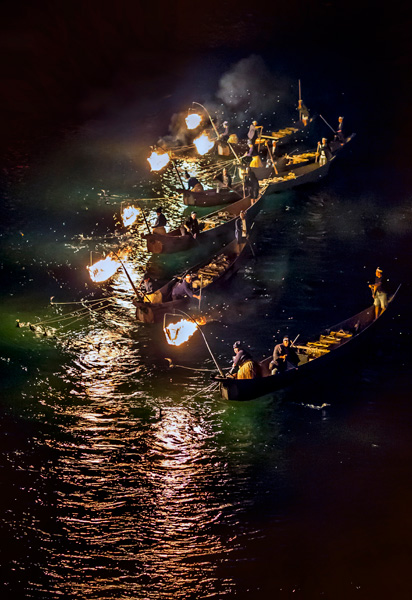
Here in Gifu, you can get a chance to see 'Ukai', the ancient fishing method in Japan. This method uses cormorants (aquatic birds) to catch fishes, and this has been a Gifu tradition for more than 1,300 years!

You will see six boats with their beacons of flame and the cormorant fishing masters directing their birds, making it a uniquely fantastic sight!

18. Getting Confused in the Reversed Park (Yoro Park)


Yoro Park, Gifu

Nature? Something trippy? Time to get to the Site of Reversible Destiny in Gifu!

Also named Yoro Park, the Site of Reversible Destiny is designed by modern artist Shusaku Arakawa and his partner poet Madeline Gins can be said as a giant piece of artwork that will make you question your preconceived notions of balance and perspective.

Besides being a great work of art, it also surrounds Yoro Falls, and offers beautiful nature sights of sakura and koyo (maple) during spring and autumn. If you aren't good with steep walks, there's a lift that you can use to make things less trippy.

It's a place where you enjoy art, sports, and nature. Kids would also love this place as they have a kids area that has facilities such as halls, indoor pool, etc. There are also tennis courts, golf courses, and even restaurants. What more can one get?

p/s: They are closed on Mondays or Tuesdays if the Monday is a national holiday.

19. Eating (and making) pretty, flower-themed sushi!

Hanazushi with rose motif (flower sushi)

In Mino, you should definitely look for Mitake Hanazushi! Its a place where you can pay a small fee of 2,000 JPY to make Hanazushi with prior reservation (check information here). 

Making hanazushi also uses local ingredients. Joining a class allows you to learn 2 different types of hanazushi that are beautiful and eye-pleasing. Rose is a city flower for the nearby city Kani, so you can try making one! 

Check out Hanazushi's site here! You can call their number for reservation 5 days prior the class.


20. Participating in Ogaki Festival

Ogaki Festival, Gifu

Wondering if there's anything to do in May? No worries! Ogaki Festival comes just in time, and it is a festival that is over 360 years, so long that it is now Japan's Important Intangible Folk Cultural Assets. 

During this festival, 13 parade floats will parade through Ogaki's castle town, that creates a beautiful and rare atmosphere where everyone could enjoy. In 2016 too, this festival is listed under UNESCO's list of Intangible Cultural Heritage. 

Which brings me to thinking that most Japanese festivals that I know are somewhat related with floats. Will write something about Nebuta Festival on Aomori next time!

21. Sekigahara Battlegrounds

Sekigahara

While Sekigahara reminds me of this funny CM of Kasaneru Dolce, it's a place that any samurai history lovers should NEVER miss.

Why? Sekigahara was the site of the largest battle among the samurais in Japanese history. There were 160,000 samurais that fought in order to control the realm. 

Of course, what you see is far different from what happened during year 1600. Now, this battleground offers a nice countryside view with flags and stone monuments that indicates where the military encampments of the Eastern and Western Armies once stood.

22. Ji-kabuki and Playhouses

Ji-Kabuki

I've recently learned that there are different kinds of kabuki around Japan! There are the large ones that are performed in cities by professionals that are called o-kabuki, and ji-kabuki are performed on countrysides by amateur locals.

Ji-kabuki gained popularity, especially in eastern Gifu as soon as the art of kabuki gets its popularity throughout Japan. Watching Ji-kabuki is a different experience than O-kabuki, as you will hear audiences shouting words that are motivating to the actors, or throwing donations to actors that are performing well.

If you want to check the schedules for Ji-kabuki, visit here!

23. Try the Hida Beef!

Hida Beef

Beef is an important aspect of Japanese meal. If you say 'meat' in Japan, it's assumed to be beef instead of other forms of meat. 

Kobe beef is famous among international gourmets, but Hida beef is also very popular in Japan! Hida beef is a kind of succulent meat that melts right in your mouth. Try it as steak, sushi, in your nabe (hotpot), or any other ways that is offered! You can say that it's a  satisfaction-guarantee meat! 

24. Getting Amazed at the Subzero Forest in Akigami Hot Spring

Akigami Onsen Subzero Forest

If you're in Gifu during Winter, Shirakawa-go is not the only place with nice light illuminations! Consider bringing your other half to Akigami Onsen for its Subzero Forest and you will be amazed at the winter-only sight!

In the afternoon you can also see this place in in bluish-white tones, and it is open throughout January until March. If you are interested to stay overnight in an onsen during winter, consider here as you also get the chance to taste local dishes for dinner in ryokans!

If you wish to check out their information, visit their Japanese site here.

25. Checking out the Monet's Pond

Monet's Pond, Gifu

If you are following a lot of Japan travel page on Facebook, you might have seen this pond. It is so beautiful that it looks like a painting straight out by Monet!

This pond, although surprisingly nameless as it was just an ordinary pond next to Nemichi Shrine until its exposure to social media in 2015. Best time to visit would be around early summer so it will have water lilies bloom, that would make it to look even more similar to Monet's Water Lillies! 

If you're here in autumn, you will see maple leaves that surrounds the pond, making it beautifully red! 

Here's a good write-up about this pond!


26. Ena Valley

Ena Valley and Onsen

Ena Valley is a man-made lake formed by the construction of Oi Dam in Gifu. Here, sightseeing boats cruise upon its waters that shows visitors different rock formations (there's a lion one in particular that is eye-catching) in the banks. This place offers beautiful view throughout all four seasons.

If you are going around on a cruise, it's a cruise of 30 minutes, otherwise if you wish to enjoy more hot springs, you can also go for their hot spring bath, and even spend your evening here to see the sunset!

Website for the cruise is here. English pamphlet is here.


Here sums up a lot of things that you can do in Gifu and I hope you'll add them into your list next time! There are so much more to explore in Gifu that I have yet to list here for sure, such as enjoying the Itadori Hydrangea Festival or to following the trails of Matsuo Basho in Oku no Hosomichi Musubi no Chi Memorial Hall. Regardless there are a lot to do!

For a full list of the places of visit, consider this site as it contains more comprehensive information in English!

Hope the information helps!


Until next time!
Share
Tweet
Pin
Share
No comments
Shinhotaka Ropeway in Autumn

Hello everyone! In my previous post I've mentioned six things to do in Gifu! There are much more that we can do besides visiting Shirakawa-go, the famous UNESCO world heritage!

Let's continue exploring on things we could do in Gifu! (^O^)/


Click here to go to Part 1.
Click here to go to Part 3.

7. Riding the Shinhotaka Ropeway

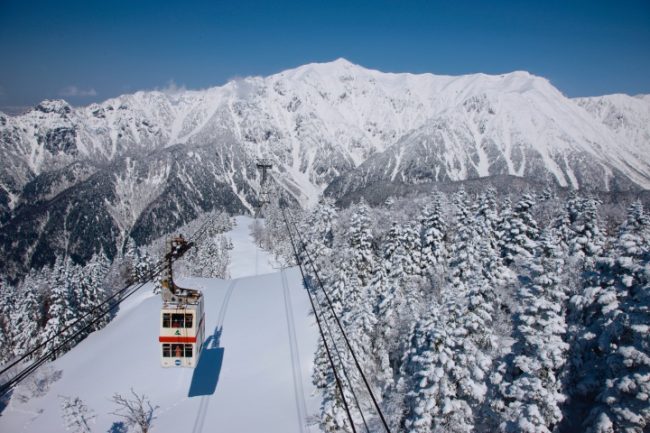
Shinhotaka Ropeway in Winter
If you wondered what makes this ropeway so famous, it's because Shinhotaka ropeway is the one and only (yes, one AND only!) two-tiered gondola! 

Boarding the ropeway gives you a panoramic view of the alps in northern Japan from the observation deck that stands at an high altitude of 2,156m.

Additionally, this ropeway is actually comprised out of two ropeways. First was a short 200m climb to Nabedaira Kogen (En: Nabedaira Highlands) from the bus stop. Alternatively you can also drive up to Nabedaira Kogen (but there's no bus service to this highland). After the first ropeway, you will find public bath, little shops (including restaurants) and galleries, and of course, the visitors' centre. You'll also see some hiking trails and the starting point of double decker ropeway of Shinhotaka ropeway. 

The double decker goes up to the upper station that has an observation deck as well as restaurants and souvenir shops. Hiking season are usually during summer (generally June~Sept). Here is where hikers hike into further points of the mountains. You can actually descend to Kamikochi or even climb further to Nishi-Hotakadate, but proper hiking equipment and preparation is necessary. 

For this ropeway, I personally recommended to visit during autumn and winter for the best views! You also get to see a lot of greens during summer but I personally just prefer autumn and winter. Round-trip will be 2,900 JPY or 1,600 JPY one way from the bottom bus stop, and 100 yen cheaper if you're going from Nabedaira Kogen. 


8. Relaxing in Okuhida Hot Spring Villages

Shinzansou Onsen

Besides Gero that you always see on JR Takayama Hokuriku Tourist Area Pass that has lots of hot spring, Okuhida has a region that has abundant natural hot spring, you could say that they have the highest number of hot air baths in Japan!

Whether you fancy staying overnight, or going there as a day trip, this place would satisfy you as this onsen village comprises of five onsens located in central Japan! Imagine surrounding yourself amongst the alps throughout different seasons as you relax your body and mind here, it's absolutely healing!

It's not too far from Takayama, and you can easily book an express bus (approx. an hour on road) at less than 1,600 JPY. Then you can take a loop bus around to your preferred hot spring. 

Also, you get to see the Hirayu waterfalls in Hirayu Onsen, or ski facility nearby during winter; or if you like beef, please visit Fukuchi Onsen for their morning market specialties - especially Hida beef! 

Matcha Japan has a good write-up of this region that I suggest checking it out here.


9. Experiencing Hot Spring in Gero 

Yumeguri Tegata - A pass that allows you to enjoy onsens!

If you happen to feel like staying in a ryokan (Japanese inn) and wish to get to the city easily, perhaps Gero would be a good place to go too! Being said as one of the top three onsens, if you are staying overnight in Gero, you can definitely consider to also use the inn's shuttle services between Nagoya and Gero Onsen too! 

It was also said that the waters of Gero onsen are so luxurious as they work wonders on the skin! Also, there's a riverbed that features a free-of-charge natural outdoor bath! 

One unique part about Gero is that, you can also spend 1,300 JPY to purchase a wooden pass called Yumeguri Tegata. This pass allows you to enjoy three onsens among 30 participating ryokans! You can use this pass for any three facilities within 6 months and also keep it as a souvenir. 

The list of places that you can use Yumeguri Tegata is here (Japanese only).

10. Checking Out Old Streets of Mino

A shop in the streets of Mino

In my previous post I've vaguely mentioned about how much traditions have been preserved in Gifu prefecture. If you walk around the old streets of Mino, you will see that the Edo-esque feels are still well-retained! There is also the Mino Washi "Akari" Art Exhibition of Japanese paper sculptures that will be held annually during October.

The artworks will be on display are contributed from all over Japan, and will also be illuminated in the streets that gives Mino a dreamy atmosphere.

11. Knowing and Making Mino Washi Paper (Japanese Paper)

Image result for Mino gifu
Illuminated Mino Washi

Though not foreigner-friendly as there is a huge lack of foreign language information, in Mino-Washi Museum, you can check out the history of Mino Washi paper that has been telling stories for at least 1,300 years. You can definitely spend from 500~3,000 on courses to make Mino-Washi paper. There are different courses from making the paper, wetting the paper, making lanterns, making postcards/ certificates, and there are also Mino-washi pro routine courses that lets you experience being a pro washi maker for 1 hour, or for a full day! So far the courses are conducted in Japanese only.

Even if you aren't there to make washi, you can definitely visit their exhibitions! It has a long history since the past. Entrance fee is 500 JPY per adult. You can also purchase a 3-entry ticket to Mino-Washi museum, Akari Art Museum, and to the Former Imai's Residence. 

Access: 20 minutes by car from Mino Station.


12. Learning the Swordsmithing History from Seki Traditional Swordsmith Museum


Seki Traditional Swordsmith Museum写真
Sword-making 
Fan of swords? Then you must come to this place!

Remember from my previous post mentioning that wood is in high demands for smithing? This is why!

Along with Germany's Solingen and England's Sheffield, the city of Seki is one of the most well-known and highly regarded blade-producing areas in the world! Blades have been produced in Seki for over 700 years.

Here you can check the documentations and videos to public. You can even see sword forging in January 2, in the ceremony that marks the first forge of the year! You get to see the high quality products including kitchen knives, scissors, nail clippers, katana swords, etc. that are famous overseas too.

For English information, visit here.


13. Gujo Odori Dance Festival

Gujo Odori
Gujo Odori
Odori means dance in Japanese language. The Gujo Odori is considered as one of the three most famous folk dances in Japan. They dance all night from Aug 13-16 (actually for longer periods from mid-July till early September but Aug 13-16 is where it peaks), called Tetsuya Odori (Literally means "Overnight dance"). People from all around Japan would gather together to dance all night!

If you're joining, you can wear a yukata and geta (wooden clogs), and dance in the circles! Don't forget to go to Gujo Hachiman, the city of crystal clear waters! You can stroll through the historical town there too.

14. Making Life-like Food Replicas

Gujo Hachiman Replica Food
If you've walked past a traditional sushi or Japanese restaurant, you might realize that there are a lot of life-like food replica! You can actually make wax-based food replicas such as tempura, lettuce, etc.

Gujo is the city of these replicas and the replicas from Gujo are sold all over Japan. Amazing, isn't it? You can pay a small fee to experience making a replica in the city too! It doesn't require a lot of time either, so I'd say that you should try it!


I'll stop my list until here for today, but in my next post I'll write more! Such as:
  • Hill of Humanity Park and Chiune Sugihara Memorial Hall
  • Mt. Kinka and Gifu Castle
  • Nagara RIver Cormorant Fishing
  • Ogaki Festival... and more!!

Until next time!


Part 3 here!
Share
Tweet
Pin
Share
No comments
Fish and crackers
Iwate's grilled fish (salted) and cookies

I just came back home from Iwate in this spring and it was so beautiful that I wished I could stay longer! I'm sharing some information and spots where you could consider visiting when you are in Tohoku!

So, where is Iwate?


Iwate is part of the Tohoku region of Japan, east of Akita, and south of Hokkaido & Aomori. It offers a unique coastline, and a lot of cultural heritages! It's also a great place for mochi and noodle lovers.

Why did you decide to visit Iwate?

The main reason I've decided to visit Iwate was no other than due to influence of my favorite person - Hosoya Yoshimasa-san. He is a famous seiyuu (voice actor) in Japan voicing various movies, anime, games and even hosts a radio show.

Years ago, he and Ono Kensho-san (voice actor) had a travel program that they have visited Iwate for a 2-day trip, so that gave me the kick start!

What do you have in Iwate?


Iwate has a lot to offer, and my stay of a short 4 days was not enough to visit everything!
Above is a map that I've compiled some information that I believe would find helpful for everyone.

The main parts of sightseeing would be Ichinoseki, Hiraizumi, and Morioka.
However, Tono, Kamaishi, Hanamaki, Miyako are also some places that are worthy of visit!

For further information, you can visit Iwate's Official Travel Guide Page here.


Hiraizumi - The Place of Heritages

Visiting Hiraizumi was a relaxing trip for me. I based myself in Ichinoseki so it is very easy to travel around! It offers a nice, relaxing walk (even a short hike) with temples and nice trees!

Motsuji, Chusonji are some of my favorite places. Amazing architecture, nice row of cedar trees, and a relaxing atmosphere! Here are some photos that I've managed to take (and edited) with my Samsung Galaxy S6 Edge.


Chusonji's Konjikido. Photography/ videography/ recording inside is strictly not allowed.


Rows of cedar trees along Tsukimizaka (moon-viewing slope) on the way up to Chusonji


Sakura tree in Motsuji's gardens. They also have a flower garden but it wasn't the best time to view it during my visit.

Dragon boats used for festivals in Motsuji.

Image may contain: sky, cloud, tree, outdoor, nature and water
Beautiful garden in Motsuji

How Konjikido looks like. This is a model found in Ichinoseki Station.

Ichinoseki - The Gem of Iwate

From Ichinoseki, I have managed to view some nice sakura, gorges, and tasting the nicest mochi I've tried in my life! 

The gorge that I would love to talk about is Genbikei, because it has a flying dango that comes from across the river! By all means please try it! 

Part of Geibikei Gorge

If anyone wants to know why I came to Iwate, here's why:

おはようございます!!
今、細谷佳正さんと旅友の撮影中です!
皆様からの質問を大募集!
このツイートに返信してください!
ロケ中に答えますー!!!よろしくお願いします^_^
まぶすぃー。 pic.twitter.com/Dwzc1oTYuc
— 小野賢章がゆく 旅友 【公式】 (@info_tabitomo) September 16, 2017


DVD「小野賢章がゆく 旅友 第六弾 〜ゲスト:細谷佳正篇〜」が2018年1月13(土)発売決定!第六弾は"大人の修学旅行"をテーマに岩手県の一関・平泉地区を巡りました!
全国のアニメイトショップ、アニメイトオンラインショップにて、本日から予約開始!→https://t.co/e3zKRwiA62 pic.twitter.com/QxLH8QMvc7
— 小野賢章がゆく 旅友 【公式】 (@info_tabitomo) October 5, 2017


Image may contain: food
Mochi from Seki no Ichi Brewery's Restaurant

A popular culture in Iwate is to eat mochi. I got to know this restaurant (which is also a place where you can visit to understand how to brew beer) from Ono-san and Hosoya-san's program! You get eight different types of mochi (the middle one is not mochi, it's raddish, more of a cleanser you use to switch flavors).

The special part about this set is that, they have a hidden branch (?) under one of the mochis. You can eat the mochi in any order, and if you picked the one with a branch on your first mochi, then the day itself is your lucky day; and if it's in your second mochi, tomorrow will be your lucky day; if it's in your third mochi, the day after tomorrow will be a lucky day... and so on!

There are 8 flavors, from top left: shrimps, wild sesame, black sesame, zunda, raddish (not mochi), walnut, natto, sweetened red bean, grated raddish (with some mushrooms). Although natto is my least favorite, but I don't dislike it. Personal favorites are red bean, shrimp and wild sesame.

Red bean has a sweetness that hit right home, shrimps are crispy and flavorful, wild sesame has a hint of sweetness and fragrance that I love. They also had another bowl of soup + mochi but I really prefer my mochi to be sweet. Salty mochi tastes nice too, but I guess I am just preferring things to be sweet?

Image may contain: food
I got my branch in my third mochi!


Sahara Glass Park near Genbikei

No photo description available.
Map of Japanese food in Seki no Ichi's Private Room

Pokemon Train (Ichinoseki - Geibikei - Kesennuma)
If anyone asked about what makes Ichinoseki interesting besides mochi, Pokemon train it is! I've made my reservation with JR East website + JR Pass (Tohoku Area) and I'll write a post about it next time. 

The oarsman in Geibikei boat cruise

Geibikei is a gorge that has different beautiful rock formation. You can buy a ticket at 1,600 yen (perks if you stay with Toyoko inn because you can get a discount of 200 yen with the voucher that you can get in the lobby!!) at the counter of Geibikei. There's a waiting room that you can wait for the boat, or you can eat the food around.

The oarsman will guide you through the river as you view the beautiful gorge (Japanese only). As there are nobody else that are foreign-looking, the oarsman spoke in Japanese only. There are some very, very basic English spoken on another boat with a few Caucasians. Either way you get to receive an English pamphlet as well so you won't miss out.

You will be brought until the end of the place and is given 20 minutes to go around. Walk till the end to get some lucky beads (5 for 100 yen) and test your throwing skills for luck! Do remember to get back to the boat on time so you won't be left behind! (I almost got left behind because there were too many people due to two ships coming in at almost the same time, no joke lol)

Image may contain: 1 person, standing, tree, outdoor, nature and water
Me finally having the courage to ask a stranger to take a photo of me in the inner part of Geibikei
Cross the bridge and you get to see the selling place of the lucky beads

Some lucky beads - you get to choose for luck, romance, love, opportunity, career.. etc.
Many failed attempts to throw the beads into the hole, gotta swing that arm hard man

Salted skewed fish outside of Geibikei's ticket counter


Free omikuji outside of Geibikei - pick a bead to see which luck you will get!

After finishing my time in Geibikei, I had plenty of time until my next train back to Ichinoseki, I ate some fish and and played with the omikuji beside the river. Apparently transparent is for studies and I have no intentions to pursue another degree at the moment (lol), a little weird but then I am contemplating about taking JLPT N2 so, maybe it works? BTW you have to return the bead and you will hear an ear-cleansing 'ding' sound!

On the way back to the train station you should also see Kamisukikan! It's a place where you can buy paper-related merchandise, or you can also try making paper! You will be given colored water and various dried leaves, flowers, etc. to be creative!

Paper-making studio in Kamisukikan

Morioka - The Heart of Iwate Noodles

If we are talking about Japanese noodles, you definitely can't miss out Iwate! They love noodles so much that even their city mascot is noodle-themed! 

The three famous noodles in Iwate are Wanko soba, Jajamen, and Reimen. You can find them all in Morioka itself! 


Top: Reimen from Pyonpyon; Bottom left: Egg soup after Jajamen; Right: Jajamen from Pairon

If you love challenging yourself as a big eater, try eating wanko soba in Azumaya! You get to eat as much as you like with a fee of 3k+ JPY and you'll receive a certificate after your challenge! If you could beat 100 bowls you get a special momento too! Otherwise if you don't feel like challenging (which was my case), there are a lot of places that you get to eat this. I ate mine in Yoshiie because Hosoya-san signed in a corner of the building! 

Image may contain: food
Wanko Soba in Yoshiie, Hiraizumi

Of course, besides noodles, Morioka has a lot to offer too! For instance, beautiful architecture and parks!

Bank of Iwate Morioka Red Brick Building

Surrounding area (red brick building across)

Morioka History and Cultural Museum

Pairon Jajamen

Morioka Castle Site Park

Shinkansen Hayabusa and Komachi in Morioka Station

Other Regions of Iwate

Hanamaki is a place where you can catch the steam locomotive to Kamaishi, SL Ginga! It's a beautiful train with a old school, sleek design while having a planetarium inside! It's a place where Miyazawa Kenji, a children storybook writer lived. This region itself is said to be the Ihatov of Iwate.

Tono and Kamaishi are famous for its history of steel and iron making. It is also a filming place for some dramas due to there having a traditional village. Besides, if you arrive Kamaishi, it's recommended to stay for a night and even head to Miyako for the beautiful Jodogahama beach! Their sanriku railway just went fully operated after the tsunami strike, so it's worth going now!

If you are interested in traditional crafts, perhaps Ninohe of Iwate is a unique place for you too! It's famous for the Japanese lacquer so if you are keen to know how they are made, a trip to Ninohe is recommended as well!

Kitakami is a great place to visit during spring (late April), as Kitakami Tenshochi is lined with rows of sakura blossoms! If you are going there at the right time, you get to enjoy festivals and night view where the trees are lit up too! 

My Itinerary

My itinerary in Iwate was a simple and relaxing one! If it's helpful it'd be great! 

Day 1 - Arrival in Morioka - Morioka Castle Ruins Park - Sakurayama Shrine - Rock-breaking Cherry Blossom Tree - Bank of Iwate Red Building - Pairon's Jajamen - Takubou Shinkon House - Returning to Ichinoseki to check in hotel.

Day 2 - Taking a train from Ichinoseki to Hiraizumi - Chusonji - Kanjizaiouin Ruins - Hiraizumi Heritage Center - early lunch in Yoshiie (tsukimizaka) - Chusonji - Konjikido of Chusonji - other ruins while walking along the way back to Ichinoseki Station - bus to Takkou no Iwaya - bus to Genbikei - Bus back to Ichinoseki 

Day 3 - Hotel breakfast - Pokemon train to Geibikei Station - Geibikei - Kamisukikan - Tsuriyama Park (sakura viewing) - train to Mizusawa Park (sakura viewing)

Day 4 - Hotel breakfast & check out - Hanamaki Station - Kenji Miyazawa Memorial Museum - Kenji Miyazawa Dowa Mura - Onsen-hopping in Hanamaki - leave Iwate 


Hope the above helps! I'm definitely planning to head back to Iwate for SL Ginga in the future! I would really want to see Miyako and also taking the Pokemon train all the way until Kesennuma (Miyagi) too! 

Will you be going to Iwate? Feel free to ask anything in the comments! 


Until my next update! ☆
Share
Tweet
Pin
Share
No comments
Older Posts

About Me

Jin
Jin
Freelance Interpreter & Translator
Type A  ·  ENFP  ·  Virgo–Libra Cusp
Interpreting Experience
・Hoshino Resorts Tomamu
Travel Events
・Gifu Prefecture Tourism
Travel & Business Events
Former travel consultant, Japanese agency (3+ years)
Languages
English  ·  中文  ·  Bahasa Malaysia  ·  日本語
岐阜県通訳・旅行コンサルタント経験有。
4ヶ国語話せます。
日本文化とモバゲーが大好きです!
Support the blog

If these posts have been useful…

Writing detailed travel guides takes time — researching, photographing, and keeping everything current. If you've found something here helpful, a coffee goes a long way. No pressure at all, and thank you for reading.

Buy me a coffee on Ko-fi
no obligation · always free to read
Rail Passes & Japan Essentials

Sort your rail pass before you book anything else.

Three years at travel fairs and it is still the first question: which JR pass do I actually need? What hassle-free activities would be great? Japan Experience carries the full range — regional and nationwide — with honest side-by-side comparisons.

Browse passes & activities →

Affiliate link. Booking through this supports the blog at no extra cost to you.

Klook.com

Blog Archive

  • ▼  2026 (63)
    • ▼  August (4)
      • Taue Festival 2027: Shirakawa-go's Rice Planting C...
      • 🌀 Typhoon in Japan: A Practical Survival Guide (2...
      • The Prescription Guide to Japan: Bringing, Buying,...
      • 2026 Shirakawa-go Doburoku Festival Guide: Dates, ...
    • ►  July (10)
    • ►  June (10)
    • ►  May (8)
    • ►  April (9)
    • ►  March (14)
    • ►  February (4)
    • ►  January (4)
  • ►  2025 (49)
    • ►  December (5)
    • ►  November (4)
    • ►  October (4)
    • ►  September (5)
    • ►  August (4)
    • ►  July (4)
    • ►  June (5)
    • ►  May (4)
    • ►  April (4)
    • ►  March (6)
    • ►  February (4)
  • ►  2020 (18)
    • ►  November (1)
    • ►  July (1)
    • ►  June (2)
    • ►  May (3)
    • ►  April (3)
    • ►  March (4)
    • ►  February (3)
    • ►  January (1)
  • ►  2019 (24)
    • ►  October (5)
    • ►  September (1)
    • ►  August (1)
    • ►  July (5)
    • ►  June (4)
    • ►  May (4)
    • ►  March (3)
    • ►  January (1)

Created with by BeautyTemplates

Distributed by Gooyaabi Templates