• Home
    • Travel Regions
      • Hokkaido
      • Tohoku
      • Osaka
      • Tokyo
      • Kyushu
      • Gifu
    • Reach Out
      • About Me
      • Contact Me
    • Tips & Guides
      • budgeting
      • Car Rental
      • Transportation
      • Muslim-friendly Guide
      • Coming Soon

Jin Travels Japan

Instagram Twitter Substack
Stepping Back in Time: A Personal Guide to Magome-juku on the Nakasendo | Jin Travels Japan

Hello everyone, and welcome back to the blog! You may have read my blog from my journey in Kyushu, especially my mystical adventures in Takachiho with my close friends, but in today's post we're talking about Gifu, located in central Japan, where we’re trading ancient myths for a place where you can still live in history!

Jump to Content Overview

Today's post is taking you to Kiso Valley to explore Magome-juku (馬籠宿), the 43rd post town on the legendary Nakasendo road. While it's less popular among Malaysian travelers, it is fairly popular for hiking enthusiasts, and tourists from the west! If you’ve ever dreamed of walking through a landscape that feels suspended in the Edo period, this is your chance. For those looking for things to do near Gifu or after visiting Shirakawago, Magome-juku offers a perfect cultural day trip, so read on!

Now, imagine cobblestone paths winding up a mountainside, lined with wooden inns with latticed windows, the sound of water wheels turning, and the smell of grilled mochi in the air. Walking along Magome isn't just about visiting somewhere like you're going to a museum, but an experience of vibrance where there are still businesses and residents where history feels palpably close. It was even awarded a star in the Michelin Green Guide Japan! I recently received some stunning photos from the Gifu Prefecture Tourism Federation, and they absolutely captured the magic, so I'm thrilled to share this visual journey with you. Let’s lace up our most comfortable walking shoes and step back in time!

Content Overview

  • A Highway Through History: The Story of the Nakasendo
  • A Walk Through Magome: Sights, Tastes, and Treasures
  • The Classic Adventure: Hiking from Magome to Tsumago
  • Practical Guide: Getting to Magome & Trip Planning Tips
  • Final Thoughts & What's Next
The view looking down the main sloping cobblestone street of Magome-juku, lined with traditional wooden buildings.

A Highway Through History: The Story of the Nakasendo

To truly appreciate Magome, you need to understand the road it served. During the Edo period (1603-1868), the Nakasendo was one of the five major highways connecting the shogun's capital in Edo (Tokyo) with the imperial capital in Kyoto. Unlike the coastal Tokaido route, the Nakasendo wound through the rugged mountains of central Japan—hence its name, which means "Central Mountain Route".

This 500-kilometer journey was no small feat. Travelers—including feudal lords (daimyo), samurai, merchants, and pilgrims—needed places to rest. This led to the establishment of 69 official post stations (shukuba) along the route. Magome-juku was the 43rd station from Edo and is uniquely built on a steep slope. So steep, in fact, that legend says its name (which uses the characters for "horse" and "basket") comes from travelers having to leave their horses at the bottom and proceed on foot!

The town you see today is a meticulous preservation. After falling into obscurity with the coming of the railway and suffering devastating fires, it has been lovingly restored to give us an authentic glimpse into Edo-period travel. Walking here, you're tracing the footsteps of centuries of travelers.

A Walk Through Magome: Sights, Tastes, and Treasures

The best way to experience Magome is to simply wander. The main street is a sloping, cobblestone path—ishidatami—flanked by dark wooden buildings with characteristic latticework. While it looks like a flawless movie set, remember this is a living town. Many buildings are private homes, so be respectful as you explore.

Here’s what you shouldn’t miss as you stroll from the lower entrance uphill:

  • The Water Wheels: Look for the large, working waterwheels along the street. They’re not just picturesque; they’re a functional piece of history and make for beautiful photos.
  • Shimazaki Toson Memorial Museum: Magome is the birthplace of Shimazaki Toson (1872), one of modern Japan's most important novelists. His former residence, which also served as the town's honjin (official inn for dignitaries), is now a museum dedicated to his life and work. It's a quiet spot to connect with the town's literary soul.
  • Local Crafts & Souvenirs: The shops are part of the charm. Look for "wara-uma" (straw horses), a traditional local lucky charm. You can also find beautiful woodwork from the Kiso region, known as rokuro-zaiku.
  • The Viewing Observatory: As you ascend the slopes along Magome-juku, you will eventually find yourself arriving at an observatory with refreshing views of the Japanese mountains. The descend from the observatory too, offers a picturesque view of Magome-juku that makes it an amazing photo opportunity.
A traditional wooden shopfront in Magome selling local crafts and souvenirs.
  • Must-Try Local Foods: Your walk demands sustenance!
    • Goheimochi: This is the iconic Kiso Valley snack. It's a grilled rice cake (mochi) on a stick, slathered in a sweet-savory miso-based sauce and often topped with walnuts. You'll smell it before you see it!
    • Oyaki: Another delicious dumpling, often filled with red bean paste, vegetables, or savory miso.
    • Soba: The mountain climate is perfect for buckwheat, so a bowl of fresh, handmade soba noodles is always a good choice.

Pro Tip for the View: The climb is worth it. When you reach the top of the town, you’ll find a stunning panoramic viewpoint. On a clear day, you can see majestic Mount Ena in the distance and look back down the Nakasendo winding through the valley. It’s the perfect spot to catch your breath and reflect.

The Classic Adventure: Hiking from Magome to Tsumago

For many visitors (including me on my wishlist!), the highlight isn't just Magome itself, but the journey to its sister post town, Tsumago-juku. The preserved section of the Nakasendo trail between the two towns is one of Japan's most rewarding and accessible historical hikes.

  • The Hike at a Glance: The trail is about 8 kilometers (5 miles) long and takes most people between 2.5 to 3.5 hours to complete. You'll walk through forests, past small farms and waterfalls, and along original cobblestone paths. The route is well-signed.
  • Direction Matters: It's highly recommended to hike from Magome to Tsumago. Why? Because you’ll be going mostly downhill, which is much easier on the knees! Magome is at a higher elevation than Tsumago.
  • Hasle-free Luggage Service: Don't want to hike with your backpack? No problem! Both towns offer a luggage forwarding service. You can drop your bag at the Magome Tourist Information Center before 11:30 AM, and it will be waiting for you in Tsumago after 1:00 PM for a small fee. This is an absolute game-changer.
  • A Town Frozen in Time: Tsumago is often cited as the best-preserved post town on the entire Nakasendo. To maintain the historic atmosphere, cars are banned on the main street, and even telephone wires are buried out of sight. Exploring its quiet lanes after the hike feels like a true reward.

Practical Guide: Getting to Magome & Trip Planning Tips

Magome is wonderfully remote, which is part of its charm, but it requires a bit of planning to visit. Based on the available information, here’s the most common route:

  1. Base City: Start from Nagoya, a major transportation hub.
  2. Train to Nakatsugawa: Take the JR Limited Express Shinano on the Chuo Line from Nagoya Station to Nakatsugawa Station. This scenic train ride takes about 50-70 minutes.
  3. Bus to Magome: From Nakatsugawa Station's bus stop #3, board the Magome-bound bus (Kita Ena Bus). The ride takes about 25-30 minutes and costs around 800 yen.

Useful Planning Tips:

  • Best Time to Visit: Spring (April-May) and Autumn (October-November) offer the most pleasant weather and stunning scenery, with cherry blossoms or vibrant fall foliage. Summer can be hot/humid, and winter may have snow.
  • Cash is King: Bring plenty of cash (yen). Many of the small shops, cafes, and bus services in this rural area do not accept credit cards.
  • Stay Overnight: To experience the magical atmosphere after the day-trippers leave, consider staying in a traditional guesthouse (minshuku) or ryokan in either Magome or Tsumago. For more standard hotel options, Nakatsugawa town near the station is a practical base.
  • Check Bus Schedules: Rural bus schedules can be infrequent, especially in the late afternoon. Always check the latest timetables for your return journey to avoid getting stranded.
A quiet, sun-dappled side street in Magome with stone paving and traditional architecture.

Final Thoughts & What's Next

Magome-juku is more than just a pretty street. It’s a portal. A place where you can actively engage with history by walking the same stones, tasting the same foods, and gazing at the same mountain views as travelers from 400 years ago. Whether you spend a few hours soaking in the atmosphere or embark on the epic hike to Tsumago, it’s an experience that connects you deeply to Japan’s cultural fabric.

Have you visited the Nakasendo or any of Japan's other historic post towns? I’d love to hear about your experiences—share them in the comments below!

If this post has inspired you to plan your own journey back in time, remember you can book your travel and accommodations through my Trip.com referral link. It’s a great way to find deals and support the blog as I bring you more guides to Japan’s hidden gems. Happy travels, and stay tuned for our next adventure!

*Disclosure: This post contains affiliate links. If you book through them, I may earn a small commission at no extra cost to you. This helps keep the blog running - thank you! 🙏

🏨 Book Nakatsugawa Hotels 🚗 Rent a Car in Nagoya ✈️ Flights to Nagoya

Continue your Gifu adventure with our guides to Takayama's cultural treasures, Hida Furukawa's serene streets, and Gifu's incredible cuisine. Have you hiked in Japan before? Share your favorite memories below!

Back to Content Overview
Share
Tweet
Pin
Share
No comments
Plans change. Sometimes you wished to defy fate, especially when you want to have things go your way for a journey you planned so meticulously. Despite the number of times I refreshed the website for Mt. Aso's crater activity in hopes to see the alert go away so perhaps we can still have a glimpse before sunset, it didn't happen.

But will that actually stop me? When I've been dreaming of seeing volcanic craters with my own eyes? Of course not! So guess who's stopping by at Aso Station because there might be a chance we'd still be able to check if local buses can operate to take us there, right?

Yeap, that was me with my wishful thinking.


Usopp Statue Kumamoto
Proof we pivoted from volcanoes to anime pilgrimages!

That, ladies and gentlemen, was how I ended up taking pictures of the bronze Usopp statue from One Piece while side-eyeing bus schedules in Aso Station, and such was our afternoon after leaving Joyfull Aso before heading to our stop at Kumamoto, but of course Kumamoto still delivered joy (and crispy pork) we never saw coming!

Aso Scenery
Image taken along the way from Aso to Kumamoto


So in this blog post, I'll be taking you to a little journey of how we end up utilizing our backup plan, even though I really didn't wish to use this plan at all. So if you do ever need to find something to do as an alternative plan when Mt. Aso isn't in the mood to see humans, perhaps this post can help you!


Detour: Usopp Statue & The Bus That Wasn’t Operating

There are actually ten different statues of the current locations all across Kumamoto Prefecture, consisting ten different characters where I'll be sharing a map below! Popular characters such as Luffy, Sanji, Usopp, Chopper, Zoro, Nami, Robin and more are listed. While none of us actually managed to finish watching the entire series of One Piece, we decided to still take a photo of Usopp while we're here at Aso Station!


By the time we arrived at Aso Station, the day was still bright and breezy, and it's difficult to imagine there were actually some volcanic activity happening not too far away from us, so my hopes were brought up once again as I gleefully ran my way from the parking lot to the bus station to search for their latest operation updates!


Aso station Kumamoto
Aso Station from the parking lot

However, with Mt. Aso still belching uninvited gas, what we ended up doing at Aso Station were:
✔️ Confirming that buses to Mt. Aso were still canceled (sigh +999)
✔️ Take pictures of Usopp’s statue (since we're here, might as well, right?)
✔️ Secretly hope the Straw Hat crew would manifest a crater visit for us (didn't happen in time, it is what it is)

So, the final result?

Gas emissions: 1, Jin’s volcano dreams: 0.

Oh well, at least Usopp’s standing tall for us to photograph him, and Mt. Aso isn't going anywhere. So in defeat, I've accepted our reality and drove back to Kumamoto.

Sotetsu Grand Fresa Kumamoto
The 5pm check-in rush—worth it for that bathtub later.

Sotetsu Grand Fresa Kumamoto: Check-In Chaos & Bathtub Bliss

By evening, we parked our car in a nearby building (with a discounted rate!), brought what's necessary (without leaving valuables in our car), and dragged our suitcases to Sotetsu Grand Fresa Kumamoto, where:
  • The self-check-in machines were packed (pro tip: arrive pre-3pm to avoid queues, or just check in much later)
  • The room had a bathtub comfortable enough to drown my Aso disappointment (with some help from bath salts)
  • The location was perfect—Shinshigai arcade is just steps away!

We booked a triple room so we got a bed each! The room is nowhere as spacious as the room we stayed in Kokura, but it was enough for a one-night stay. Plus their coin laundromat was available (as per my friends' request) so it was still a pretty big W for us, despite them needing to queue for quite a while to get laundry done. And since we noticed the queue, we decided to just head out and do laundry later, so off to Shinshigai Arcade we go!

Shinshigai Arcade: Shopping & Michelin-Starred Pork

With our hotel being super close to the shopping arcade, it's clearly the first stop for us right after check-in! Consisting of various shops from drugstores to souvenirs, fashion to karaoke outlets, there are plenty to do here!

As a self-proclaimed shopaholic, we hit Kumamoto’s famous arcade for three priorities:

1. Retail Therapy

Kumamoto Shopping Arcade
Strolling as we go~

With the super filling meal we had from Joyfull Aso, our tummies were still pretty much filled even after checking in! So we shopped for a while along the streets, from looking at quirky souvenirs to checking out drugstore items to compare prices and of course, checking out more Kumamon merch (because obviously that's a NEED if you're traveling to Kumamoto), we window-shopped until we got really hungry, and that's when we began walking to indulge in our next Michelin-starred stop!


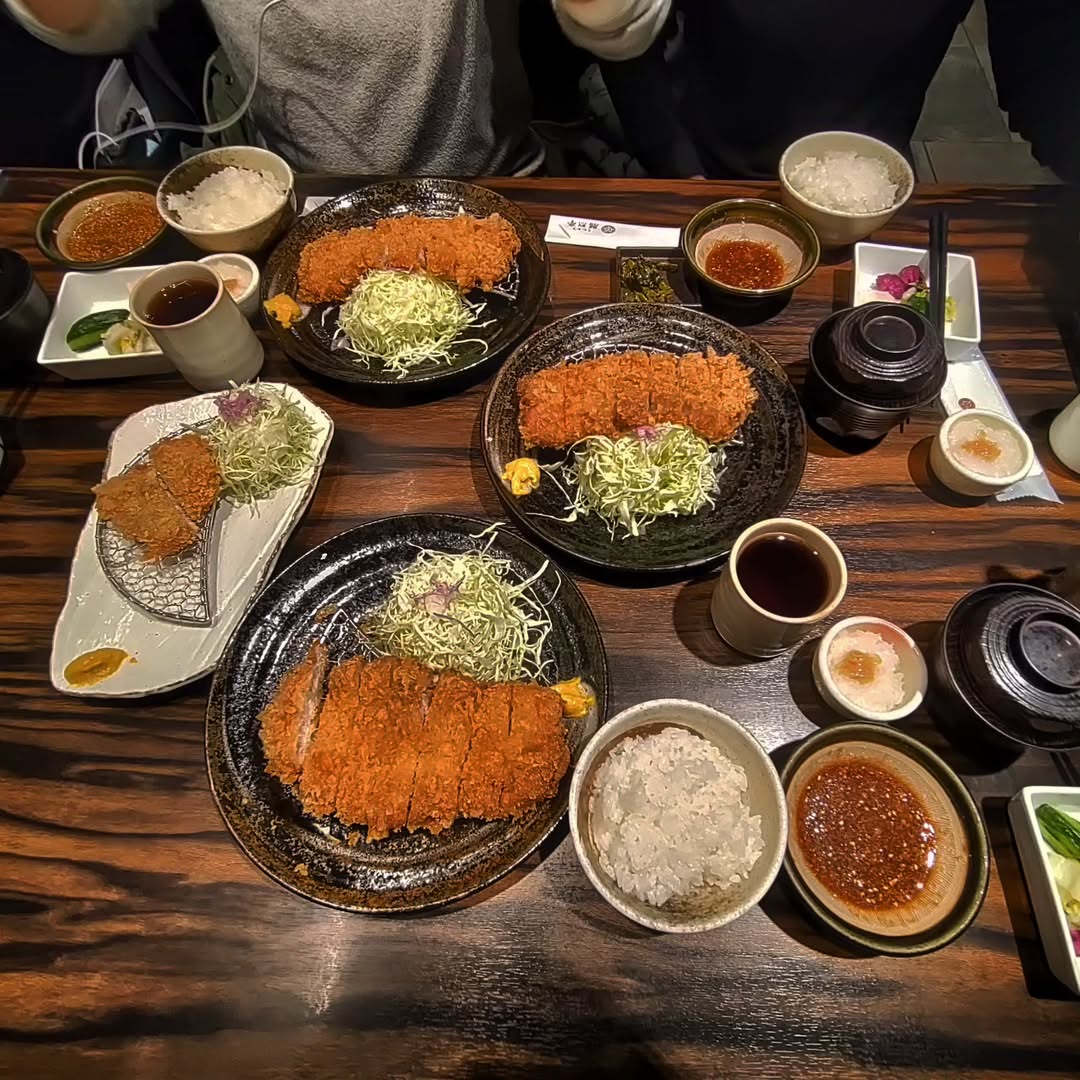
2. Katsuretsu Tei’s Tonkatsu (★)

Michelin-starred tonkatsu at Katsuretsu Tei in Kumamoto
Not all Michelin-starred meals have to break the bank, trust me

At this Michelin-starred spot, we devoured:
  • 💎 Premium loin katsu (so tender it made me forget about volcanoes for a moment)
  • 🍚 Bottomless rice & cabbage (because carbs heal wounds)
  • ✨ Secret sauce (with some grinding involved)

While I personally have a stronger preference for my tonkatsu at Gohantotororo Toromugi, I absolutely love the idea of grinding your own sesame to blend with their tonkatsu sauce! It might feel a little tiring at first, but doing this together with friends can be fun, and the meal tastes unique and gives you a sense of accomplishment so I'd say it's still a great experience!


Michelin-starred tonkatsu at Katsuretsu Tei in Kumamoto
Crispy, juicy, and worth every calorie.

Since we're able to order rice and cabbage refills, I managed to finish another three bowls of rice, and rest assured my tummy was filled and happy! Oh did I mention we actually had to queue for a seat because there were so many of us queueing in their main branch? It's popular with the locals and travelers too, and I definitely understand why after a meal here.

3. Art Museum

Contemporary Art Museum Kumamoto

After our meal, we decided to drop by Contemporary Art Museum Kumamoto as we strolled along the downtown. There are different sections that we can visit for free, and there's also an exhibition that is time-limited that will require an entrance fee. We actually also managed to see works by Yayoi Kusama, and we're really happy too! 


Contemporary Art Museum Kumamoto
Contemplating life in a Contemporary Art Museum (featuring Friend B)

There are also many art pieces made of sand that are beautifully arranged, and 'mesmerizing' was the least creative word I could think of when it comes to describing them. It almost feels like we could really spend hours and hours here!


Contemporary Art Museum Kumamoto Drawing
I also colored this while waiting for Friend A to browse the rest of the paid exhibition!


Not to mention, they also have various merchandise, art prints, frames, and so much more that you can also purchase! I also managed to find prints from an artist I happened to know from a collaboration with my favorite voice actor's narrations, so I was really happy (and did spend quite a while to pick which print to get).


Contemporary Art Museum Kumamoto
As someone who likes clear, shiny things, they caught my eye (especially the emerald-colored one)


After a lot of standing and walking, we decided to stroll back along the shopping arcade instead of going for a karaoke session so I can get my daily soak like a fish out of water, while my friends can get their laundries done!

Laundry vs. Baths: The Evening Divide

After returning to our hotel, our group split:
  • 👚 Friends A & B: Laundromat warriors (bless them, the queue was still long but they gotta do what they gotta do)
  • 🛁 Me: Soaking in the tub like a happy goldfish for the entire hour

Sotetsu Grand Fresa Kumamoto
Our room comes with TV with multiple channels (though all in Japanese)


I headed straight to the tub as soon as I tossed my coat onto my bed, heard my friends heading out, and thankfully brought my phone, along with my onsen bath salt to enjoy my me-time in the bathtub while listening to my favorite music, clearing my game dailies, and updating my family on my travels. By the time my friends were back almost an hour later, I was just about to get out from the tub to catch some sleep!

Though we did end up chatting more while watching TV while they took their turns to shower and sort out their suitcases, and that's how we ended our day!


What's Next: Morning Buffet Redemption

On the following morning it's going to be a day where we explore a little more in Kumamoto before leaving the city with its super lovable mascot! But of course, our room did come with breakfast, so we'll talk about that next time!


Tips and Key Takeaways

From our experience of missing out the crater and having to change our plans, there are definitely a few things I'd like to share!
  • 🔥 Mt. Aso closures? You'd also want to check bus schedules here first (especially if you're visiting Mt. Aso by public transportation) and always have a backup plan.
  • 🍖 Katsuretsu Tei: Worth the Michelin hype (go before 7pm!)
  • 🛌 Sotetsu Grand Fresa: Book a room that comes with a bathtub along with a breakfast plan, you'll appreciate it if you're walking a little too much!

If you're also looking for accommodation or tickets and would love to support my blog, kindly consider booking via my referral links! It doesn't cost you more, but it'll help supporting my blog when you make a booking!
👉 Book here via my Agoda referral link (click here)
Or if you're still looking for flight tickets, consider booking here at Trip.com (click here)!


"Save this itinerary for your Kumamoto backup plan! Pin it below or bookmark for later. Also, ever had a Plan B day that outshined Plan A? Share your stories below! ↓
Share
Tweet
Pin
Share
No comments
Meal at Joyfull Japanese Family Restaurant
Lunch!


"You attract what you fear," they said. 


And they were right.

Our original plan? End our hike at Kamishikimi Kumanoimasu Shrine, drive up to Mt. Aso, stand at the edge of its majestic crater, and feel like tiny, insignificant specks in the grand scheme of nature.

Reality? "Absolutely not," gas emissions said.


webpage information on mt. aso status
The webpage message I wished not to see...


Yes, plans do change—especially when volcanoes are involved, and no matter how meticulously I tried to plan my trip in an Excel sheet. Our dream of standing at Mt. Aso’s crater edge was dashed by gas emissions, but Joyfull’s Salisbury steak and free-flow melon soda saved the day. Here’s why this budget-friendly chain is a road-tripper’s best friend.

So instead of sulking (okay, maybe a little sulking), we rerouted to Aso City for the next best thing: food. Specifically, a glorious, budget-friendly feast at Joyfull. Because if Mother Nature denies you volcanic wonders, at least let Salisbury steak and free-flow melon soda heal your soul.

It's a little over 2 months since I've written weekly posts about my girls trip to Kyushu, Japan! If you've followed so far, you probably knew how much I love dining at Saizeriya (and Japanese family restaurants) so there are no other reasons why we shouldn't be dropping by at Joyfull at Aso City. 


Joyfull Japanese Family Restaurant Signboard - Aso Kumamoto
Opens 24 hours. What a blessing.


Why Joyfull? Parking, Affordability & the Allure of Free-Flow Drinks

Meal at Joyfull Japanese Family Restaurant Interior
We sat nearby! And you can kinda see the soft drinks machine on the left now, I think!


Sure, there were other restaurants available, but we were already hungry and we did spend a little too much on our earlier days at Beppu and Takachiho (don't get me wrong, every yen spent was worth it) so a budget-friendly restaurant was the first choice in mind. It was also the only family restaurant we could find on the map back then because there were no Saizeriya or Gusto near Aso City too, so Joyfull was the immediate choice.

Also, since we were driving in Japan, so parking space has been a concern, but here at Joyfull, parking was a breeze! Joyfull locations (like most Japanese family restaurants) usually have spacious lots, and this Aso branch was no exception. No circling like a vulture hunting for a spot—just pull in, park, and prepare for a meal that won’t break the bank.

Not to mention, though I've probably said this before, the main reasons why family restaurants like Joyfull are a godsend for travelers, and here's why:
  • Budget-friendly: Unlike fancy izakayas or tourist traps, family restaurants in Japan offers huge portions at wallet-friendly prices.
  • Free-flow drinks: The Joydrink bar (in this context, from Joyfull, provides unlimited soft drinks and coffee) is a steal with just a small purchase of their menu item!
  • Comfort food galore: From Japanese classics to Western-style dishes, there’s something for everyone—even picky eaters.

Pro Tip: If you’re road-tripping in Kyushu, Joyfull (along with Saizeriya, Gusto and Jonathan’s and other family restaurants) is a reliable pit stop for affordable, hearty meals. Oh by the way, if you've heard of Shabu-yo (yes, the shabu-shabu buffet) restaurant in Malaysia, it is also operated by Skylark, which also runs Gusto and Jonathan's as well as many other restaurants all across Japan!


What We Ordered (And Why It Was a Big W for Us)

1. The Daily Lunch Set (¥768, tax included)

Meal at Joyfull Japanese Family Restaurant - Rice, Hamburg, Gyoza
My lunch!


"Today’s Special: Grand Salisbury Steak + Rice + Free-Flow Drinks & Soups"


I went for the daily lunch set, which included a juicy Salisbury steak smothered in demi-glace sauce, a plate of rice (and if you add just 100 yen more you can enjoy unlimited rice refills too!), and—most importantly—unlimited access to the Joydrink bar and soup. 

The menu without add-ons are actually just 500 yen, but who doesn't love free flow drinks and soup? I'm definitely not someone who'd pass on such an opportunity. So, with the generous offer from Joyfull, it's pretty clear why this was a big win for me. The hamburg was more tender than I expected, the sauce rich without being cloying, and the rice portion was just enough.


Meal at Joyfull Japanese Family Restaurant - Drink Bar
On the left you can get cups/glasses, and from the middle to the right you can get water, coffee, tea, (soft drinks machine is on the leftmost of the image, though not in the image, oops), and the rightmost machine is for their soup!

Also, the corn soup? Addictive! I shamelessly refilled my bowl three times! THREE full bowls of soup! And I also tried out their onion soup and needless to say, I have no regrets and I would do it again and again.

Plus, the drinks section offered free-flow melon soda—because nothing says "I’m on vacation in Japan" like neon-green fizzy drinks at 2 PM, right? And to think that I can make yet another concoction with a mixture of different kinds of fizzy drinks? Another big W for me indeed.

2. Cheese Salisbury Steak & Premium Diced Steak (¥1,065, tax included)

Meal at Joyfull Japanese Family Restaurant - Hamburg with Diced Steak
Omnomnomnom


Of course, how could merely a plate of rice and some hamburg satisfy someone like me? Yours truly, the one who ate so much rice back in Takachiho? Wheher it was because I was spoilt too much by the local food or if it's just my insatiable appetite, ordering just the Today's Special was definitely going to be a miscalculation on my end, because I knew I craved for more meat!

So, as a self-proclaimed meat enthusiast, along with my earlier menu, I also ordered this protein-packed combo to fill myself up even more. Yes, it was under the gazes of surprise from not just my friends, but the waitress who took our order as well because there were four set meals for just a table of three! But hey, can you blame me when the images looked so good on their menu? 

Not to mention, the cheese-stuffed Salisbury steak oozed gloriously when cut, while the diced steak was surprisingly tender for the price, and even if I did overfill myself, it was all worth it!

3. Chicken Namban Teishoku (Friend A’s Choice, ¥658)

Friend A went for something popular locally, and of course it was a great choice! Knowing how she enjoyed tempura back in Beppu, I figured she'd enjoy fried chicken. She enjoyed the Chicken Namban—crispy chicken drenched in their sweet and sour sauce added with tartar sauce. 

The portion was generous, and the tangy glaze balanced the richness perfectly. Her set meal also came with miso soup and some side dish, along with rice, so it was a hearty meal for her too!

4. Tenjin Rice with Gyoza Set (Friend B’s Pick, ¥955)

Friend B, who happens to be interested in the differences between Chinese food in Malaysia and Japan, decided to order their Tenjin rice that also comes with gyoza. Her appetite is small, so we did end up sharing some gyoza together, and I managed to also have a bite of her rice.

Topped with a layer of egg, the rice is soaked in savory broth, reminding me a little of man-fan (or some people call them mui-fun) back here in Malaysia, but personally I still very much preferred the rice I had back at home, the wok-hei just hits different when it's from home, I'm sure any Malaysian could relate to my sentiment in this one.

5. Special Gyoza (5 for ¥372, tax included)

But of course, how can we not try the gyoza in Japan when we knew it's different from Malaysia? So we shared an order of gyoza, because no Japanese meal is complete without dumplings. While it may not compare to the gyoza I personally loved from Onomichi, the ones from Joyfull still had that sweet crisp-to-juicy ratio, and at ¥75 per piece? Absolute steal if you asked me, since it allowed us to enjoy add-ons for the Joycafe drinks!


Meal at Joyfull Japanese Family Restaurant
The semi-aftermath, from Friend B's perspective and we had no more pictures because we were so hungry we focused on our meals rather than taking pictures


The Joydrink Bar: A Sugar-Fueled Paradise

And since we did order food items of over ¥299 (before taxes), my friends got unlimited access to drinks for an additional ¥262 per person (price may have been updated after our trip btw)!

For soup bar access, I was told that it comes with additional purchase on top of my daily menu, but since my friends didn't really want the soup, so I was the only one adding soup to my option, so personally, for just under 800 yen (refer #1), I had unlimited access to:

  • Soft drinks (Coca-Cola, melon soda, iced tea, and other soft drinks)
  • Hot drinks (coffee, tea)
  • Soups (corn and onion—both delicious but I really have a liking for their corn soups!)

With that, I maximized my ROI (Return on Indulgence) by:
✅ Chugging melon soda like it was my job
✅ Downing even more glasses of cola like my life depended on it
✅ Pretending 4 bowls of soup was a good idea at 2 PM (it wasn’t, I was bloated after also eating two hamburgs, no regrets tho')

Pro Tip: If you’re someone who eats and drinks very little, the bar may not be a must, since they do offer ala carte menu options for their drinks. But if you’re like me—someone who drinks almost endlessly and gets delighted at the sound of 'free flow'? This is a must!


Final Thoughts: When Volcanoes Say No, Joyfull Says "Eat More"

Joyfull Japanese Family Restaurant Interior
Their washroom is at the other end, to the left from their payment counter


Was it a once-in-a-lifetime experience? No, but if you asked me if I'd come back to Joyfull, I'd always say yes, yes and YES! With how much I ate, it's a no brainer and I'd do this again and again!

✅ Affordable? Heck yes! Our bill ended up with ¥5,044 for the three of us, and we all had our fill!
✅ When it also comes with unlimited drinks and soup? A huge steal!
✅ Convenient? Easy parking, quick service, and comfy seats. Very clean toilets too!
✅ Worth it? If you want a filling, no-fuss meal after a long hike? 100%!


p/s: If you love, LOVE senbei but wanted to have it all to yourself? I gotchu! Here in Joyfull Aso Ichinomiya branch, I did purchase ware-senbei (it's the mentaiko senbei but had manufacturing defects where they are not in their perfect shapes, but perfectly edible) from the payment counter for self consumption. It's not recommended to use it as a souvenir for others, though, since its packaging is a simplified one (hence discounted) but I'd indulge in more senbei anytime!

Also a bonus for travelers: Joyfull locations are all over Japan, making them a reliable option whether you’re in Kumamoto, Fukuoka, or beyond!

Whether you’re heading to Kamishikimi Kumanoimasu Shrine or visiting Mt. Aso, or perhaps driving from Kumamoto to Beppu or even staying a night at Takachiho, why not considering a stop at Aso? Perhaps pairing it with a meal at Joyfull Aso Ichinomiya like what we did could be part of your ultimate budget-friendly trip too!

📌 Need a place to stay? Check out my exclusive Agoda deals for the best accommodations in Kumamoto:
👉 Book here via my Agoda referral link (click here), it doesn't cost you more, but it'll help supporting my blog when you make a booking!


Have you tried Joyfull? What's your favorite dish? Or ever had to pivot plans because of weather (or volcanoes)? Where did you end up going? Drop a comment below and let me know! 🍛🔥
Share
Tweet
Pin
Share
No comments
Kamishikimi Kumanoimasu Shrine: A Spiritual Journey in Takamori
With our time in Takachiho concluding with sunrise watching at Kunimigaoka Observatory and our breakfast back in Kamigakure, it is time for us to say our farewells to the mystical place blessed by the Gods - but is our spiritual journey truly over? Of course not! In this post today I'm going to take you to Kumamoto, but we aren't reaching the city just yet as we are still hoping to immerse ourselves with a little more spirituality — so we are visiting Kamishikimi Kumanoimasu Shrine!

Kamishikimi Kumanoimasu Shrine Ugetoiwa
Ugeto-Iwa, what a view

Table of Contents

  • Introduction
  • The Name: What Does It Mean?
  • The Myths: Gods, Legends, and a Cave
  • Architecture and Design
  • The Visiting Path: A Journey Through Nature
  • Hall of Worship: Where Spirits Reside
  • Ugeto-Iwa: A Window to the Divine
  • How to Visit
  • Tips for Visitors

Kamishikimi Kumanoimasu Shrine - An Introduction

Kamishikimi Kumanoimasu Shrine Ugeto-Iwa
Hiking up here is a reminder of how your efforts will always pay off

Nestled in the lush forests of Takamori, Kumamoto, Kamishikimi Kumanoimasu Shrine (上色見熊野座神社) is a place where time seems to stand still. With its moss-covered stone lanterns, towering cedar trees, and a pathway that feels like it leads to another world, this shrine is a spiritual haven and a photographer’s dream. Whether you’re seeking tranquility, a connection to nature, or just a unique adventure, Kamishikimi Kumanoimasu Shrine is a must-visit.

We planned to visit here right before we visit Mt. Aso, a popular volcanic mountain located in Kumamoto, and figured that Kamishikimi Kumanoimasu Shrine is somewhere we can drop by en-route (okay I'll be honest, with just a slight detour) and the information we found online when we were researching for places to go were so promising we just couldn't bring ourselves to miss it! 

But what makes this shrine so special? Is it the ancient myths that surround it? The breathtaking architecture that blends perfectly with its surrounding nature? Or the sense of peace that washes over you as you walk its sacred paths? Spoiler alert: it’s ✨all ✨ of the above. Join me as I take you through the history, myths, and my personal experience at this magical shrine!


The Name: What Does It Mean?

Kamishikimi Kumanoimasu Shrine Forest
To bask under the sunlight dancing between the leaves with a breezy autumn is truly a refreshing experience.


Let’s break down the shrine’s name, because it’s a mouthful to be read out, and a handful to be typed out! Kamishikimi Kumanoimasu Shrine (上色見熊野座神社) can be translated as “Upper Shikimi Kumano Shrine.” The shrine’s name, Kamishikimi Kumanoimasu, tells a story of its origins, and here’s what each part means:
  • Kami (上): Refers to the “upper” part of a mountain or a stream. But in this context, it is referring to the upper part of Shikimi Village, which was once a small agricultural community.
  • Shikimi (色見): The name of the village where the shrine is located in the Aso region.
  • Kumanoimasu (熊野座): Indicates the shrine’s affiliation with the Kumano network, a group of over 3,000 shrines connected to the Kumano Sanzan in Wakayama Prefecture, dedicated to the Kumano deities. The group of shrines are known for their syncretism of Shinto and Buddhism.
So, in essence, the name tells us that this is the “Upper Shikimi Shrine” affiliated with the Kumano deities. Simple, right? Well, not really, but it’s fascinating how much history is packed into those few characters!

While the exact founding date is unclear, you can easily tell that this place has been here for centuries and centuries, especially with burial mounds discovered nearby and how they have now blended so perfectly with nature. The shrine itself is believed to have been established during the Kamakura or Muromachi periods (1185–1573). Despite being rebuilt multiple times—most recently in 1979—the shrine retains its ancient charm and spiritual significance.


The Myths: Gods, Legends, and a Cave

Kamishikimi Kumanoimasu Shrine
Doesn't this look mystical already?


The shrine is dedicated to three deities: Izanagi, Izanami, and Takeiwatatsu no Mikoto. Izanagi and Izanami are central figures in Japanese mythology, credited with creating the Japanese islands and many Shinto deities. They are also the deities portrayed in the Goshintai dance of Yokagura we watched on the day before (read here). Takeiwatatsu, a legendary figure and grandson of Japan’s first emperor, is revered as the god of agriculture in the Aso region.

One of the shrine’s most fascinating features is the Ugeto-Iwa (穿戸岩), a massive rock with a hole in the middle. According to legend, Takeiwatatsu's assistant, Kihachi, kicked the rock in desperation while fleeing from his master. The cave is now a sacred site, believed to bring success in life and business to those who pay their respects.

But the myths don’t stop there. The shrine is also associated with the creation of the Aso region. Takeiwatatsu is said to have drained the volcanic lake in Mount Aso’s caldera by kicking down part of its rim, allowing the local people to become successful farmers. Talk about divine intervention!


Architecture and Design

Kamishikimi Kumanoimasu Shrine
Wished I took a closer photo, but there are sun and moon motifs in the lanterns that will also remind you of Amaterasu and Tsukuyomi

The shrine’s design is a blend of natural beauty and traditional craftsmanship. The Visiting Path (参道/Sando) is its most iconic feature—a stone pathway lined with over 100 moss-covered lanterns, flanked by towering cedar trees. Walking this path feels like stepping into a Studio Ghibli film, with sunlight filtering through the trees and mist hanging in the air.

At the end of the path, you’ll find the Hall of Worship (拜殿//Haiden), a wooden structure built in the irimoya-zukuri style (or known as 'resting hill roof', commonly found in East Asian architecture). Its hip-and-gable roof is adorned with katsuogi (decorative wooden logs) and chigi (forked roof ornaments), symbolizing the presence of both male and female deities. Behind the Hall of Worship is the Main Hall (本殿/Honden), a smaller, more sacred building where the kami (Gods/Deities) reside.


The Visiting Path: A Journey Through Nature

Kamishikimi Kumanoimasu Shrine
The torii where the hike all begins


The Visiting Path is the heart of the shrine's charm. With a short walk from the parking lot passing by some unmanned stalls selling local produces, you'll find a torii standing over a flight of stairs with a signboard of Kamishikimi Kumanoimasu Shrine. As you walk up the stone steps, you’ll pass by over 100 moss-covered lanterns, each donated by locals as a sign of gratitude. The path is flanked by towering cedar trees, their branches forming a natural canopy that filters the sunlight into a soft, ethereal glow.


Kamishikimi Kumanoimasu Shrine
Fun fact: Temizuya can also be read as Chouzuya, the word itself evolved over time so there are multiple ways of reading the kanji!

Halfway up the path, you’ll find the Purification Fountain (手水舍/Temizuya), where visitors cleanse their hands and mouths before entering the sacred space (and no, you don't need drink it, you can just rinse your mouth with the water after cleansing your hands, and also, no, you don't spit the water back into where you scooped it from). The fountain is simple yet elegant, with water flowing slowly where you can relax in its sounds. It’s a reminder to leave the outside world behind and enter the shrine with a pure heart.

💡Pro Tip: Before you go beyond this point, you'd want to have a toilet break at the restroom right opposite of the temizuya, because you won't be able to find any ahead!


Hall of Worship: Where Kami Resides

Kamishikimi Kumanoimasu Shrine
Before we hike further from the temizuya

One thing to note is that there is, in fact, quite a number of steps along the slope to take until you reach the haiden, but it is a nice walk in nature on the day we visited, so we took our time! It felt like we were basking in a soft shower of sunlight, sweating a little but quickly cooled down by the gentle autumn breeze, while I jokingly complained about my horrendous stamina while breathing the scent of the forest woods along with a sliver of petrichor as we watched the specks of sunlight danced over the ground. And with a bit of panting and chatting along the way, we finally arrived at the Hall of Worship. 


Kamishikimi Kumanoimasu Shrine
I had to take a picture of the roof because it reminds me of a silly yet adorable face and it was so crowded to the point I couldn't take a proper photo of the main building


The moment we saw the top of the stairs, we were definitely taken aback in surprise at how it was congested where we had to go 'excuse me' multiple times to get to the side of the main hall instead of standing along the stairs (mainly for personal safety, because I don't think it's safe to have tired legs while trying to queue to see what's ahead).

If I had to be honest, I initially thought this would've been a place with less tourists, or perhaps an off-the-beaten-path, a hidden gem or the sort, but to my surprise there are many tourists from Taiwan and Hong Kong (I can tell from their accents as a Mandarin speaker before you ask) visiting as well. Good for Kyushu, for sure! 


Kamishikimi Kumanoimasu Shrine
This was really the best I could do because of the crowd


Like many shrines, at the hall, you’ll find a rope with a bell attached. Visitors ring the bell to announce their arrival and offer a prayer. The atmosphere is serene, with the sound of the bells echoing through the forest. It’s a moment of connection, both with the kami and with the natural world around you. 

After some waiting time while catching our breaths from the hike, we did manage to make our offerings despite the crowd, though we also noticed there were no omamori left for us to purchase. There are, however, people leaving their old omamori that has been expired into a designated box, but since the shrine appears to be unmanned, we assumed that they just happened to be sold out.


Ugeto-Iwa Cave: A Window to the Divine

While we were queuing, we heard some unique sounds echoing throughout the mountains. The sounds were melodious, pleasant to the ear, almost reminding me of sounds of bamboo pipes from traditional water fountains, but none of us could really place a finger on the actual source of the sound and found it mystical at the first place.

However, after paying our respects, and seeing there's a path ahead, we decided to follow the path, and that's how we began our journey continues up a steep staircase to the Ugeto-Iwa (穿戸岩). And just when we were almost wondering if we were going to really take up the challenge in the hike, we found these (see image below) and finally came to a realization on the source of the echoing melodies across the mountain. People were using these sticks as a walking stick, and the echoing sounds were the sounds of the bamboo sticks hitting the stone ground!


Kamishikimi Kumanoimasu Shrine Bamboo
Bamboo sticks you can borrow as a hiking stick (remember to return them when you descend!)

While none of us knew too much about the cave at first, we did decide that if my spine is hurting we'll be turning back. Thankfully, we didn't, and we did find out that the cave is a massive rock with a hole in the middle, and only after our trip we knew that it was believed to have been created by Takeiwatatsu’s assistant, Kihachi, as he fled from his master. The cave is now a sacred site, with a small shrine nestled inside.

Kamishikimi Kumanoimasu Shrine Ugeto Iwa Cave
A shot taken before we left

Climbing to the cave is no easy feat—the stairs are steep, and the path is narrow—but the view from the top is worth it. It was also a windy morning, so we also had to queue a little to take pictures while trying to avoid getting sand into our eyes. However, as you stand at the entrance to the cave, you’ll feel a sense of awe and reverence. It’s a reminder of the power of nature and the divine, and a moment to reflect on your own journey. I was also immensely grateful that while I may not in perfect health, I still managed to finish the hike and I wish to be blessed with abundance in health from here onwards. After taking one final picture of the cave, we descended and moved to our lunch spot in Aso.


How to Visit


From our hotel at Kamigakure, it was about 45 minutes by car. We found a parking lot nearby for visitors of the shrine, bought some drinks from a nearby vending machine (because we craved for drinks we missed in Japan and couldn't find them easily anymore), and walked past these unmanned stalls until we found the flight of stairs.


Unmanned vegetable store Kyushu
You can put some cash and purchase local produce here.


Kamishikimi Kumanoimasu Shrine is accessible by car, and if you are visiting from Aso, it is only about 10 minutes from Minami Aso Tetsudo Takamori Station. There are limited parking, though. The parking lot only fits about 30 cars, and you can also see large buses for tourist groups too.

If you are visiting by bus, there are local buses on the Shikimi Loop Line. It takes about 16 minutes from Takamori Station, but the bus frequency is very low (only 4 trips outbound and 3 trips inbound for the year 2023). While the fare is affordable at only 200 yen per ride, the frequency may make it difficult for planning with limited time, so we'd still recommend renting a car when you visit southern Kyushu. You can check Sanko Bus's website for their latest schedule if you'd still like to find out more about it. 

Alternately, you can also book a taxi in advance via this website if you are traveling within Aso. If you have more time to spend in southern Aso, there is also a pass you can consider: The Aso Minamiaso Travel Rail Bus Pass (Check details here and only purchase if it's applicable for your journey).


Tips for Visitors

Kamishikimi Kumanoimasu Shrine
You can see Ugeto-Iwa on top left of the image!

  • Arrive Early: The shrine is most peaceful in the early morning, before the crowds arrive.
  • Wear Comfortable Shoes: The path can be slippery on a rainy day, and it is also on a slope, proper shoes would be highly recommended.
  • Bring a Camera: The shrine and its surroundings are incredibly photogenic, you'll regret it if you don't have a camera with you!
  • Respect the Sacred Space: Remember that this is a place of worship. Be mindful of your actions and keep noise to a minimum.
  • Return the Bamboo Stick: It can be tempting to use the bamboo stick you borrowed, especially when you are not here with a hiking stick, but let's return what we borrowed so we don't leave bad karma. We're in a sacred place, after all!
  • Be mindful of your condition: If you are feeling unwell, rest and use support when necessary. Do not force yourself to proceed and jeopardize your health, because your wellbeing is more important, and Japan will always be there until your next visit! Please take care!

And that concludes my introduction to Kamishikimi Kumanoimasu Shrine! Have you ever visited a shrine that felt like it was from another world? Or do you have a favorite spiritual spot in Japan? Let me know in the comments—I’d love to hear from you! And if you’re planning a trip to Kumamoto, don’t forget to book your accommodations and rental car using my links:
  • Flights and Car Rentals: Trip.com
  • Hotels: Agoda
Happy travels, and may your journey to Kamishikimi Kumanoimasu Shrine be as magical as mine! ✨
Share
Tweet
Pin
Share
No comments
Older Posts

About Me

Jin
Jin
Freelance Interpreter & Translator
Type A  ·  ENFP  ·  Virgo–Libra Cusp
Interpreting Experience
・Hoshino Resorts Tomamu
Travel Events
・Gifu Prefecture Tourism
Travel & Business Events
Former travel consultant, Japanese agency (3+ years)
Languages
English  ·  中文  ·  Bahasa Malaysia  ·  日本語
岐阜県通訳・旅行コンサルタント経験有。
4ヶ国語話せます。
日本文化とモバゲーが大好きです!
Support the blog

If these posts have been useful…

Writing detailed travel guides takes time — researching, photographing, and keeping everything current. If you've found something here helpful, a coffee goes a long way. No pressure at all, and thank you for reading.

Buy me a coffee on Ko-fi
no obligation · always free to read
Rail Passes & Japan Essentials

Sort your rail pass before you book anything else.

Three years at travel fairs and it is still the first question: which JR pass do I actually need? What hassle-free activities would be great? Japan Experience carries the full range — regional and nationwide — with honest side-by-side comparisons.

Browse passes & activities →

Affiliate link. Booking through this supports the blog at no extra cost to you.

Klook.com

Blog Archive

  • ▼  2026 (63)
    • ▼  August (4)
      • Taue Festival 2027: Shirakawa-go's Rice Planting C...
      • 🌀 Typhoon in Japan: A Practical Survival Guide (2...
      • The Prescription Guide to Japan: Bringing, Buying,...
      • 2026 Shirakawa-go Doburoku Festival Guide: Dates, ...
    • ►  July (10)
    • ►  June (10)
    • ►  May (8)
    • ►  April (9)
    • ►  March (14)
    • ►  February (4)
    • ►  January (4)
  • ►  2025 (49)
    • ►  December (5)
    • ►  November (4)
    • ►  October (4)
    • ►  September (5)
    • ►  August (4)
    • ►  July (4)
    • ►  June (5)
    • ►  May (4)
    • ►  April (4)
    • ►  March (6)
    • ►  February (4)
  • ►  2020 (17)
    • ►  November (1)
    • ►  July (1)
    • ►  June (2)
    • ►  May (3)
    • ►  April (2)
    • ►  March (4)
    • ►  February (3)
    • ►  January (1)
  • ►  2019 (24)
    • ►  October (5)
    • ►  September (1)
    • ►  August (1)
    • ►  July (5)
    • ►  June (4)
    • ►  May (4)
    • ►  March (3)
    • ►  January (1)

Created with by BeautyTemplates

Distributed by Gooyaabi Templates