
 Genbikei and Geibikei sit thirty kilometres apart in Ichinoseki, Iwate, with names one letter different and almost nothing else in common. Genbikei is the free one you walk — a volcanic gorge of enormous boulders where a wooden basket of dango has been zipping across the river on a rope since 1878. Geibikei is the paid one you float through — a limestone canyon entered by hand-poled cedar boat, with a boatman who sings as the cliffs close in. This is the comparison, the access, the costs, the hotels, and how to do both in a single day.
SL Ginga: Japan's Starry Steam Train Journey
Experience JR East's unique steam locomotive with onboard planetarium through Iwate's magical landscapes. Inspired by Miyazawa Kenji's universe.
★★★★☆ 4.8/5
Train Info
🚂
Name: SL Ginga (SL銀河)
📍
Route: Hanamaki to Kamaishi (Iwate Prefecture)
⏱️
Duration: 4.5 hours (full route)
🚉
Key Stops: Hanamaki, Tono, Sumita, Kamaishi
Key Features
🌌
Unique: Japan's first train with onboard planetarium
📚
Theme: Inspired by Miyazawa Kenji's literature
🎭
Cars: Four uniquely themed carriages
🎫
Access: Free with JR East Tohoku Area Pass
The Miyazawa Kenji Experience

SL Ginga with its distinctive starry theme and blue exterior
"The train offers a magical journey through landscapes that feel like stepping into Kenji's stories."
4 Themed Carriages
SL Ginga features four distinct cars inspired by Miyazawa Kenji's literary universe:
- Car 1: Planetarium showcasing Kenji's horoscope
- Car 2: Literature gallery with books and maps
- Car 3: Science & agriculture exhibition
- Car 4: Art gallery featuring Kenji's artwork
The train was created to revitalize the Tohoku region after the 2011 tsunami and earthquake.
The Scenic Journey

The planetarium car - Japan's first train planetarium
- Must-see: Planetarium shows throughout journey
- Unique: Station signs in Esperanto
- Photo ops: Special stops for photography
Through Ihatov, by Miyazawa Kenji
The SL Ginga travels through landscapes that inspired Miyazawa Kenji's fictional world of Ihatov:
- Rolling hills and countryside of Iwate
- Traditional villages and farming landscapes
- Rivers and forests from Kenji's stories
During stops, passengers can experience cultural performances including tiger dances in Kamaishi.
Onboard Experience

SL Ginga's beautiful star-themed design
Starry Interiors & Planetarium
Experience unique features throughout the train:
- Planetarium: 15-minute shows with Kenji's constellations
- Gallery Spaces: Exhibits on science, agriculture & art
- Observation Areas: Large windows for landscape viewing
- ORAHO Counter: Local Iwate snacks and souvenirs
The train's dark blue exterior features star motifs that glow at night.
Cultural Immersion
Throughout the journey, experience:
- Live performances of local dances
- Kenji's literature readings
- Educational activities about astronomy
- Local Iwate treats and crafts
Staff share stories about Kenji's connection to the landscapes you pass through.

SL Ginga making a station stop for photos
What I Loved
- World's first train with onboard planetarium
- Deep cultural immersion in Kenji's universe
- Authentic steam locomotive experience
- Free with JR East Tohoku Area Pass
- Unique photo opportunities at stops
- Thoughtfully designed themed interiors
- Friendly and knowledgeable staff
Considerations
- Limited departures (weekends only)
- Requires advance reservation
- Full journey takes 4.5 hours
- Planetarium has limited capacity
- Some stations lack accessibility features
Ride the Starry Express!
Ready for your journey through Kenji's universe?
Check Schedule & Reserve SeatsReservations open 1 month in advance
Final Verdict
★★★★☆ 4.8/5
The SL Ginga offers a truly unique journey through literary landscapes. Combining nostalgic steam travel with modern planetarium technology and deep cultural immersion, it's a must for literature lovers and train enthusiasts exploring Tohoku.
Perfect for
Literature & astronomy enthusiasts
Steam train lovers
Cultural experience seekers
Travelers with JR East Pass
Steam train lovers
Cultural experience seekers
Travelers with JR East Pass
Consider if
You enjoy immersive storytelling
You appreciate heritage transportation
You want to explore rural Japan
You appreciate heritage transportation
You want to explore rural Japan
Travel Tip: Book at least one month in advance through JR East's Eki-Net. Combine with visits to Hanamaki's Miyazawa Kenji Museum and Kamaishi's Dai-kannon Statue. The best photo spot is at Tono Station with the meganebashi bridge in the background.
*Disclosure: This post contains affiliate links. If you book through them, I may earn a small commission at no extra cost to you. This helps keep the blog running - thank you! 🙏
Having extra days in Japan with a JR Pass? Then you should visit Iwate of
Japan with Japan’s fastest bullet train Hayabusa!
Culturally and aesthetically beautiful, Iwate also has some traditional food
that would make you to crave for more!
|
| Iwate Food; |
When we talk about food, Iwate of Tohoku region is particularly famous for
their food. They are so proud of their food that their prefecture mascot
design revolves around food!

|
| Mascots: Omocchi, Tofucchi, Sobacchi, Unicchi, and Kokucchi. |
So, what are the food that one shouldn’t miss in Iwate?
Let’s find out!
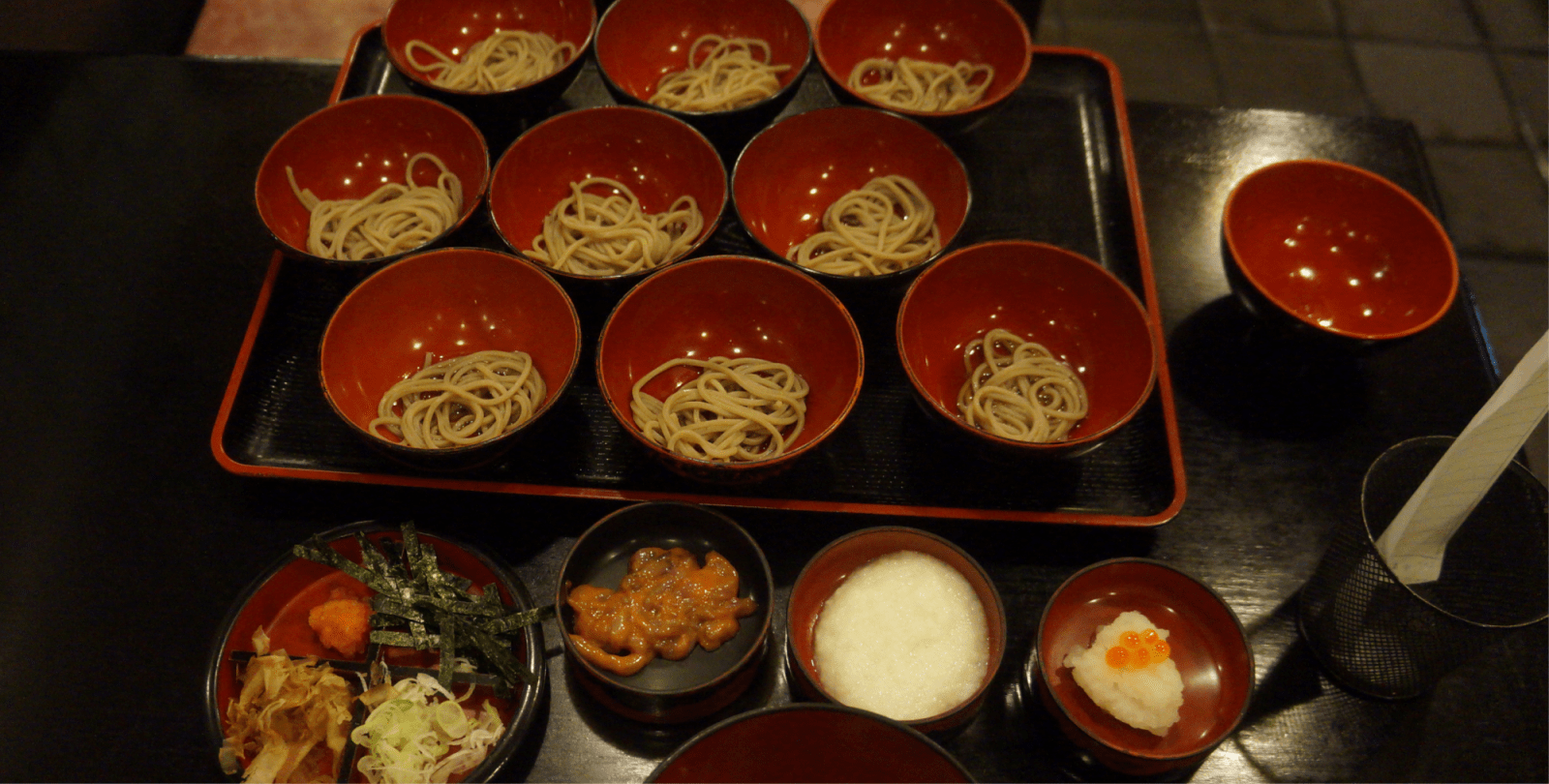
1. Wanko Soba
‘Wan’ is for ‘bowl’ and ‘ko’ means ‘small’. Wanko Soba is a traditional
noodle served in small bowls that gives its name! Each bowl has only a
mouthful of noodles, but eating a lot is surely filling!
In Morioka, the busiest part of Iwate, is famous for various noodles and you
can challenge yourself to see how much you can eat at a fixed rate! Azumaya is
particularly famous for challengers as you receive a token upon participating
the wanko soba challenge!
|
| Wanko Soba |
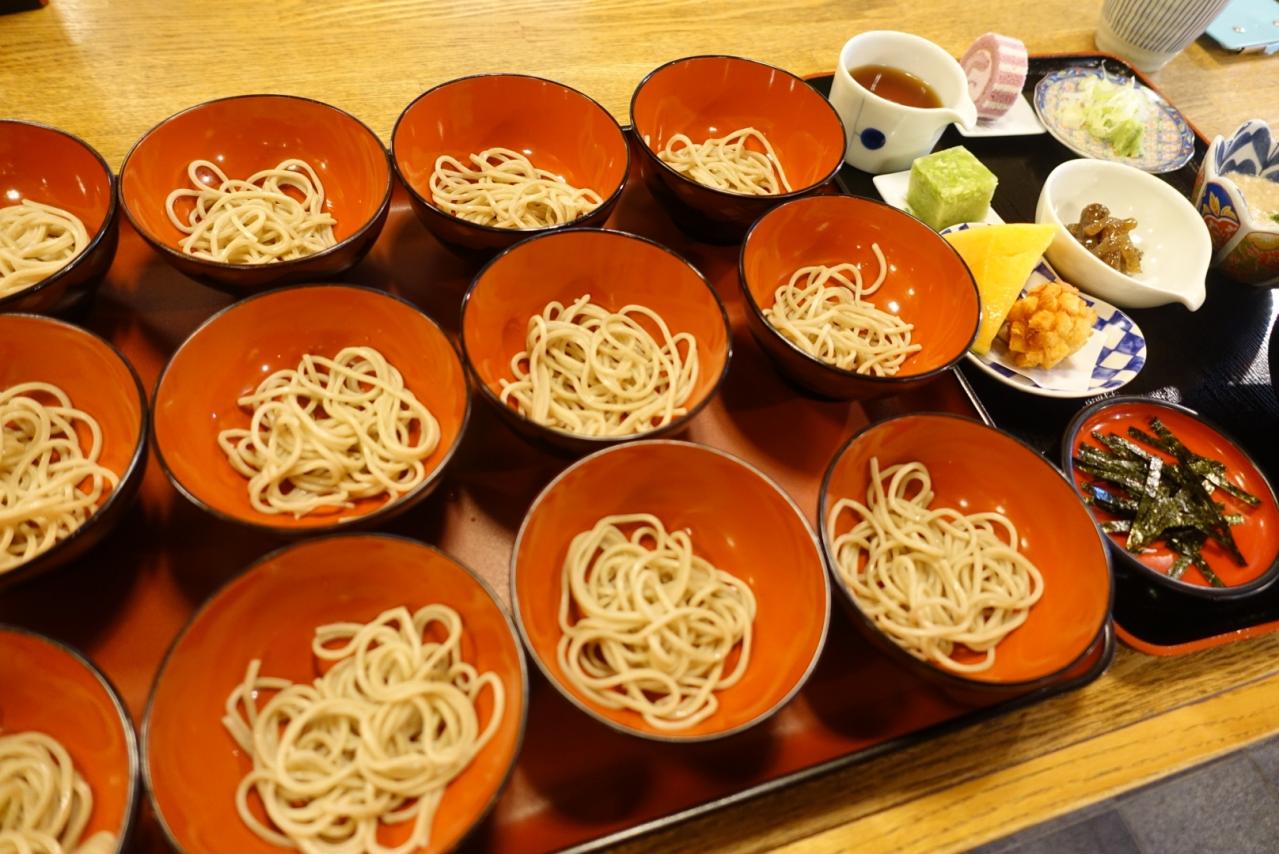
That aside, if you have a small appetite but would still love to eat Wanko
Soba, you can also do it in Iwate! If you are visiting Chusonji of Hiraizumi,
you can also dine in Yoshiie for Wanko soba!
In Yoshiie, you can view the cedar trees from Tsukimizaka along the way to
Chusonji without feeling the heat of competition. It is a great place to
relax, and wallet-friendly for those with a small appetite. Each serving in
Yoshiie is 12 bowls!
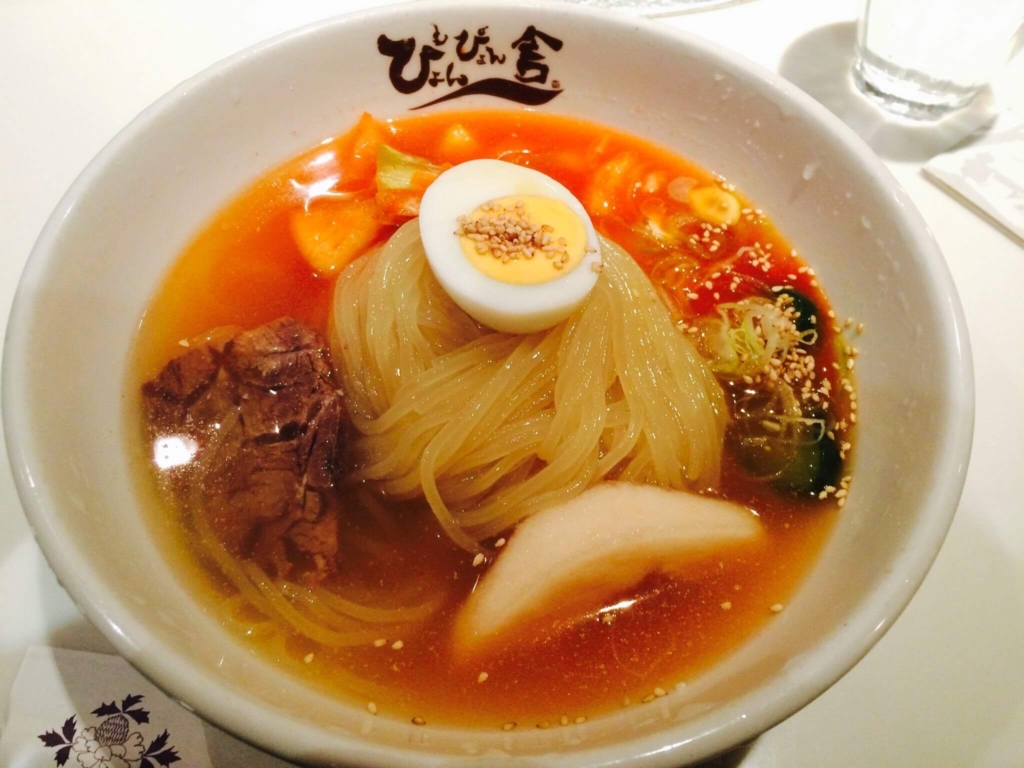
2. Reimen
‘Reimen’ literally means ‘cold noodles’ and they are definitely served cold!
Definitely a summer favourite, but you can eat them all-year! Although it was
said to originate from Korea, the Morioka version began when the spices were
mixed with the light-flavoured broth.
|
| Pyon Pyon Sha’s Reimen |
As cute as the shop’s name sound, Pyon Pyon Sha’s reimen is popular in Morioka
– so popular they have become a long-established chain!
Reimen itself is chewy, and it is beef-based. The broth itself is not thick at
all compared to ramens of southern Japan, but once you mix the kimchi (you can
choose the spice level, by the way!), onions, cucumbers together, the broth
will turn very flavourful.
A thing to note is that, different stores may use a different broth, but
comparing different reimens in Morioka, Pyon Pyon is a personal favourite for
many of my local friends!
3. Jajamen
|
|
| Pairon Jajamen |
The other popular noodle of Iwate is no other than Jajamen! It’s like udon,
but topped with miso paste with minced meat. They also have chopped leeks
and cucumbers.
Ask a local in Morioka about Jajamen and they will definitely recommend
Pairon! It is a short walking distance from the Bank of Iwate Red Brick
Building! It is not a big shop, but not difficult to find either.

|
| Pairon’s Store Front |
Inside the store, you can just order Jajamen. They offer small, medium and
large and the large portion is perfect for big eaters! You can choose to sit
near the counter, or be seated near the walls.

|
| Inside Pairon – Many Japanese local celebrities have left their marks here! |
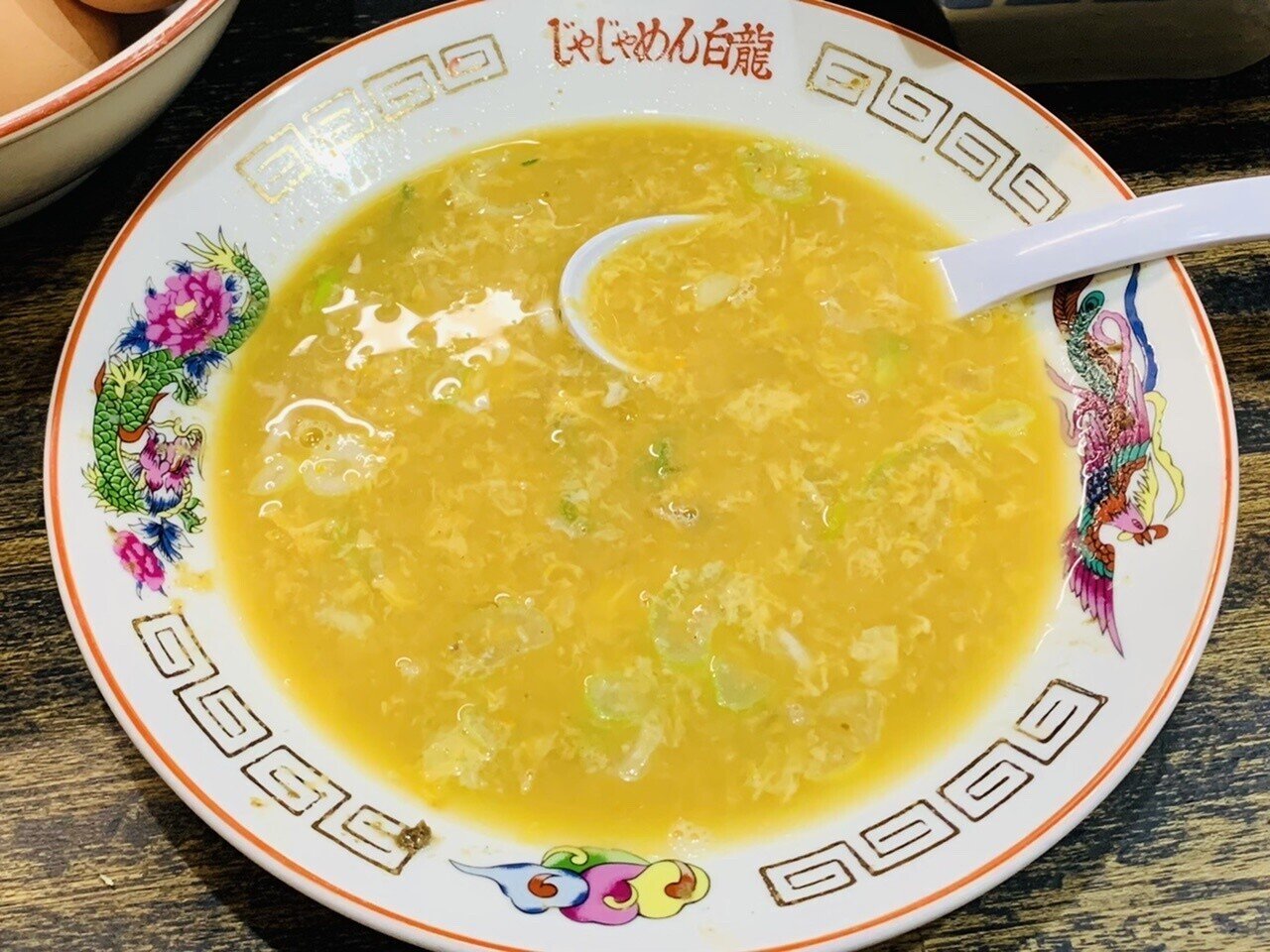
For those had sharp eyes, you might have noticed that there are eggs on the
table! This is because you can pay just a small amount extra after finishing
your Jajamen for additional egg soup! Just crack an egg, pour it into your
finished bowl and pass it to the staff. It’s that simple!
|
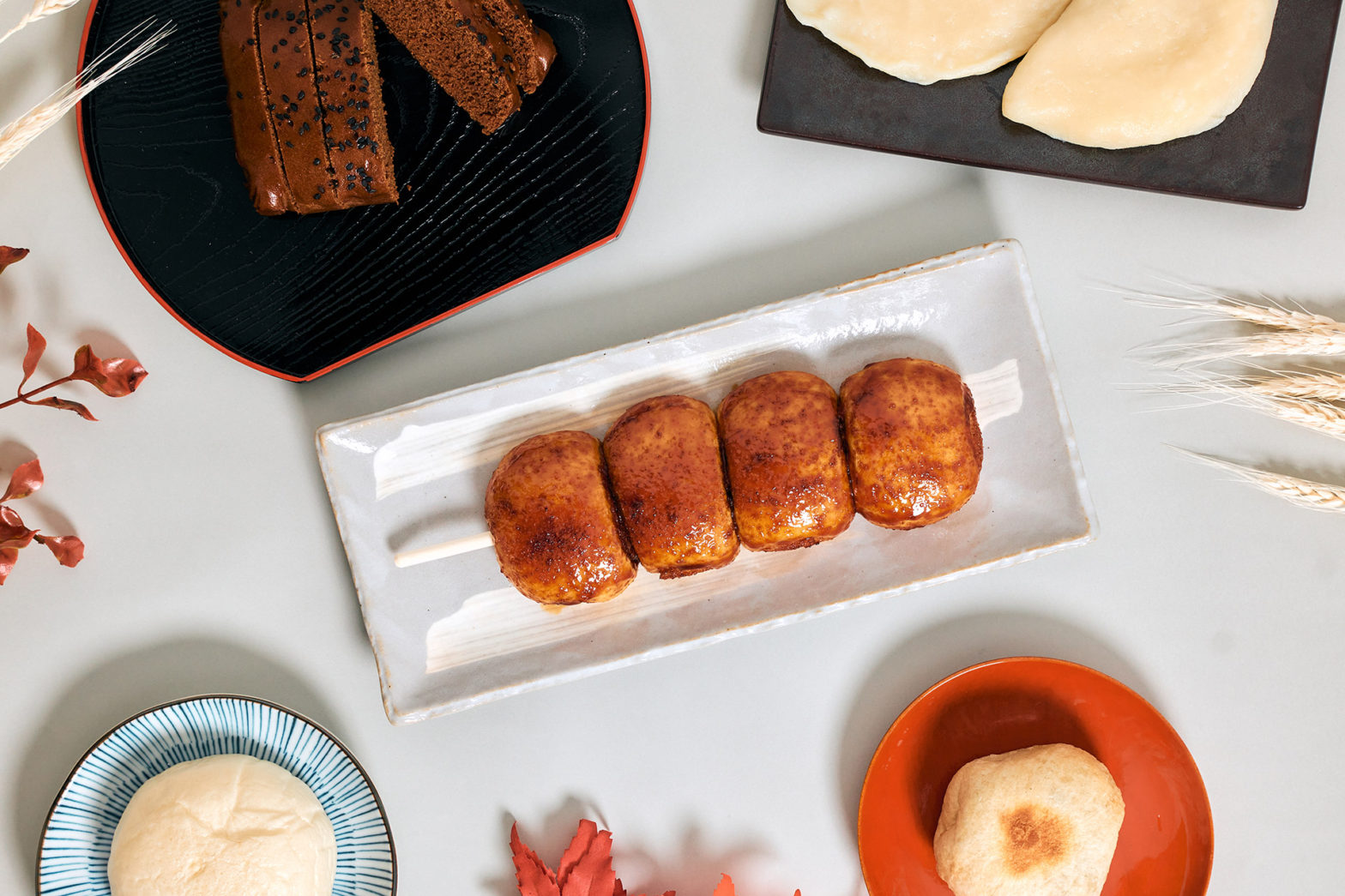
4. Mochi
If you are interested in Iwate’s culture, the mochi-eating culture is
something that you should not miss! Hiraizumi is a place where mochi-eating
has hundreds of years of history for various occasions!
In Hiraizumi, one should not miss a mochi cuisine in Seki no Ichi
Restaurant! Seki no Ichi itself is a sake brewery, but they also have a
restaurant for you to try their alcohol and mochi. Their mochi has also won
awards!
You can choose a good variety of mochi cuisines. They are flavourful and
chewy, and the taste hits right home!

|
| Mochi from Seki no Ichi Brewery's Restaurant - I came here because of Hosoyan |
You get eight different types of mochi (the middle one is not mochi, it's
radish, more of a cleanser you use to switch between flavours). The special
part about this set is that, they have a hidden branch under one of the
mochis.
You can eat the mochi in any order, and if you picked the one with a branch on
your first mochi, then the day itself is your lucky day; and if it's in your
second mochi, tomorrow will be your lucky day; if it's in your third mochi,
the day after tomorrow will be a lucky day... and so on!

|
| I got my branch in my mochi! |
5. Soymilk Donuts
Remember Tofucchi the Tofu-based mascot? If you are wondering what makes
Iwate’s tofu so special, you should totally visit Hachimantai of Iwate!
Hachimantai is best known for skiing during winter season and its beautiful
mountains during spring and autumn, but Fusetsuka makes Hachimantai even
better for foodies!

|
| Soymilk Donuts |
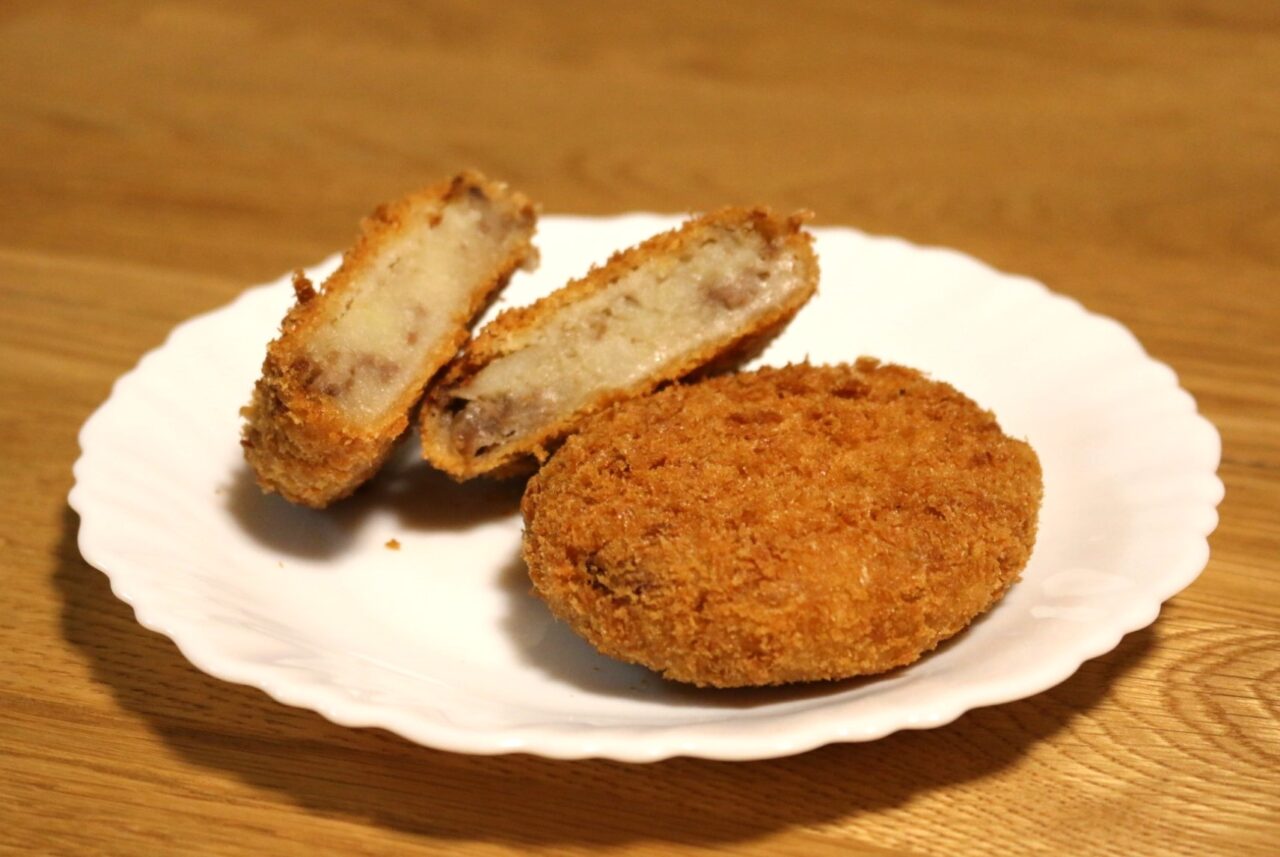
Only a 3-minute walk from Koyanohata station, Fusetsuka has been a well-known
tofu, yuba, and creamy croquettes, and you can definitely trust them for
choosing the best soybeans!
|
| Fluffy croquette |
Their soybeans give a nice tint of sweetness and fragrance. Besides, you can
also try on their samples of sliced tofu. If you want a tofu that is rich in
flavour, the bamboo flavour will be the one that you should try! Otherwise,
if you wanted to know the most popular tofu, then you should not miss the
green bean tofu!
There are definitely more other food that one should try in Iwate and other
regions of Tohoku, so if you are interested to visit the Tohoku region, feel
free to grab a JR East Tohoku Area Pass or a Japan Rail Pass
(Nationwide)!
6. Flying Dango

|
| Dango that flew all the way here - Another spot that I came here because of Hosoyan |
In my
previous post
I've talked about Genbikei, a beautiful gorge that does not only offer a
beautiful view, but also a great place for a new experience!
Paying 400 yen (if you paid more you will get your change back!) and knocking
on the board will send a basket flying. Wait a couple of minutes and you will
see your dango sent to you, flying from the opposite of Genbikei!! Also comes
with green tea.
Eating this in a chilly weather while sipping hot tea is one of the nicest
moment, especially when sakura is in full bloom that offers a perfect
view!
Pro tip: Get yourself extra time to go across the river and get a chance to
send a flying dango across the sea! You can tell the owner on which country
you are from, and they will put your country's flag while playing your
national anthem when someone from across orders the dango. Unique experience
indeed!
Is there anything that might be missing from the list? Let me know!
Until next time!
|
During my stay in Iwate, I have talked to different staff and locals about my job as a travel consultant. Thanks to a lot of these conversations I get to understand a whole lot more about Iwate and managed to make my journey a lot more beautiful. I have promised them to share about this place so I'm writing a little more of Iwate than I plan to do!
Today, I'm writing about SL Ginga - the steam locomotive with a planetarium, and the very first in Japan.
Inspired by Miyazawa Kenji's Ihatov, this train runs between Hanamaki of Iwate until Kamaishi on certain weekends from late April to November and tickets get booked out super quickly!
- About the train -
 |
| SL Ginga by JR East |
Compared to Pokemon with YOU train that has only 2 cars, SL Ginga has 4. It's also different in the sense where all four cars has seats, but the Pokemon train has only 1 car full of seats with another car being the playroom.
SL Ginga has been here for many years, but after the tsunami and earthquake that devastated Iwate, it's seen as a project to revitalize the affected regions besides Pokemon with YOU (that instead heads to Kesennuma, another affected region). It is also the first train in Japan with its very own planetarium!!
First car has the planetarium that displays horoscope of the children book author Miyazawa Kenji. You can spend time in the planetarium during your ride. It's also a place you can see and purchase SL Ginga's merchandises.
Second car is more of a gallery of books and maps. You can find information on literature, astronomy and knowing more about Miyazawa's Ihatov - a fictional land based on his native Iwate Prefecture.
Third car is another part of gallery, but more towards sciences and agriculture. Miyazawa has contributed a fair amount in education and agriculture for this region (he has his agricultural school in Hanamaki!) and understanding things that inspires his work.
The fourth car is a gallery featuring the artist side of Miyazawa Kenji. He composed songs and made artwork, and is actually well-known for his talents in meteorology, philosophy, geography, horticulture, etc. This car is a fancy place to sit in for sure!
- The Journey -
 |
| SL Ginga Interior |
You will be getting queue tickets to go into the planetarium rooms (the room is not a big one so it's definitely required to take turns). The planetarium projection lasts about 15 minutes, and the room fits about 10 person (maybe another 2 or 3 if everyone are skinny).
In each stop you are given some time to take photo with the train but one thing about the train stations along the way is that, each sign has a Esperanto translation - an international auxiliary language often used in Miyazawa's works.
 |
| SL Ginga |
- About Tourist Spots -
*Hanamaki*
In Hanamaki of where SL Ginga starts, it is a place where you can feel Miyazawa's traces from places such as Miyazawa Kenji Ihatov Museum, Polan Square Garden, Ginga Poppo Clock, Miyazawa Kenji Dowa Mura, Kenji's school... etc.Hanamaki is also famous for its hot springs that is nice to go, so even if you are not boarding the SL Ginga (reservation required with JR East), Hanamaki is a nice place for day trips.
*Tono*
In Tono, it is famous for tits meganebashi. It's a good viewpoint with a beautifully-arched bridge, also rumored as the lovers' sanctuary - the reason why stopping here is recommended if you didn't want a 4.5-hour journey.That aside, if you are using SL Ginga's tour you can also see country dance. SL Ginga takes quite a long break in this station that if you join a tour with JR East it'll be more convenient for sightseeing purposes in my opinion, or you can also consider checking out the sightseeing taxi plans in Tono station. It's also said that the mythical Kappa lives here.
*Sumita*
This is more of a place that I recommend driving here (despite SL Ginga passes by) as it offers the beautiful Ryusendo where you can see a waterfall within the cave. Kakkou is also a place for some nice local sweets. It's a great place for a side trip with visits to Kamaishi and Miyako as you can spend time strolling around the machiya and understanding the local culture in Sumita.*Kamaishi*
Well-known for its Dai-kannon Statue where you can see a stunning view of the Kamaishi Bay and the straits, you can also understand a little more about steel and irons in Kamaishi. When SL Ginga arrives here, there's a tiger dance (imagine the Chinese lion dance, but tiger) performance that prays for the safety of fishermen. Additionally, Kamaishi is also a place where it has a UNESCO world heritage - Hashino Iron Mining and Smelting Site, for this site has been recognized as the oldest western-style blast furnace in Japan.- Reservation of SL Ginga-
You can reserve it if you are a JR East Tohoku Area Pass holder, JR Pass Nationwide holder without additional charges.Without the passes, you can also purchase the tickets from Midori no Madoguchi in Japan, or pre-book 1 month before the boarding date (then collect it in Japan) using ekinet (English version available).
Share the info out, help a fam who's interested!
Enjoy!
 |
| Iwate's grilled fish (salted) and cookies |
So, where is Iwate?

Iwate is part of the Tohoku region of Japan, east of Akita, and south of Hokkaido & Aomori. It offers a unique coastline, and a lot of cultural heritages! It's also a great place for mochi and noodle lovers.
Why did you decide to visit Iwate?
The main reason I've decided to visit Iwate was no other than due to influence of my favorite person - Hosoya Yoshimasa-san. He is a famous seiyuu (voice actor) in Japan voicing various movies, anime, games and even hosts a radio show.Years ago, he and Ono Kensho-san (voice actor) had a travel program that they have visited Iwate for a 2-day trip, so that gave me the kick start!
What do you have in Iwate?

Iwate has a lot to offer, and my stay of a short 4 days was not enough to visit everything!
Above is a map that I've compiled some information that I believe would find helpful for everyone.
The main parts of sightseeing would be Ichinoseki, Hiraizumi, and Morioka.
However, Tono, Kamaishi, Hanamaki, Miyako are also some places that are worthy of visit!
For further information, you can visit Iwate's Official Travel Guide Page here.
Hiraizumi - The Place of Heritages
Visiting Hiraizumi was a relaxing trip for me. I based myself in Ichinoseki so it is very easy to travel around! It offers a nice, relaxing walk (even a short hike) with temples and nice trees!Motsuji, Chusonji are some of my favorite places. Amazing architecture, nice row of cedar trees, and a relaxing atmosphere! Here are some photos that I've managed to take (and edited) with my Samsung Galaxy S6 Edge.
 |
| Chusonji's Konjikido. Photography/ videography/ recording inside is strictly not allowed. |
 |
| Rows of cedar trees along Tsukimizaka (moon-viewing slope) on the way up to Chusonji |
 |
| Sakura tree in Motsuji's gardens. They also have a flower garden but it wasn't the best time to view it during my visit. |
 |
| Dragon boats used for festivals in Motsuji. |
 |
| Beautiful garden in Motsuji |
 |
| How Konjikido looks like. This is a model found in Ichinoseki Station. |
Ichinoseki - The Gem of Iwate
From Ichinoseki, I have managed to view some nice sakura, gorges, and tasting the nicest mochi I've tried in my life!
The gorge that I would love to talk about is Genbikei, because it has a flying dango that comes from across the river! By all means please try it!
 |
| Part of Geibikei Gorge |
If anyone wants to know why I came to Iwate, here's why:
おはようございます!!今、細谷佳正さんと旅友の撮影中です!皆様からの質問を大募集!このツイートに返信してください!ロケ中に答えますー!!!よろしくお願いします^_^まぶすぃー。 pic.twitter.com/Dwzc1oTYuc— 小野賢章がゆく 旅友 【公式】 (@info_tabitomo) September 16, 2017
DVD「小野賢章がゆく 旅友 第六弾 〜ゲスト:細谷佳正篇〜」が2018年1月13(土)発売決定!第六弾は"大人の修学旅行"をテーマに岩手県の一関・平泉地区を巡りました!— 小野賢章がゆく 旅友 【公式】 (@info_tabitomo) October 5, 2017
全国のアニメイトショップ、アニメイトオンラインショップにて、本日から予約開始!→https://t.co/e3zKRwiA62 pic.twitter.com/QxLH8QMvc7
 |
| Mochi from Seki no Ichi Brewery's Restaurant |
A popular culture in Iwate is to eat mochi. I got to know this restaurant (which is also a place where you can visit to understand how to brew beer) from Ono-san and Hosoya-san's program! You get eight different types of mochi (the middle one is not mochi, it's raddish, more of a cleanser you use to switch flavors).
The special part about this set is that, they have a hidden branch (?) under one of the mochis. You can eat the mochi in any order, and if you picked the one with a branch on your first mochi, then the day itself is your lucky day; and if it's in your second mochi, tomorrow will be your lucky day; if it's in your third mochi, the day after tomorrow will be a lucky day... and so on!
There are 8 flavors, from top left: shrimps, wild sesame, black sesame, zunda, raddish (not mochi), walnut, natto, sweetened red bean, grated raddish (with some mushrooms). Although natto is my least favorite, but I don't dislike it. Personal favorites are red bean, shrimp and wild sesame.
Red bean has a sweetness that hit right home, shrimps are crispy and flavorful, wild sesame has a hint of sweetness and fragrance that I love. They also had another bowl of soup + mochi but I really prefer my mochi to be sweet. Salty mochi tastes nice too, but I guess I am just preferring things to be sweet?
 |
| I got my branch in my third mochi! |
 |
| Sahara Glass Park near Genbikei |
 |
| Map of Japanese food in Seki no Ichi's Private Room |
 |
| Pokemon Train (Ichinoseki - Geibikei - Kesennuma) |
 |
| The oarsman in Geibikei boat cruise |
Geibikei is a gorge that has different beautiful rock formation. You can buy a ticket at 1,600 yen (perks if you stay with Toyoko inn because you can get a discount of 200 yen with the voucher that you can get in the lobby!!) at the counter of Geibikei. There's a waiting room that you can wait for the boat, or you can eat the food around.
The oarsman will guide you through the river as you view the beautiful gorge (Japanese only). As there are nobody else that are foreign-looking, the oarsman spoke in Japanese only. There are some very, very basic English spoken on another boat with a few Caucasians. Either way you get to receive an English pamphlet as well so you won't miss out.
You will be brought until the end of the place and is given 20 minutes to go around. Walk till the end to get some lucky beads (5 for 100 yen) and test your throwing skills for luck! Do remember to get back to the boat on time so you won't be left behind! (I almost got left behind because there were too many people due to two ships coming in at almost the same time, no joke lol)
 |
| Me finally having the courage to ask a stranger to take a photo of me in the inner part of Geibikei |
 |
| Cross the bridge and you get to see the selling place of the lucky beads |
 |
| Some lucky beads - you get to choose for luck, romance, love, opportunity, career.. etc. |
 |
| Many failed attempts to throw the beads into the hole, gotta swing that arm hard man |
 |
| Salted skewed fish outside of Geibikei's ticket counter |
 |
| Free omikuji outside of Geibikei - pick a bead to see which luck you will get! |
After finishing my time in Geibikei, I had plenty of time until my next train back to Ichinoseki, I ate some fish and and played with the omikuji beside the river. Apparently transparent is for studies and I have no intentions to pursue another degree at the moment (lol), a little weird but then I am contemplating about taking JLPT N2 so, maybe it works? BTW you have to return the bead and you will hear an ear-cleansing 'ding' sound!
On the way back to the train station you should also see Kamisukikan! It's a place where you can buy paper-related merchandise, or you can also try making paper! You will be given colored water and various dried leaves, flowers, etc. to be creative!
 |
| Paper-making studio in Kamisukikan |
Morioka - The Heart of Iwate Noodles
If we are talking about Japanese noodles, you definitely can't miss out Iwate! They love noodles so much that even their city mascot is noodle-themed!
The three famous noodles in Iwate are Wanko soba, Jajamen, and Reimen. You can find them all in Morioka itself!
 |
| Top: Reimen from Pyonpyon; Bottom left: Egg soup after Jajamen; Right: Jajamen from Pairon |
If you love challenging yourself as a big eater, try eating wanko soba in Azumaya! You get to eat as much as you like with a fee of 3k+ JPY and you'll receive a certificate after your challenge! If you could beat 100 bowls you get a special momento too! Otherwise if you don't feel like challenging (which was my case), there are a lot of places that you get to eat this. I ate mine in Yoshiie because Hosoya-san signed in a corner of the building!
 |
| Wanko Soba in Yoshiie, Hiraizumi |
Of course, besides noodles, Morioka has a lot to offer too! For instance, beautiful architecture and parks!
 |
| Bank of Iwate Morioka Red Brick Building |
 |
| Surrounding area (red brick building across) |
 |
| Morioka History and Cultural Museum |
 |
| Pairon Jajamen |
 |
| Morioka Castle Site Park |
 |
| Shinkansen Hayabusa and Komachi in Morioka Station |
Other Regions of Iwate
Hanamaki is a place where you can catch the steam locomotive to Kamaishi, SL Ginga! It's a beautiful train with a old school, sleek design while having a planetarium inside! It's a place where Miyazawa Kenji, a children storybook writer lived. This region itself is said to be the Ihatov of Iwate.
Tono and Kamaishi are famous for its history of steel and iron making. It is also a filming place for some dramas due to there having a traditional village. Besides, if you arrive Kamaishi, it's recommended to stay for a night and even head to Miyako for the beautiful Jodogahama beach! Their sanriku railway just went fully operated after the tsunami strike, so it's worth going now!
If you are interested in traditional crafts, perhaps Ninohe of Iwate is a unique place for you too! It's famous for the Japanese lacquer so if you are keen to know how they are made, a trip to Ninohe is recommended as well!
Kitakami is a great place to visit during spring (late April), as Kitakami Tenshochi is lined with rows of sakura blossoms! If you are going there at the right time, you get to enjoy festivals and night view where the trees are lit up too!
My Itinerary
My itinerary in Iwate was a simple and relaxing one! If it's helpful it'd be great!
Day 1 - Arrival in Morioka - Morioka Castle Ruins Park - Sakurayama Shrine - Rock-breaking Cherry Blossom Tree - Bank of Iwate Red Building - Pairon's Jajamen - Takubou Shinkon House - Returning to Ichinoseki to check in hotel.
Day 2 - Taking a train from Ichinoseki to Hiraizumi - Chusonji - Kanjizaiouin Ruins - Hiraizumi Heritage Center - early lunch in Yoshiie (tsukimizaka) - Chusonji - Konjikido of Chusonji - other ruins while walking along the way back to Ichinoseki Station - bus to Takkou no Iwaya - bus to Genbikei - Bus back to Ichinoseki
Day 3 - Hotel breakfast - Pokemon train to Geibikei Station - Geibikei - Kamisukikan - Tsuriyama Park (sakura viewing) - train to Mizusawa Park (sakura viewing)
Day 4 - Hotel breakfast & check out - Hanamaki Station - Kenji Miyazawa Memorial Museum - Kenji Miyazawa Dowa Mura - Onsen-hopping in Hanamaki - leave Iwate
Hope the above helps! I'm definitely planning to head back to Iwate for SL Ginga in the future! I would really want to see Miyako and also taking the Pokemon train all the way until Kesennuma (Miyagi) too!
Will you be going to Iwate? Feel free to ask anything in the comments!
Until my next update! ☆
